‘Backrooms’ Ending Explained: Every Death, The Final Twist, And What Comes Next

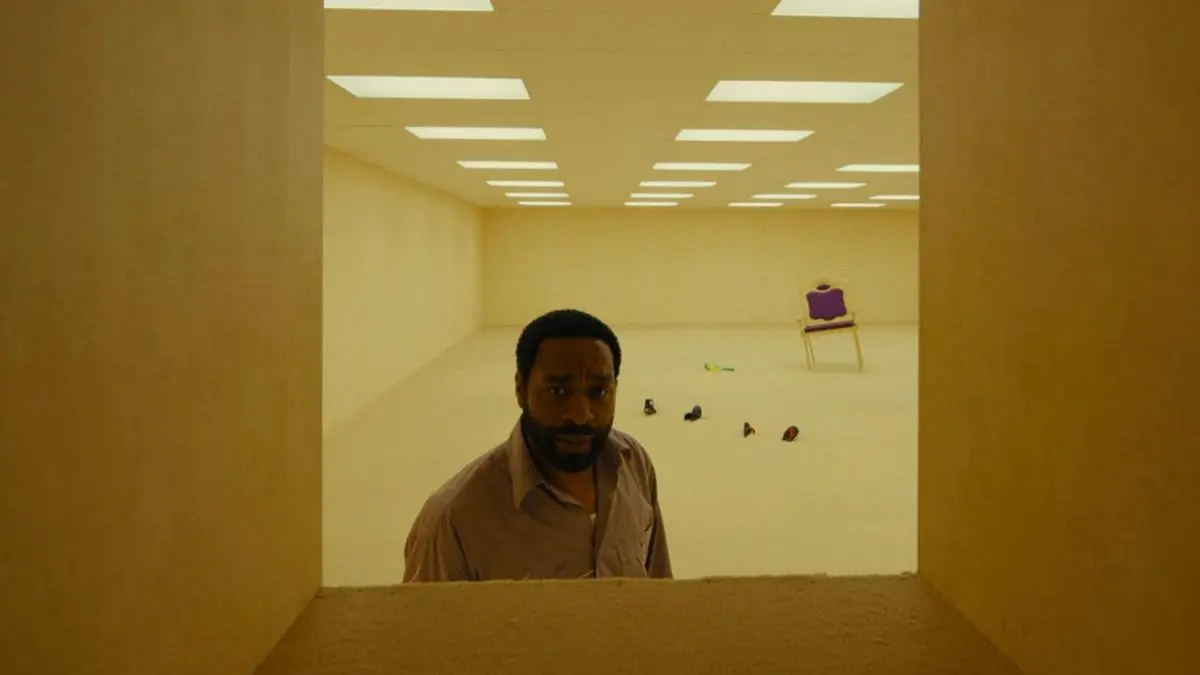

Kane Parsons’ “Backrooms” movie leaves viewers with a lot of questions, and that is exactly the point. The film does not try to explain everything clearly. Instead, it pulls people into a strange and unsettling world where nothing feels safe or normal. The movie takes ideas from Parsons’ original YouTube series and turns them into a bigger story about fear, trauma, loneliness, and losing yourself inside a place that never seems to end.
For people who are new to “The Backrooms,” the movie can feel confusing at first. The story jumps between reality and nightmare-like spaces. Characters speak in vague ways. Important details are hidden instead of fully explained. Still, underneath all the mystery, the movie tells a very emotional story about broken people trying to escape their pain.
The film follows Clark, played by Chiwetel Ejiofor, a struggling furniture store owner whose life is falling apart. His business is failing, his marriage has ended, and he drinks heavily. Clark spends much of the movie speaking with his therapist, Dr. Mary Kline, played by Renate Reinsve. During their sessions, Clark talks about feeling trapped and disappointed with his life.
Everything changes when Clark discovers a strange portal hidden inside the basement of his furniture store. The portal leads to the Backrooms, an endless maze of empty rooms, ugly carpets, strange lighting, and impossible architecture. The place feels familiar but deeply wrong at the same time. It looks like pieces of normal life copied badly by something that does not fully understand humans.
The movie slowly reveals that the Backrooms are much more than abandoned rooms. According to Clark, the place creates copies of people who enter it. These copies are called “Still Lifes.” They look human, but their faces and bodies are distorted. Some behave quietly while others become violent monsters.
One of the most terrifying examples is Pirate Clark, a giant twisted version of Clark wearing the pirate costume from his furniture store commercials. This creature becomes one of the main threats in the movie’s final act.
Before the main story begins, the movie opens with footage from Async Corporation researchers in 1990. A researcher named Naren Warne records himself while hiding inside the Backrooms. He warns Async about hostile entities roaming the area before he is attacked and apparently killed. These opening scenes immediately connect the movie to Kane Parsons’ earlier YouTube shorts, where Async is already established as a secretive organization studying the Backrooms.
In Parsons’ web series, Async accidentally discovered the Backrooms during scientific experiments. The company then built a gateway called “The Threshold” to enter and study the endless dimension. Several shorts suggest Async hoped to use the Backrooms for commercial purposes, including transportation and research. The movie expands on these ideas but still keeps many details secret.
As the story continues, Clark becomes obsessed with proving the Backrooms are real. He asks his employee Kat and her boyfriend Bobby, a film student, to help him document the place on camera. Their exploration quickly turns into a nightmare. Bobby is dragged away and killed by an unseen creature while Clark and Kat desperately try to escape.
These scenes are heavily inspired by found footage horror movies. Kane Parsons became famous online for using this style in his YouTube shorts. The shaky camera footage, dim lighting, and sudden appearances of creatures create tension without relying on loud jump scares. Much of the fear comes from not fully seeing what is chasing the characters.
After Bobby and Kat disappear, Clark remains trapped inside the Backrooms for a long time. When Mary later finds him there, he is physically alive but mentally broken. He has adapted to life in the strange dimension and now lives among the Still Lifes.
Clark explains to Mary that he survived by eating parts of the Still Lifes because, according to him, they cannot feel pain. The movie never fully confirms whether everything Clark says is true. By this point, he has clearly lost his grip on reality. Still, his explanations help viewers understand how the Backrooms might work.
The movie also spends time exploring Mary’s past. Through flashbacks, viewers learn that her mother suffered from paranoid schizophrenia and kept Mary trapped inside their apartment as a child. The windows were covered, and Mary was isolated from the outside world. These scenes are important because they connect Mary emotionally to the Backrooms.
The Backrooms are not just a scary place. They represent emotional imprisonment. Mary’s childhood home was already like a version of the Backrooms long before she entered the real thing. The movie uses this connection to show how trauma can trap people mentally and emotionally.
One important object throughout the film is a piece of concrete containing Mary’s childhood handprint. She saves it from the demolition of her old home and carries it with her later in the story. This object becomes symbolic of her past and her identity.
The movie reaches its emotional peak during a disturbing scene where Clark ties Mary to a chair and forces her to continue their therapy roleplay sessions. Clark finally admits that he prefers living inside the Backrooms because he no longer has to deal with his failures in the real world.
Mary confronts him directly and tells him the truth he has been avoiding. She explains that his wife did not leave because of alcohol alone. She left because Clark constantly blamed others for his unhappiness instead of changing himself.
This moment changes Clark emotionally. For a brief moment, he seems to accept the truth about himself. He unties Mary and allows her to leave. But the peace does not last long.
Pirate Clark suddenly appears and attacks. The creature kills Clark by biting his neck before chasing Mary through the Backrooms. The sequence that follows becomes one long nightmare escape scene filled with confusion and panic.
Mary eventually reaches what appears to be Clark’s furniture store, but the movie reveals that it is only another fake copy created by the Backrooms. This detail is important because it shows that the Backrooms can imitate real places almost perfectly.
Mary manages to stun Pirate Clark using her concrete handprint before men in hazmat suits capture her. These men work for Async Corporation. They transport Mary through a doorway that seems to lead back into the real world.
At Async headquarters, Mary meets Phil, played by Mark Duplass. Phil explains that Async originally worked on MRI technology before discovering the Backrooms accidentally. Now the company studies the strange dimension and the creatures inside it.
Phil never clearly answers Mary’s questions about whether she is free to leave. This creates one of the movie’s biggest mysteries. The audience never actually sees Mary return to normal life. Instead, the film ends with a montage showing warped copies of earlier locations inside the Backrooms.
One of these locations is the Async interrogation room itself. Sitting there is a strange copy of Mary.
This ending has caused many different interpretations among fans and critics. One theory is that Mary escaped successfully, but the Backrooms created a copy of her that remains trapped forever. Another theory is much darker. Some viewers believe the Mary speaking to Phil was already the copy all along and never escaped at all.
The movie never gives a final answer. Kane Parsons clearly wants the mystery to remain unresolved.
That approach matches the larger themes of the film. “Backrooms” is not really about solving puzzles or learning every secret behind the monsters. The movie is more interested in fear, isolation, trauma, and the feeling of being trapped inside your own mind.
The Backrooms themselves work as a metaphor for emotional suffering. Clark becomes consumed by bitterness and regret. Mary remains haunted by her childhood. Both characters enter a place that reflects their pain back at them in physical form.
The Still Lifes may represent distorted versions of people’s memories and emotions. They are copies that look human but are missing something important. Pirate Clark especially feels like a physical version of Clark’s anger and self-hatred.
According to information from Kane Parsons’ earlier YouTube shorts, Async’s discovery of the Backrooms happened in 1989. The movie takes place shortly after that. This timeline leaves room for many future stories.
Because of this setup, the franchise could continue in several ways. One option is direct sequels following Mary, Phil, and Async as they continue investigating the Backrooms. Another possibility is an anthology format where each movie follows different people trapped inside the endless dimension.
An anthology approach might actually fit the concept best. The Backrooms are supposed to feel infinite and unknowable. Following new characters in different parts of the maze could keep the mystery fresh while expanding the world slowly.
At the same time, Mary’s survival makes her a strong candidate for future movies. She fits the classic horror role of the “final girl,” the survivor left traumatized by what she experienced. Her connection to childhood trauma also gives the character emotional depth that could continue in sequels.
Still, there is always a danger in explaining too much. Part of what makes “Backrooms” effective is its uncertainty. The audience never fully understands how the dimension works, where it came from, or what the creatures really are.
The movie understands that fear often becomes weaker once everything is explained clearly. By leaving questions unanswered, “Backrooms” keeps viewers uncomfortable even after the credits end.
Kane Parsons started making “Backrooms” videos while still a teenager, and many fans worried that a Hollywood adaptation would lose the strange atmosphere that made the original videos popular. Instead, the film keeps the same unsettling feeling while expanding the emotional side of the story.
The movie combines internet horror, found footage, psychological drama, and existential fear into something that feels unique. It is not interested in easy answers or traditional horror storytelling. Instead, it asks viewers to sit with uncertainty and discomfort.
That may frustrate some people, but for many horror fans, that lingering mystery is exactly what makes “Backrooms” memorable. Like the endless halls inside the movie itself, the story feels like it could continue forever, with new questions waiting around every corner.
Have something to add? Let us know in the comments!