Lupita Nyong’o Reveals She Had the “Easiest Job” on Christopher Nolan’s Brutal ‘The Odyssey’ Set


The film industry has long documented the toll that carrying an entire production can take on a lead actor, requiring them to shoulder both the emotional and physical demands of maintaining a character across the entirety of a screenplay.
When performers take on dual or multiple roles within the same project, the challenge can multiply exponentially, requiring distinct physical vocabularies and vocal patterns to convince audiences that two seemingly separate characters are inhabiting the same narrative space. Yet sometimes, the presence of a strong ensemble cast and the right directorial vision can shift the dynamic entirely, offering performers unexpected breathing room even when playing multiple complex characters.
‘The Odyssey‘ represents one of the most ambitious ensemble undertakings in recent cinema, bringing together some of the industry’s most accomplished actors to bring Homer’s ancient epic to the screen.
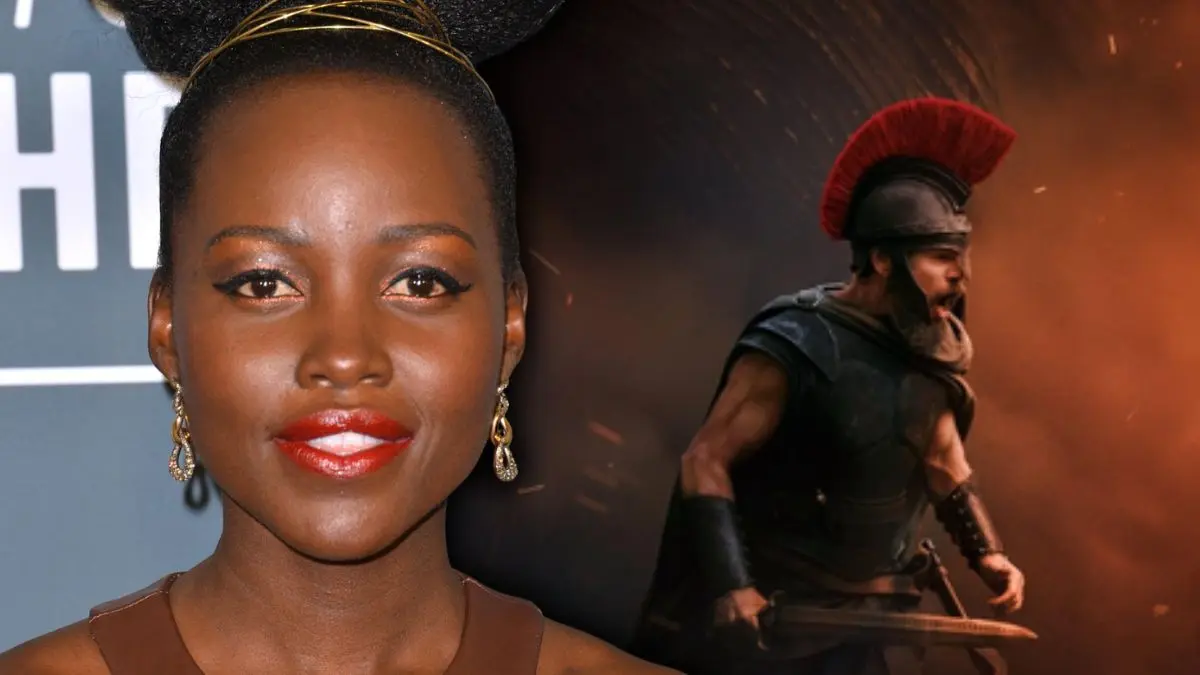
Lupita Nyong’o signed on to play not one but two critical roles in the adaptation, portraying both Helen of Troy, the legendary figure whose beauty sparked the Trojan War, and her sister Clytemnestra, the tragic queen driven to murder her own husband. For an actor less experienced with dual roles, this might seem like an overwhelming assignment requiring months of preparation and psychological stamina to maintain two entirely distinct characterizations across the grueling production schedule of a Christopher Nolan film.
In an interview with ET, Nyong’o discussed her experience playing dual roles, noting that she had the reassurance that she had already done two roles before in Jordan Peele’s psychological thriller ‘Us’, explaining that her role in ‘Us’ was more of a heavy lift to do than it was to be a really, really valuable and pivotal part of Odysseus’s journey in ‘The Odyssey’.
“I cannot claim challenge…I was playing queens in nice clothes and beautiful locations. Everyone’s talking about challenges…I had it real easy.”
The comment speaks volumes about the nature of different creative environments and how ensemble dynamics reshape the demands placed on individual performers. In ‘Us’, Nyong’o essentially carried the entire film as both Adelaide and Red, two distinct characters who anchored the narrative and required viewers to invest completely in her portrayal to experience the film’s emotional and psychological impact.
Every scene, every beat, every moment of screentime fell squarely on her shoulders to deliver. By contrast, ‘The Odyssey’ places Nyong’o within a sprawling cast of formidable talents, all bringing their own gravity and complexity to Homer’s ancient narrative.
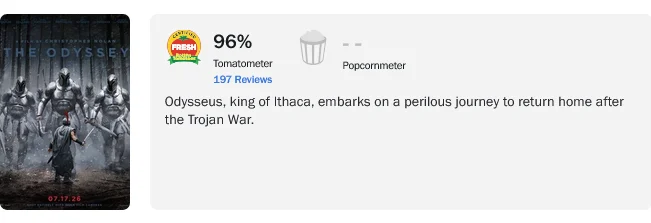
Christopher Nolan cast Nyong’o in the dual role of Helen of Troy and her sister Clytemnestra, as revealed by the filmmaker himself, with Helen being the wife of Menelaus who is ultimately taken to Troy, and Clytemnestra being the wife of Agamemnon. ‘The Odyssey’ is an epic fantasy action film written and directed by Christopher Nolan, based on Homer’s epic poem of the same name, and was shot entirely with IMAX 70mm film cameras.
What Nyong’o’s candid reflection highlights is that the nature of a role extends far beyond whether an actor portrays one character or many. Context matters enormously. The presence of Matt Damon anchoring the narrative as Odysseus, Tom Holland as his son Telemachus, Anne Hathaway as Penelope, and an ensemble that includes Robert Pattinson, Charlize Theron, and Zendaya fundamentally alters the pressure and responsibility resting on any individual performer’s shoulders.
How do you think Lupita Nyong’o’s dual role in The Odyssey compares to Us?
This doesn’t diminish the complexity or importance of Nyong’o’s roles as the twin sisters. Rather, it underscores a nuance about filmmaking that rarely gets discussed in interviews centered on dramatic challenge and artistic suffering. Sometimes the smartest creative decision an actor can make is accepting that bringing depth to a supporting role within a strong ensemble can prove less exhausting than carrying the entire emotional weight of a feature film.
Have something to add? Let us know in the comments!