‘Dutton Ranch’ Episode 4’s Cattle Crisis Is Rooted in Real Science — Here’s What the Show Got Right About Foot-and-Mouth Disease

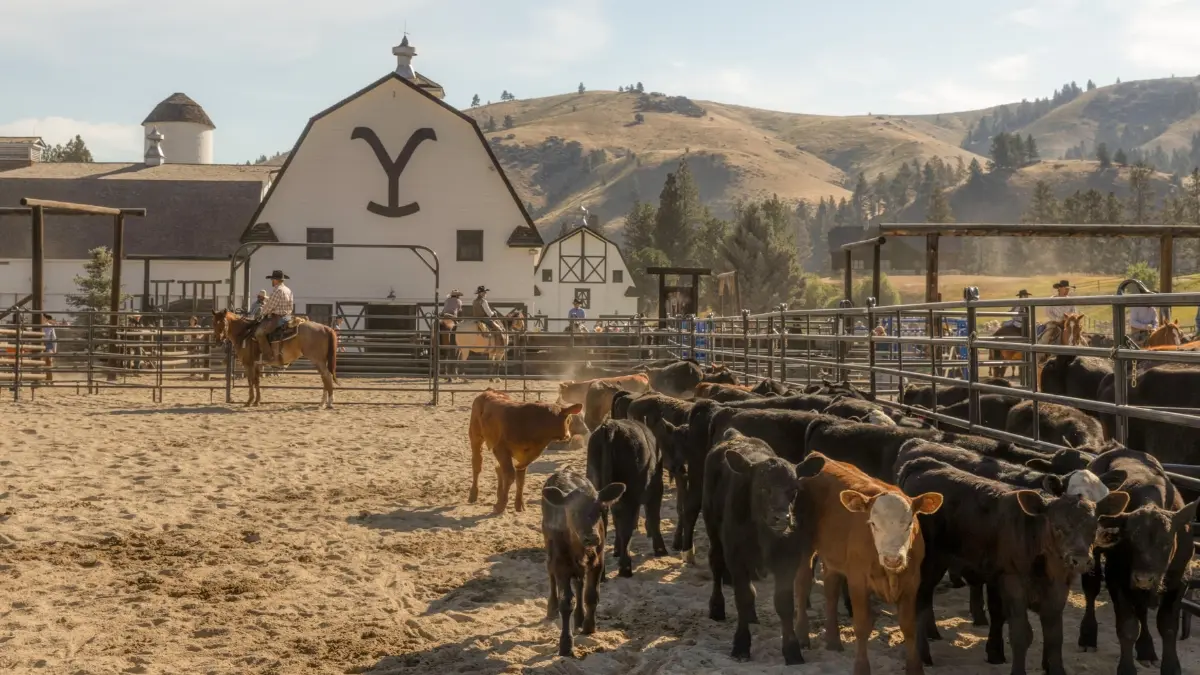

The ‘Yellowstone‘ spinoff ‘Dutton Ranch‘ has quickly established itself as the franchise’s emotional gut-punch specialist, and episode 4 may be the most devastating hour it has delivered yet. What began as a promising new chapter for Beth Dutton (Kelly Reilly) and Rip Wheeler (Cole Hauser) in the Texas Hill Country collapsed into ash when their prized Black Angus herd was confirmed to be carrying foot-and-mouth disease, a virus so feared in American agriculture that its name alone sends ranchers into crisis mode.
The disease storyline, introduced in episode 3 and detonated in episode 4, is not just compelling drama. It draws from a very real and very terrifying chapter in livestock history, and the show gets surprisingly close to the science. Here is a breakdown of what foot-and-mouth disease actually is, how accurately ‘Dutton Ranch’ portrayed it, and why the stakes for Beth and Rip feel so grounded in agricultural reality.
How Foot-and-Mouth Disease Entered the Dutton Ranch Story
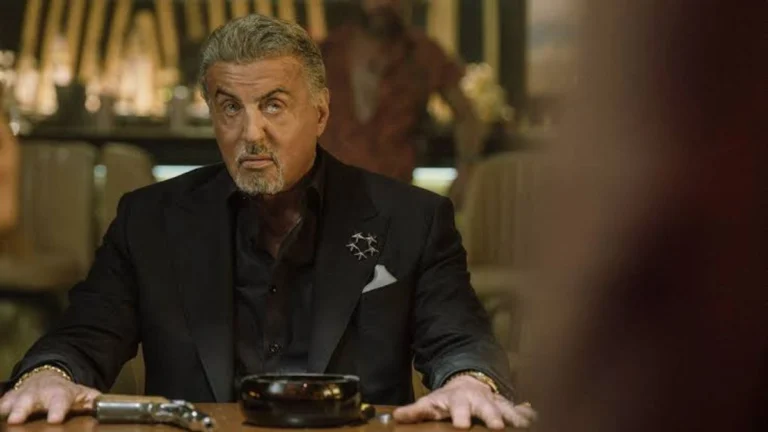
Beth and Rip’s Black Angus cattle are confirmed to be infected by foot-and-mouth disease in ‘Dutton Ranch’ episode 3, as diagnosed by Everett McKinney, played by Ed Harris, the veterinarian for Rio Paloma and Beth’s emerging ally. The spinoff had been sitting at 88 percent on Rotten Tomatoes after its first three episodes, making this a high-profile crisis for a show that fans were already rallying behind.
The investigation into the source quickly pointed toward sabotage. Beth tracked down Dr. Poole, the physician who supposedly conducted the preliminary bloodwork on the bull they purchased at auction, only to discover that Dr. Poole had never heard of the seller, a man named J.R. Simon. The steer’s clean bill of health was a forgery, and its arrival at the ranch had devastating consequences for the entire herd.
In a devastating sequence, Rip dug an enormous grave for the infected herd, corralled the animals into the giant trench, then shot them dead one by one. A desperate Beth made a plea to save one calf, but Rip told her it was too late for all of them. Fans described the scene as brutally dark and emotionally overwhelming, with one Reddit user writing that the episode was better than anything from the original ‘Yellowstone’ run.
The Real Science Behind Foot-and-Mouth Disease
Foot-and-mouth disease is a highly infectious virus that affects cattle as well as goats, sheep, pigs, water buffalo, and other even-toed ungulates. FMD causes fever and blisters in the mouth and on the hooves. It does not affect horses, dogs, or cats, and it does not make people sick. It is also not considered a food safety concern.
Foot-and-mouth disease is considered to be the most economically devastating livestock disease in the world, representing a worst-case scenario because of the variety of species involved, the rapid spread, and the difficulty in controlling outbreaks.
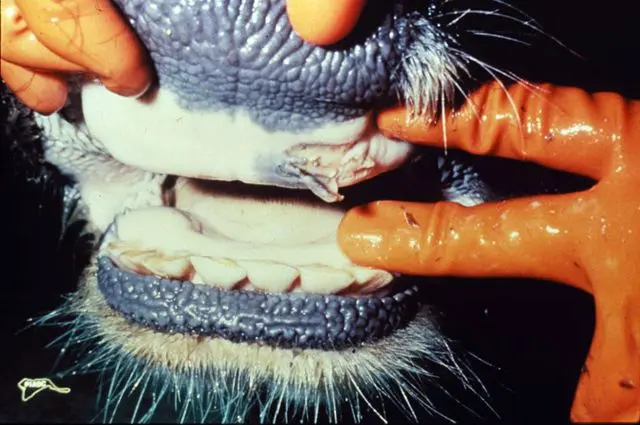
When an animal becomes infected, it runs a high fever and develops blisters around the mouth, tongue, and hooves. The animal stops eating because of the pain, loses significant weight, and dairy cattle may never return to the production levels they achieved before the disease.
Because the virus can survive for weeks to months in the environment, buildings and equipment must be thoroughly cleaned and disinfected, and the premises left uninhabited for several months after an outbreak. The virus can enter the host through inhalation, ingestion, or skin wounds and mucous membranes, and pigs can exhale a thousandfold more virus than cattle, making their proximity to other livestock especially dangerous.
What ‘Dutton Ranch’ Got Right and Where It Stretched the Truth
The show leans hard into the catastrophic framing of FMD, and on several counts it is entirely justified. The United States has maintained its status as FMD-free without vaccination since 1929, as classified by the World Organisation for Animal Health. North America has remained largely free of the disease because of a rigorous surveillance system, making any outbreak in Texas a scenario with enormous real-world implications for trade and agriculture.
As Rip notes in the episode, North America has been free of the disease for years, and animals can survive it, but recovery takes weeks, meaning a devastating loss in production for ranching businesses. That detail is accurate. However, the show’s decision to have Rip immediately shoot the entire herd has drawn some scrutiny.
One reviewer who consulted USDA and NIH guidance on the disease noted that FMD is not fatal in adult animals, there is no cure but infected animals do eventually recover, and that you can eat the meat and drink the milk of infected animals, raising the question of whether the mass culling was quite as urgent as the show presented it.
Still, the show is not entirely wrong. The 2001 FMD outbreak in Great Britain resulted in the slaughter of more than six million animals and an estimated economic loss of 20 billion dollars. Mass culling is a recognized and widely used response to FMD outbreaks globally, and with the herd already fully infected, Rip’s instinct to contain the spread at any cost reflects real agricultural protocol.
The Economic Devastation Behind the Drama
What makes the FMD storyline so effective as narrative fuel is that the financial stakes are completely authentic. The infected cows represented an existential threat to Beth and Rip’s livelihood, as the couple was just beginning to build their beef wholesale business, with Beth securing a deal to distribute Dutton Ranch beef at one of Dallas’ top steakhouses.
To prevent the disease from spreading further, Rip had to kill the entire Dutton Ranch herd, wiping out the historic lineage that the Edwards Ranch had stewarded for generations before them.
The existing North American FMD vaccine bank inventory is insufficient for anything beyond a very small, localized outbreak in the United States, and the current supply could only vaccinate about 14 percent of cattle in Texas.
That sobering real-world detail makes the show’s scenario feel less like a TV plot device and more like a plausible nightmare for any rancher operating in the region. The writers clearly did their homework, and the result is a storyline that hits harder because it is grounded in a genuine agricultural threat that American farmers and policymakers have been quietly worried about for decades.
Beth and Rip’s Future After the Herd Is Gone
The opening scenes of episode 4 confirmed that foot-and-mouth disease had infected the entire herd, wiping away Beth’s big win at the high-end Dallas hotel in an instant and leaving the couple wondering how they will survive. Every cow showed red eyes and a frothy white mouth, and the team of Beth, Rip, Azul, and Zachariah was left with no choice but to put the animals down.
Fans described it as a death sentence not just for the cattle, but possibly for the dreams Beth and Rip carried with them from Montana. Where the story goes from here is the central question of the back half of the season, with the forged health certificate pointing toward an organized effort to destroy the Dutton Ranch before it could get off the ground.
The FMD arc transforms what could have been a simple ranching setback into something far more sinister, and it gives the show a villain-shaped shadow lurking behind what looked like an act of God.
With the herd gone and the mystery of J.R. Simon still unresolved, the question now burning through the fan community is whether Beth and Rip will get justice for whoever planted that infected bull in their auction lot — and what a revenge-minded Beth Dutton looks like when the enemy is not just a rival rancher but someone who weaponized science against everything she loves.