Does Mary Actually Escape ‘Backrooms’? A24’s Unsettling Ending Unpacked

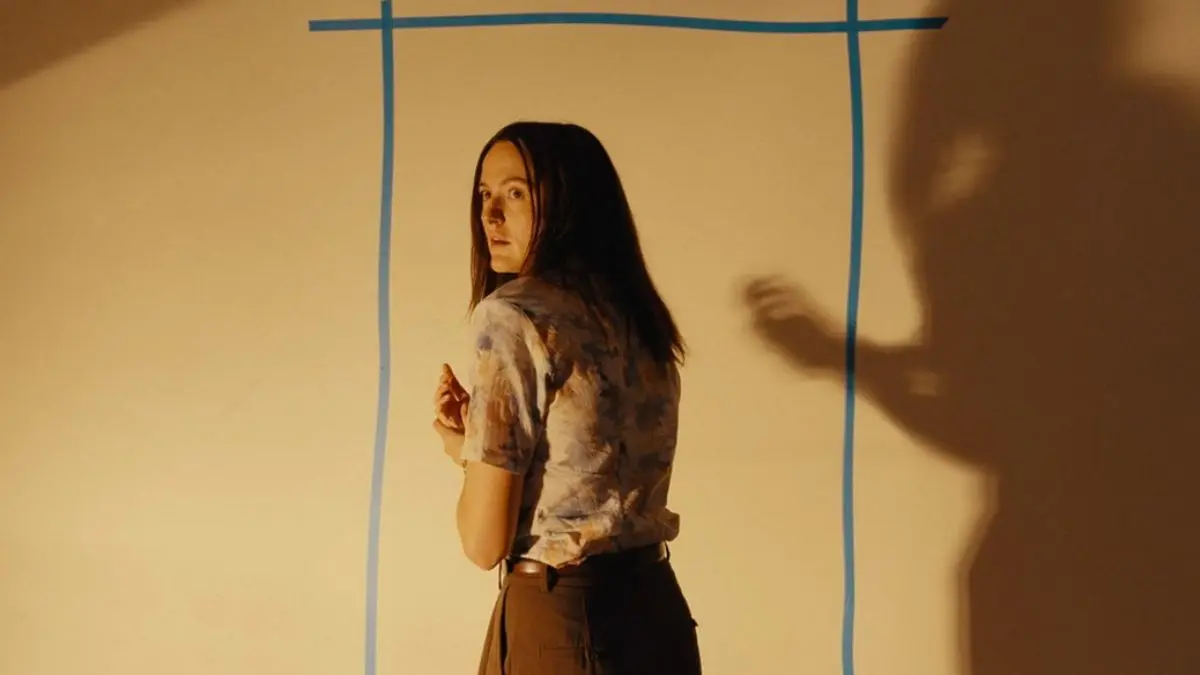

The question haunting audiences walking out of A24’s new horror hit is deceptively simple. Did Dr. Mary Kline make it out, or did she never really leave at all? ‘Backrooms,’ the theatrical debut from 20-year-old director Kane Parsons, has become one of the most discussed films of the year precisely because it refuses to hand viewers a clean answer.
The surreal plot follows Clark, a furniture store owner who finds a secret doorway leading to a seemingly endless series of nondescript rooms, and once he goes missing, his therapist Dr. Mary Kline enters the Backrooms to find him, even as her own reality begins to bend. What happens to Mary by the final frame is the film’s most debated mystery, and with good reason.
Mary’s Escape and What It Actually Cost Her
A big chase sequence culminates with Mary beating back the creature known as Captain Clark using a piece of cement she pocketed from the driveway of her childhood home, a remnant of her own trauma, before she escapes down a narrow passageway the entity cannot fit through. It is a visceral, hard-won exit that feels earned. But the film immediately undercuts any relief.
Following her escape, she falls directly into the hands of a group of Async scientists, who take her back to their facility. Freedom from one labyrinth delivers her straight into another kind of captivity, this one institutional and clinical.
Mary did escape and return to the real world, but because she entered the Complex, a copy of her is left inside of it forever, a literal manifestation of the film’s metaphors about getting trapped inside childhood trauma. This is where ‘Backrooms’ becomes something more than a creature feature.
The ending is less about actually solving a mystery and more about showing how impossible it is to ever fully escape the things that truly haunt us. For a film rooted in internet folklore, that is a remarkably grounded emotional thesis.
The Real Mary vs. The Backrooms Duplicate
Mary is immediately taken into the custody of the ASYNC Research Institute after her escape, and the film doesn’t end there. What follows is the sequence that has sent audiences into full theorizing mode across Reddit and social media.
The final image the audience sees is a distorted, multi-faced version of Mary similar to the hideous sub-humans that acted as Clark’s companions during his time in the Backrooms, which naturally leaves the ending ambiguous as to whether Mary actually escaped or whether the entire sequence was a fabrication in the mind of her distorted copy.
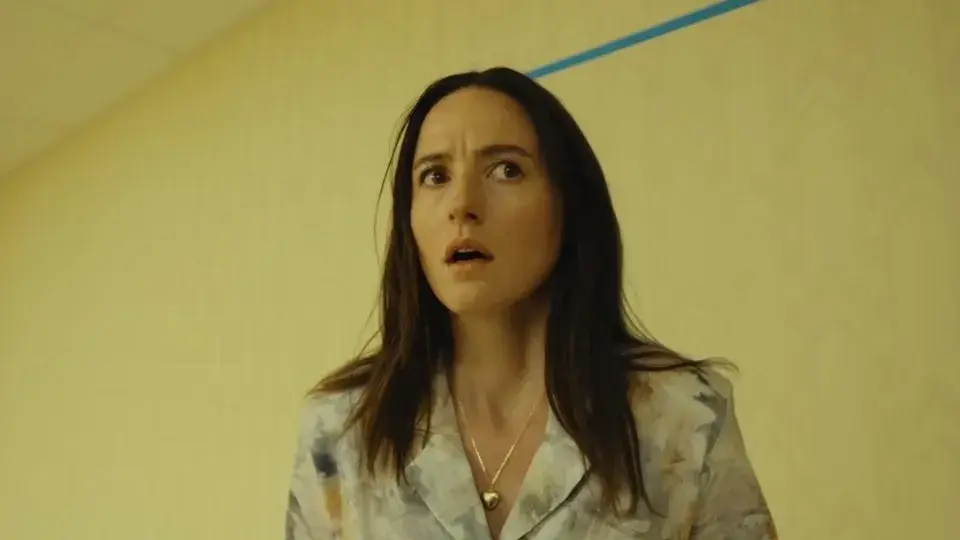
The first possibility is that Mary has escaped successfully, and under this reading, the woman seen talking to Phil is the real Mary. The counterargument is darker and considerably more unsettling.
Based on the scenes showing Phil in the real world living a seemingly normal life, it seems as though Mary did in fact escape, and the final image of her copy is intended to be a demonstration of how the Backrooms work. The film offers this as its most generous reading, though it stops well short of confirming it.
What Director Kane Parsons Has Said
Kane Parsons, who became the youngest director in A24 history at 22 years old, told Polygon in May 2026 that he was hesitant to explain the ending, fearing his interpretation would be taken so seriously. It is a position that has both frustrated and delighted fans in equal measure.
Parsons didn’t confirm who or what is in control of the Backrooms, noting it was a revelation he had to protect for the future, adding that he is averse to explaining the events in the work he does. The implication of a sequel, or at least a continuing mythology, is hard to miss.
He added that his audience loves to defer to his word over their own interpretations, suggesting that withholding his reading is itself a creative choice meant to preserve the viewer’s experience. Whether that lands as artistically principled or deliberately evasive likely depends on how much you enjoyed the ride getting there.
The Childhood Trauma Underneath the Horror
While Clark’s story drives most of the film, ‘Backrooms’ is also arguably just as interested in Mary’s past, repeatedly returning to memories from her childhood, including scenes of her watching her former home being demolished and her careful attention to a concrete handprint left behind by her and her mother.
Mary grew up in a house controlled by her mother’s severe mental health struggles, where the windows were covered, they were isolated from the world outside, and Mary was rarely allowed to leave, making much of her childhood a kind of imprisonment. The Backrooms, for her, is not an alien environment. It mirrors something she has already survived.
The mural Mary discovers inside the Backrooms, depicting a giant monster and a person escaping through a window above them, seems to be the metaphorical window her approach to therapy was based around, which Clark had found before her. The dimension is not just a maze. It is a psychological echo chamber built from the fears of whoever enters.
A Record-Breaking Debut That Has Earned Its Ambiguity
The cultural weight behind this ending is inseparable from the film’s staggering commercial success. ‘Backrooms’ earned $38 million domestic on opening day from 3,442 theaters and is projected to gross between $85 million and $90 million through the weekend, more than triple the previous A24 record set by Alex Garland’s ‘Civil War’ in 2024.
The film only cost $10 million to produce, making it a massive profit for A24. For a slow-burn psychological horror built around a question that never gets a definitive answer, those numbers are extraordinary.
The film holds an 88% score on Rotten Tomatoes from critics and a generally favorable reception at Metacritic with a score of 76%. Audiences have clearly responded to the ambiguity rather than recoiling from it, which speaks to how well Parsons has calibrated the tension between resolution and mystery.
‘Backrooms’ ultimately argues that escape is not the same as freedom, and that the most dangerous labyrinths are the ones we carry inside ourselves. Whether the Mary walking out of the ASYNC facility is the real one or a copy shaped by the dimension, she is a woman defined by what she survived, not by whether anyone can verify the survival.
So after sitting with that final image of a distorted Mary still trapped inside the Complex, do you believe the woman who walked out of the Backrooms is the real Dr. Kline, or has the film already replaced her without anyone noticing?