Did Nolan’s ‘The Odyssey’ Get Ancient Greeks Right? The Casting Debate Explained

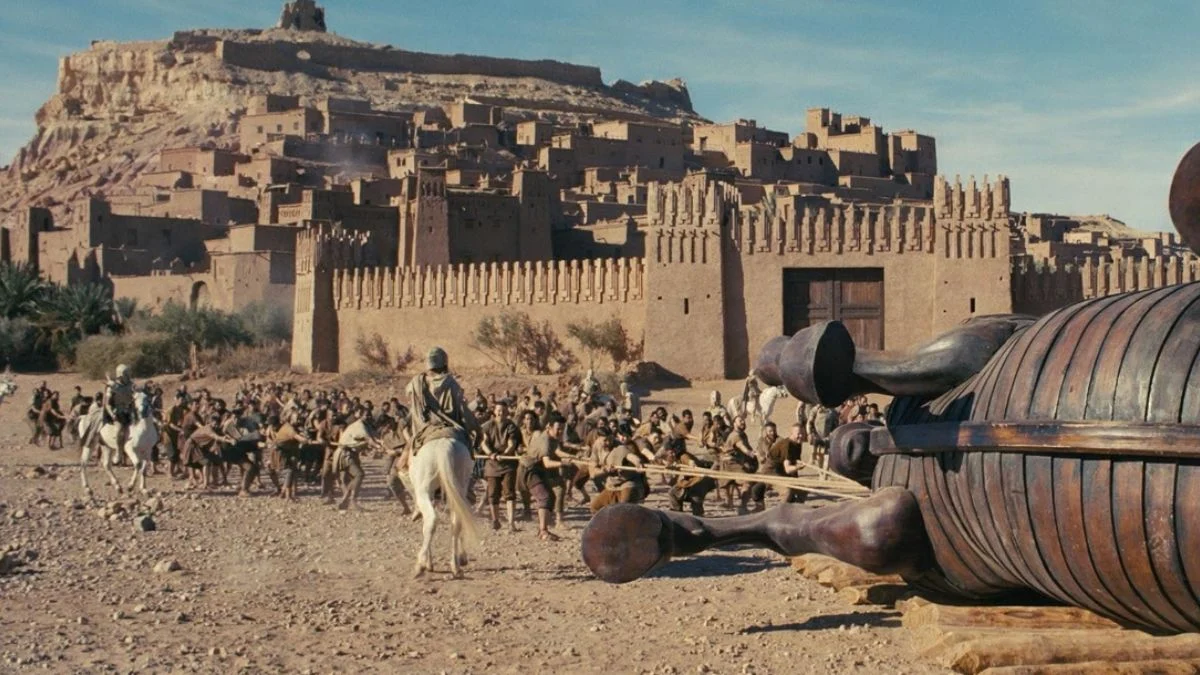

Christopher Nolan’s ‘The Odyssey‘ has barely hit theaters and it’s already sparked one of the messiest historical accuracy debates in recent blockbuster memory. Between casting choices, costume design, and modern dialogue, fans and scholars alike are asking the same question, did Nolan actually capture what ancient Greeks looked like, or did he take creative liberties that misrepresent the era entirely.
The answer, according to historians and classicists who’ve weighed in, is more complicated than a simple yes or no. The film stars Matt Damon as Odysseus, the Greek king of Ithaca, alongside Anne Hathaway as Penelope, with an ensemble that includes Tom Holland, Robert Pattinson, Lupita Nyong’o, Samantha Morton, Zendaya, and Charlize Theron. That cast list is exactly where the controversy begins.
The Casting Controversy Around ‘The Odyssey’
Lupita Nyong’o was cast as Helen of Troy and Clytemnestra, while Zendaya plays Athena and Charlize Theron takes on Calypso. For a story rooted in Bronze Age Greece, some viewers expected a cast that reflected Mediterranean or Greek heritage more directly.
Over the course of production, Greek and Greek Cypriot media platforms wrote open letters to Nolan’s team and to Hollywood, arguing that Greek people had not vanished and remained a living culture whose story deserved representation. That sentiment escalated into a broader public letter campaign.
An open letter published on Greek City Times saw modern day Greeks denounce what they viewed as a lack of authentic Greek representation in the film. The letter specifically asked that Greek stories not render Greek people invisible within their own narratives.
The backlash intensified further once social media got involved. Elon Musk publicly commented on the casting controversy, and one user claimed they had planned to support the film until the casting decisions were announced. That kind of high profile pile on turned a casting choice into a full blown culture war flashpoint.
What Did Ancient Greeks Look Like? Here’s What Historians Actually Say
Here’s where things get genuinely interesting. Multiple classicists have pushed back on the idea that ancient Greece was some kind of racially uniform society.
Classicist Joel Christensen, a Homer scholar at the CUNY Graduate Center, pointed out that the Iliad and Odyssey emerged from Ionian Greek communities along the coast of Asia Minor, a region deeply connected to Phoenician traders, Egyptians, Lydians, and other Mediterranean and Near Eastern civilizations. According to Christensen, the audiences who first heard these epics performed came from across the Mediterranean world, not from an isolated, homogeneous bubble.

There’s also a historical wrinkle that keeps getting cited in Nyong’o’s defense. Herodotus, considered the definitive historian of ancient Greece, described Ethiopians as the most beautiful people in the world, which some point to as evidence against the idea of a strictly white ancient Mediterranean. It’s a detail that complicates the narrative that ‘The Odyssey’ cast is somehow a modern invention layered onto ancient material.
Even the physical descriptions in Homer’s original text are murkier than people assume. Homeric Greek color terms don’t map cleanly onto modern color categories, and the poems famously describe the ocean as wine dark rather than blue, since ancient Greek lacked a dedicated word for that color. The term xanthos, often translated as blonde or fair, is used to describe Achilles only twice in the entire Iliad, both times in moments of grief or rage, which suggests it wasn’t functioning as a straightforward physical descriptor. That’s a pretty significant wrinkle for anyone claiming Homer gives us a clear physical blueprint for these characters.
Historical Accuracy Beyond the Casting Debate
The casting isn’t the only place where ‘The Odyssey’ has taken heat for accuracy. The costume design has drawn just as much scrutiny from historians and fans.
Odysseus’s costume, particularly a Corinthian helmet with a red plume, was labeled historically inaccurate by various commentators, both in terms of what Odysseus would have actually worn and what’s described in the Iliad. Critics noted the armor leaned more into cinematic tradition than archaeological record.
The ships haven’t fared much better in the accuracy department. A modern replica Viking longship called Draken Harald Hårfagre was used in the film, despite the fact that such ships wouldn’t have existed until roughly two millennia after the events the Odyssey describes. For a film seemingly aiming for grounded realism, that’s a fairly glaring anachronism.
Even the dialogue has become a lightning rod. Tom Holland’s Telemachus uses the word dad in the film, which struck many viewers as jarringly modern, though Emily Wilson’s Odyssey translation notes that ancient Greek did have less formal terms for father, giving Nolan some linguistic wiggle room. Nolan himself has defended these choices as intentional risk taking rather than sloppiness.
Nolan’s Response to the Backlash
Nolan hasn’t stayed silent on any of this, and his reasoning offers some insight into how he’s approaching the material.
Nolan told Time magazine he cast Travis Scott as a rapping bard figure because he wanted to honor the idea that the Odyssey’s story was originally handed down as oral poetry, which he compared to rap as an art form. It’s an unconventional comparison, but it frames his casting philosophy as thematic rather than purely aesthetic.
On Amy Poehler’s podcast Good Hang, Nolan explained that he learned while making his Batman trilogy that audiences want a filmmaker’s most sincere attempt to honor the source material, while still delivering something that feels like the director’s own interpretation. That’s essentially Nolan’s thesis for the entire project, honoring Homer while still making the story his own.
Nolan has said he sees the modern sounding dialogue as a calculated risk aimed at giving the language emotional rather than purely intellectual meaning for audiences. Whether that gamble pays off critically is still being sorted out, but it’s clear the choices weren’t accidental.
So did Nolan get ancient Greece right. The honest answer is that he blended documented historical fluidity in the ancient Mediterranean with some clear cinematic anachronisms, and reasonable people are landing in very different places on whether that mix works. Now that ‘The Odyssey’ is finally in theaters, which side of this debate are you on, the historians defending a more complex ancient world or the critics who wanted a stricter adherence to Homer’s text?