Did Odysseus Really Cheat on Penelope in ‘The Odyssey,’ and How Might Nolan Handle It


Homer’s ‘Odyssey‘ has survived thousands of years precisely because it refuses to give its hero a clean moral record, and one question keeps resurfacing every time a new adaptation gets announced. Did Odysseus actually cheat on his wife Penelope during his ten year journey home, and if so, how faithful will Christopher Nolan’s new film stay to that uncomfortable detail.
With Nolan’s star studded take on the epic poem now arriving in theaters, fans are digging back into the source material to separate myth from assumption before they see how the director chooses to frame it.
Odysseus and Penelope in Homer’s Original Poem
In the poem, Odysseus spends years detained by two immortal women, the nymph Calypso and the sorceress Circe, both of whom keep him from returning home to his wife. Odysseus is introduced midway through the narrative, stranded on the island of Ogygia as a captive of the nymph Calypso, and he later falls under the spell of a powerful sorceress named Circe during his travels.
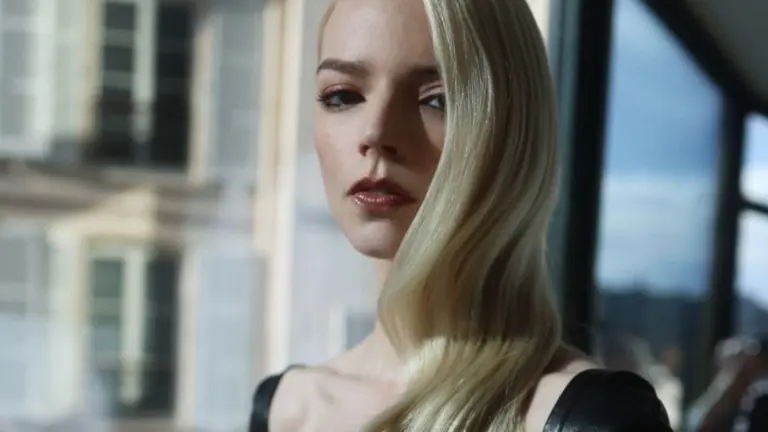
Calypso is not simply a captor in the text, she is described as offering Odysseus something enormous in exchange for staying. Theron plays Calypso, the nymph who keeps Odysseus captive on the island of Ogygia for seven years, offering him immortality if he stays. That detail alone complicates the question of consent and fidelity, since Homer frames Odysseus as physically detained rather than simply choosing to stray.
Circe presents a different kind of entanglement entirely. Circe is the enchantress who lives on the island of Aeaea and turns Odysseus’s men into swine, and she plays a significant role in Homer’s original poem as the figure who transforms his crew into animals before he manages to best her. Classical readers have long debated whether Odysseus’s time with both women counts as infidelity, willing surrender, or survival under duress, and Homer himself never resolves it with a clean verdict.
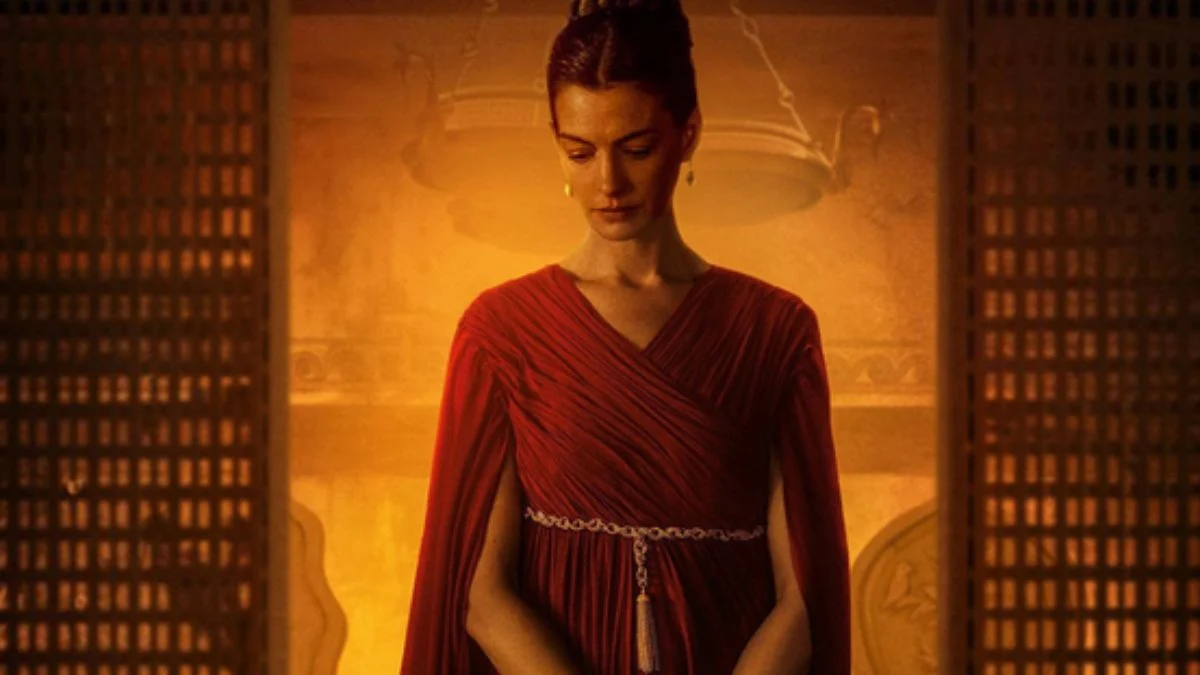
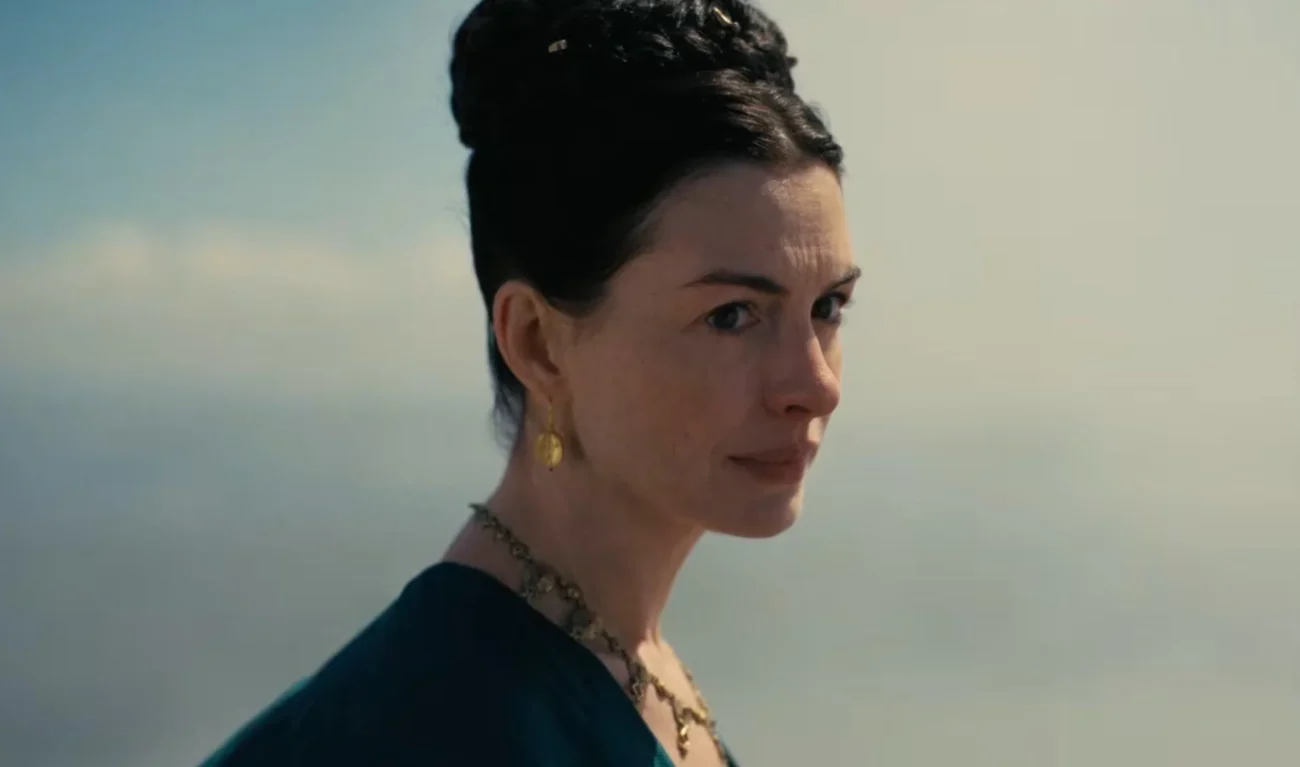
Penelope, meanwhile, is characterized in the poem as the model of enduring loyalty, fending off suitors for years while she waits. Anne Hathaway plays Queen Penelope of Ithaca, Odysseus’s wife and the mother of Telemachus, and she awaits the return of her husband but has to stall suitors who say that her husband is dead and seek to take the crown. That asymmetry, a wife holding the line at home while her husband is entangled with two goddesses abroad, is exactly what keeps this debate alive among modern readers.
Nolan’s Odyssey Adaptation and Its Approach to Circe and Calypso
Nolan’s script does not appear to shy away from these characters, and reporting suggests he is actually expanding their presence rather than trimming it. The film is described as humanizing the goddess and witch Circe to be unsettling yet sympathetic, and complicating the reunion between Helen of Troy and Spartan king Menelaus, showing that Nolan is willing to add emotional texture to relationships the poem leaves ambiguous.
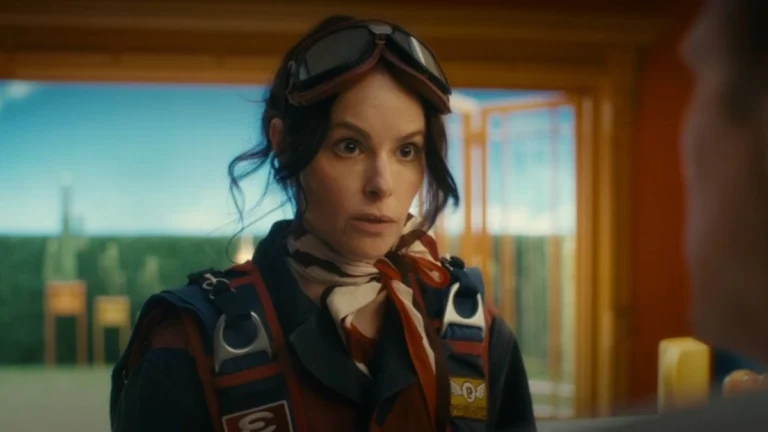
Casting choices reinforce how central these women are to the film’s structure. Samantha Morton plays Circe, a witch and goddess from the island of Aeaea, while Charlize Theron plays Calypso, a nymph from the island of Ogygia who tries to keep Odysseus as her immortal husband. Both actresses bringing that level of prestige to roles that could have been minor subplots suggests Nolan sees them as essential to the emotional stakes of the film, not just obstacles in a travel montage.
Nolan has also spoken about why the poem resonated with him long before he had the resources to adapt it. Nolan recalled seeing a school play of the Odyssey as a child and remembered the Sirens and Odysseus being strapped to the mast, adding that he thinks the story is in all of us, and that when you break down the text you find that all the films he has worked on trace back to it. That comment hints at a filmmaker who sees the poem’s moral complications, including Odysseus’s entanglements, as part of what makes it foundational rather than something to sanitize.
The overall shape of the story remains intact according to early breakdowns of the plot. After being released by the gods, Odysseus endures another shipwreck and washes up on the island of the Phaeacians, where he recounts falling under the spell of a powerful sorceress named Circe and facing constant challenges from the sea god Poseidon before ultimately losing his crew one by one. That framing keeps the Circe and Calypso arcs as narrated flashbacks rather than glossed over asides, which suggests Nolan intends to give them real screen time.
Predictions on How Nolan Might Frame the Fidelity Question
Given how faithfully Nolan seems to be treating the text, there is a strong chance he leans into ambiguity rather than resolving it for the audience. Nolan has a track record of making viewers sit in moral discomfort rather than handing them easy answers, and Circe and Calypso feel primed for that treatment rather than a simplified villain or victim arc.
One theory worth floating is that Nolan uses his trademark nonlinear editing to intercut Penelope’s loyalty at home with Odysseus’s captivity abroad, forcing the audience to feel the imbalance between the two spouses in real time rather than through a tidy flashback structure. That kind of crosscutting would make the fidelity question impossible to ignore without ever needing a single line of dialogue to state it outright.
Another possibility is that Nolan uses Circe’s more sympathetic portrayal to blur the line between manipulation and mutual attraction, making it harder for audiences to simply write off Odysseus’s actions as coerced. If Circe genuinely cares for him rather than acting purely as a predator, that would push the film toward a messier and more human reading of the myth instead of a black and white one.
It is also plausible Nolan uses Penelope’s own suitor storyline as a mirror, letting her navigate temptation and pressure at home while Odysseus faces his own abroad, so the film ultimately asks whether either spouse truly had a choice in their circumstances. That kind of structural symmetry would fit the way Nolan tends to build his films around parallel timelines and would give Penelope far more agency than the poem sometimes affords her.
Whichever direction the film ultimately takes, it seems unlikely Nolan will let audiences leave the theater with a simple answer to whether Odysseus was unfaithful or simply a man trapped by gods far more powerful than himself.
How do you think Nolan will handle Odysseus and Penelope’s marriage once you see the Circe and Calypso storylines play out on screen?