Christopher Nolan’s ‘The Odyssey’ Ending Explained, And Why Odysseus Might Not Have Survived His Own Homecoming

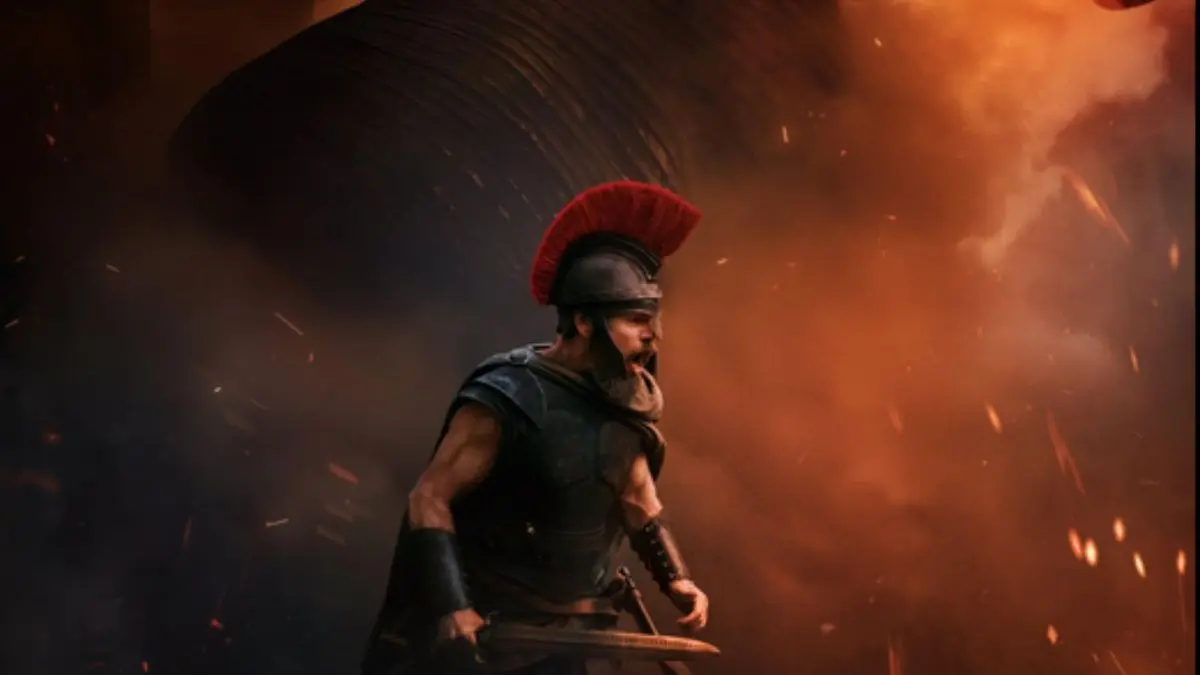

Ten years is a long time to be away from home, and Christopher Nolan clearly wanted audiences to feel every second of that absence. His new adaptation of ‘The Odyssey’ finally landed in theaters worldwide this week, closing out a marketing rollout that had fans dissecting trailers for months.
The film reimagines Homer’s ancient poem through Nolan’s signature nonlinear lens, jumping between Telemachus growing up fatherless in Ithaca and Odysseus battling monsters, gods, and his own guilt across the sea. Matt Damon leads as the weary king, with Anne Hathaway as Penelope and Tom Holland as his son Telemachus.
By the time the credits roll, though, the story does not end with a tidy bow. Odysseus finally makes it home, but the film leaves his fate deliberately murky, and that ambiguity is the detail everyone is talking about. After being counseled by the shade of Agamemnon in the underworld to enter his own palace in disguise, Odysseus returns to Ithaca to find it overrun by suitors, the most dangerous of them being Robert Pattinson’s Antinous, who has already plotted to have Telemachus killed.
Posing as a beggar, Odysseus quietly reconnects with his old ally Eumaeus and secretly reveals himself to Telemachus before the assassination can happen. In a devastating scene, he privately confesses to Penelope, still not recognizing him, his guilt over breaking Zeus’s law with the Trojan Horse, describing how that act of deception fractured something sacred that held the old order of civilization together.
Penelope, testing the crowd of suitors, sets a challenge only her true husband could complete, stringing Odysseus’s old hunting bow and firing an arrow clean through twelve axe heads. Every suitor fails, until the disguised beggar steps forward, completes the feat, and reveals exactly who he is.
What follows is a brutal, sealed room battle. Odysseus kills Antinous and Corey Hawkins’s Polybus, while Telemachus cuts down the traitorous Melanthius. The remaining suitors surrender, and the disloyal maidservant Melantho, played by Mia Goth, is executed for her betrayal. It is a decisive victory, but Odysseus does not walk away from it clean, taking several arrows to the back that leave him badly wounded.
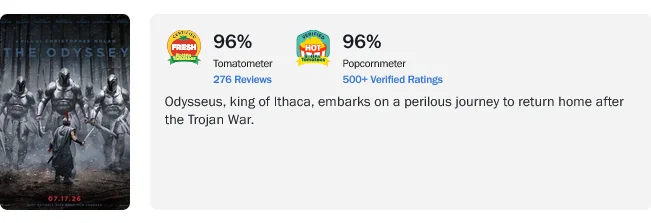
This is where Nolan departs most sharply from Homer’s original text. The poem gives Odysseus a clear, triumphant homecoming, but the film refuses to confirm whether he actually survives his injuries. Rather than settling into the throne he fought so hard to reclaim, Odysseus chooses to hand his kingdom over to Telemachus and sails away into exile with Penelope, seeking some kind of peace after years of violence and regret.
Zendaya’s Athena adds another layer to that unresolved feeling. Her presence throughout the film is later tied to a Trojan priestess whose death Odysseus witnessed as Troy burned, recasting the goddess who has guided him the entire journey as a manifestation of his own unresolved guilt.
Critics reviewing the film have framed this ending as intentional, describing ‘The Odyssey’ as less interested in a clean victory lap than in showing a man who cannot fully outrun what he did to get home. That reading tracks with Nolan’s broader filmography, where triumph and cost tend to arrive in the same breath, much like they did in ‘Oppenheimer.’
What do you think happened to Odysseus at the end of The Odyssey?
Whether Odysseus lives, dies, or simply chooses to disappear into the horizon is left for the audience to decide, and that open-endedness seems to be exactly the point. It turns a nearly three-thousand-year-old story into something that still feels unsettled.
Have something to add? Let us know in the comments!