Elon Musk Finally Unleashes His AI-Generated ‘Odyssey’, but Only a Fraction of the Promised Epic Has Arrived

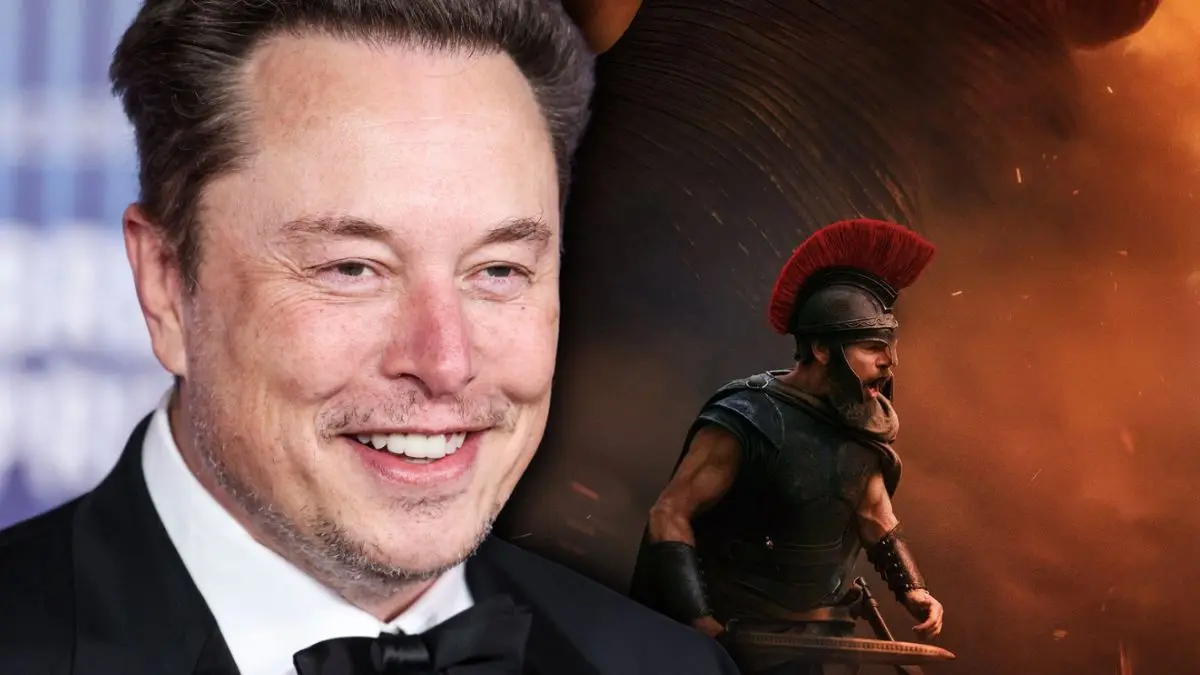

Few Hollywood feuds this year have been as strange as the one between Elon Musk and Christopher Nolan. Months before Nolan’s ‘The Odyssey’ hit theaters, Musk was already criticizing the film’s casting choices, and the argument only grew louder once the movie became a hit. The tech mogul didn’t just complain, either. He promised to make his own version.
That promise came in July, after Nolan’s film had opened to huge numbers. Musk said his AI tool, Grok Imagine, would create a full-length movie of Homer’s epic by the end of the year, describing it as historically accurate and true to the art of Homer. He attached a three-minute AI-generated clip to the post, and the internet reacted with a mix of mockery, curiosity and skepticism.
Now the first piece of that pledge has finally appeared. Grok Imagine released the first AI-generated episode of an ‘Odyssey’ series on Friday, October 23, running just over 7 minutes and posted in 4K. Musk shared it later that night, which means the tech mogul has only partially followed through on his claim.
The company credited the project as a creative collaboration with Wonder Studios and director Dev Walker, both of which specialize in AI filmmaking. There was no further statement from Musk or the company about what comes next. The company also invited viewers to ask for a full breakdown of how the episode was made.
Watch Episode 1 of our Odyssey series made with Grok Imagine. Let us know in the comments if you’d like a full breakdown of how it was done! Creative collaboration with @WonderStudiosX and director Dev Walker @glumlot_ https://t.co/xpgpkqSCpq
— Grok Imagine (@imagine) October 23, 2026
The installment covers the Greeks’ arrival at Troy. According to reports, Odysseus is the only named character throughout the runtime, which leaves viewers unfamiliar with the source material unable to identify others such as Palamedes. The release was also criticized for featuring an exclusively white cast of characters.
That detail stands out because Musk’s earlier attacks on Nolan focused heavily on casting. He had repeatedly criticized the film’s casting of Elliot Page as Achilles’ Ghost and Lupita Nyong’o as Helen of Troy. At one point he said Nolan had lost his integrity, and he later replied that he was willing to bankroll a live-action version directed by Mel Gibson after a user suggested it.
The gap between the pledge and the delivery is hard to ignore. A full-length film was promised before the end of 2026, but the company has not said how many episodes are planned or when more will arrive. Seven minutes is a tiny fraction of a feature, and there are only about 2 months left in the year.
There are practical questions as well. While AI can already generate realistic scenes lasting a few seconds, keeping characters, performances and visual style consistent across an entire feature remains one of the biggest hurdles in the field. So far, xAI has not demonstrated a publicly available system capable of generating a full-length film.
The phrase at the center of Musk’s pitch has drawn plenty of ridicule. Homer’s poem is a story filled with gods, monsters and a cyclops, and critics pointed out that it is hard to apply a historical accuracy test to a work of myth. Several online commenters also noted that an AI-generated cast would be no more Greek than the live-action one.
Nolan has dismissed the pre-release backlash, saying those conversations are irrelevant because no one having them knows what the film actually is yet. The audience seems to have agreed. His movie has now topped $600M at the US box office and reached about $1.79B worldwide, becoming the highest-grossing R-rated film of all time.
The release also lands at a sensitive moment for AI in entertainment. Artists, writers and actors have raised concerns about how generative tools are being used, and a high-profile project from one of the world’s most famous tech figures is likely to get a lot of attention. Supporters see it as an experiment in a new kind of storytelling, while critics see it as a shortcut that undercuts human creativity.
For now, the episode serves as both a proof of concept and a test of Musk’s patience with his own deadline. Viewers will have to decide whether the project feels like a genuine creative step or a publicity move aimed at a rival. Either way, the debate has already given Nolan’s blockbuster another round of headlines.
Whether the rest of the series arrives before the year ends is anyone’s guess. If it does, it will be interesting to see how an AI-generated epic holds up against a film that has already conquered the box office.
Do you think Elon Musk’s Grok can deliver a full-length AI-generated Odyssey by the end of 2026?
Have something to add? Let us know in the comments!