Is ‘Nocturne’ Based on a Book or a True Story? The Origins of Apple TV’s Crime Thriller Series


The chilling allure of the psychological crime thriller continues to hold television audiences in an unrelenting grip. Stories examining the sinister minds of incarcerated killers have captivated viewers for decades, echoing classics like ‘The Silence of the Lambs’. Modern streaming dramas frequently explore the psychological wreckage left by such monsters, charting the steep emotional toll borne by investigators.
When Apple TV premiered ‘Nocturne‘ in October 2026, the 10-episode series instantly immersed audiences in a fog-drenched atmosphere of dread. Starring Liev Schreiber as retired detective Jonah Lynn and Stephen Graham as serial killer Jurek Walter, the narrative tracks an agonizing search for a missing girl after her abducted brother reappears alive. Given the authenticity of the investigation and the horrific specificity of Walter’s crimes, viewers immediately wondered whether the saga was adapted from a novel or pulled from real-life headlines.
The answer provides relief to true crime fans while offering exciting news for avid readers. While ‘Nocturne’ is indeed adapted from acclaimed literature, it is not based on a true story in any capacity. The Apple TV series is a fictional adaptation rooted in the bestselling Scandinavian crime novels crafted by Swedish authors Alexander Ahndoril and Alexandra Coelho Ahndoril under the pen name Lars Kepler.
The Lars Kepler Bestsellers Behind the Series
The foundation of ‘Nocturne’ stems primarily from two novels in the Joona Linna series, ‘The Sandman’ and its sequel ‘Lazarus’. Writing together under the Kepler pseudonym, the husband-and-wife team has sold over 15 million books worldwide across 40 languages. Their gripping books established the duo as leading figures in contemporary crime fiction, making their work prime material for prestige television.
Co-showrunners Rowan Joffé and John Hlavin pulled the central spine of the series from ‘The Sandman’. In the original text, a long-missing captive re-emerges to reveal his sister is still trapped by a mysterious accomplice aiding the imprisoned Walter. The television adaptation preserves this ticking-clock dilemma, though it reimagines the Swedish protagonist Joona Linna as battle-scarred American detective Jonah Lynn.
Why Jurek Walter Is Not a Real Serial Killer
Because Walter’s methodology is so horrifying—he infamously buries victims alive in subterranean coffins with simple breathing straws—many viewers feared the story drew from real cases. However, Walter and his twisted crimes are purely fictional creations designed to test the limits of human endurance. Neither the kidnappings nor the psychiatric ward standoff reflect an actual historical tragedy.
The absence of a real-life foundation is an intentional ethical boundary upheld by the authors. The Ahndoril writing duo has maintained a strict rule against adapting real murders, emphasizing that true crimes involve real victims and grieving families. Instead, the creators synthesized psychological profiling and classic thriller tropes to craft Walter into a terrifying existential adversary.
Translating ‘Nordic Noir’ to Pennsylvania
Adapting the story for an American audience meant moving the action from Stockholm to Fairhaven, Pennsylvania. The show’s creative team recognized that the wooded isolation and overcast skies of the region mirrored the bleak atmosphere of Scandinavian noir. This visual shift allowed the narrative to feel rooted in rural America while retaining the gloomy texture of the source books.
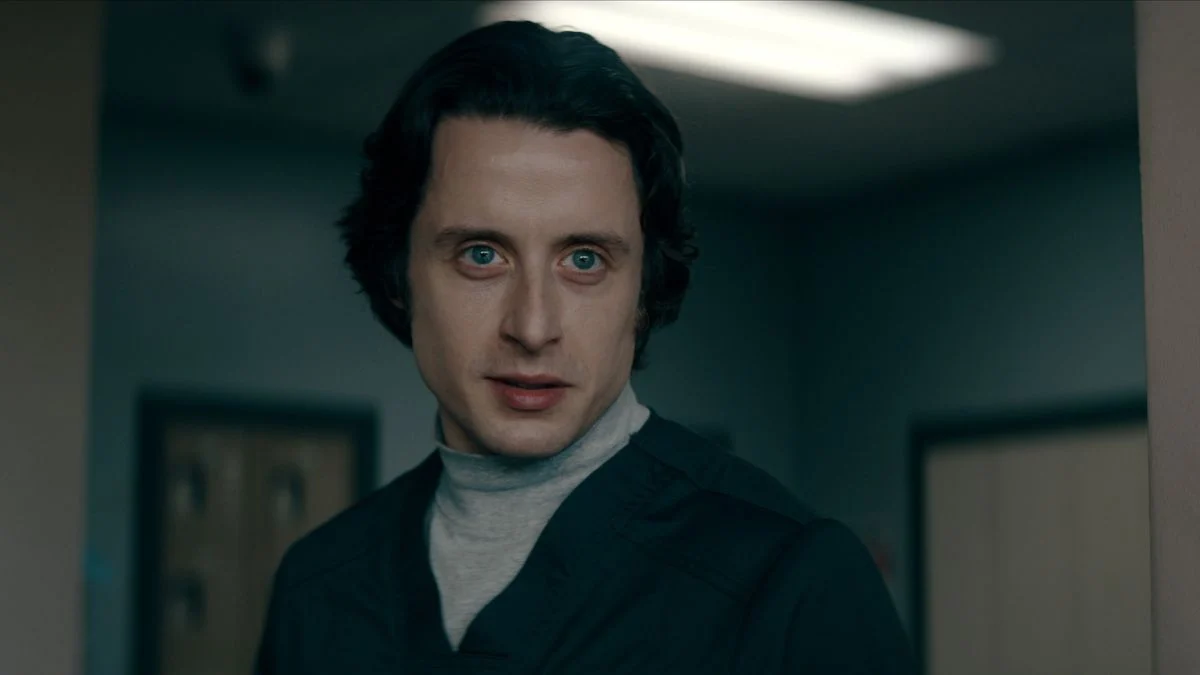
Schreiber, who also serves as an executive producer alongside co-star Zazie Beetz, embraced the regional pivot. Schreiber in an interview with FOX 5 Atlanta remarked, “I love the genre, you know? The whole ‘Nordic Noir’ thing is really fun,” explaining that the team focused on “Finding the American version of that, that bleakness, that solitude…we talked about Maine at one point, and then kind of landed in Western Pennsylvania”.
High Stakes Behind Prison Walls
At the dramatic center of the adaptation is the perilous undercover mission undertaken by FBI Agent Saga Bauer, played by Beetz. In order to extract the location of the missing girl before time runs out, Bauer voluntarily enters the restricted psychiatric ward where Walter is held in permanent solitary confinement. This setup sparks a nerve-shredding game of psychological chess between an undercover agent and a ruthless predator.
The physical separation between the cells created a unique working environment for the lead performers. Reflecting on filming those intense dialogue exchanges through a barrier, Beetz told Screen Rant Plus, “it did feel there is something interesting about having like a scene partner where you like can’t see them… they did feel very intimate and almost almost erotic in a way like intense”.
By combining Kepler’s source material with an American backdrop, ‘Nocturne’ creates an experience grounded in psychological trauma without exploiting real tragedy. The series proves that compelling crime television can evoke authentic dread through purely fictional craft. Viewers can engage with the mystery knowing that while the tension is genuine, the monster remains entirely imaginary.
Have you read the Lars Kepler novels, and what do you think of how ‘Nocturne’ adapted the source material? Leave your thoughts in the comments below!