How League of Legends Built a Fictional Universe That Rivals Marvel and DC

Marvel and DC have spent decades building fictional universes filled with memorable heroes, complicated villains and interconnected stories. But some of today’s most ambitious fantasy worlds aren’t coming from traditional comic book publishers.
They’re coming from video games.
League of Legends, developed by Riot Games, has evolved far beyond its origins as a multiplayer online battle arena. What began as a competitive game has become an expanding fictional universe featuring animated series, comics, music and dozens of characters with detailed backstories.
For comic book fans, the similarities are hard to ignore.
From Competitive Game to Expanding Universe
When League of Legends launched in 2009, its main attraction was competitive gameplay.
Players selected champions with unique abilities and competed in team-based matches. Over time, Riot Games expanded the fictional world surrounding those characters.
The result was Runeterra, a setting filled with rival nations, magical conflicts and complicated relationships.
Characters such as Jinx, Vi, Yasuo and Lux became more than playable champions. They developed identities, motivations and personal histories that could support stories outside the game.
League of Legends also developed a major esports scene, attracting fans who follow professional teams and international tournaments. That competitive ecosystem has generated related coverage, including League of Legends betting resources at Dot Esports, although wagering is separate from the game’s fictional universe and involves financial risks.
For comic enthusiasts, however, the most interesting development is how Riot transformed a roster of game characters into a world capable of supporting multiple storytelling formats.
Arcane Proved Video Game Stories Could Reach Mainstream Audiences
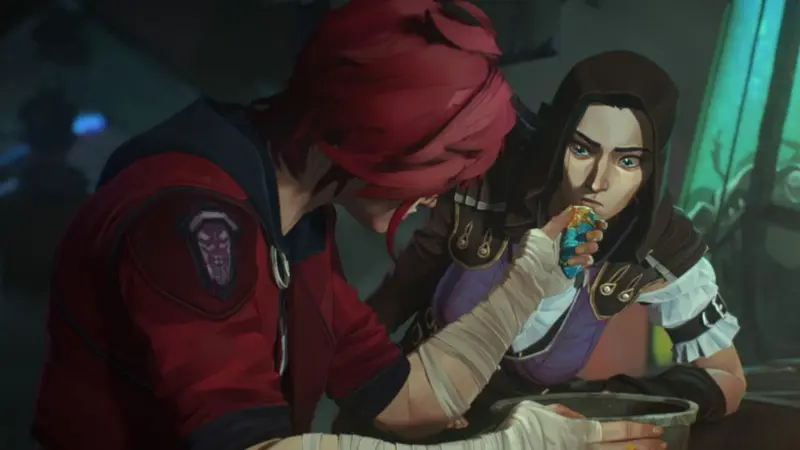
Rather than focusing on competitive gameplay, the series explored the relationship between sisters Vi and Jinx against the backdrop of political conflict between Piltover and Zaun.
Its emotional storytelling, distinctive animation and morally complicated characters attracted audiences beyond the gaming community.
That success resembles what superhero adaptations have achieved for decades.
Many viewers discover Marvel and DC characters through films or television before exploring their comic book origins.
Arcane created a similar entry point for League of Legends.
Someone unfamiliar with the game could enjoy the series without understanding its mechanics.
League of Legends Characters Follow Familiar Comic Book Archetypes
One reason Runeterra works as a storytelling universe is its diverse cast.
Many champions resemble character types familiar to comic book readers.
Jinx is a chaotic antihero whose destructive behaviour conceals a complicated emotional history.
Vi resembles a street-level superhero, relying on physical strength and determination while struggling with personal relationships.
Swain, the calculating ruler of Noxus, shares characteristics with politically ambitious comic book antagonists.
Meanwhile, characters such as Kayle and Morgana explore themes of justice, morality and conflicting interpretations of what is right.
Why flawed characters make better stories
Modern superhero storytelling increasingly focuses on characters who make mistakes.
Readers want more than straightforward battles between good and evil.
They want personal conflict, difficult decisions and believable motivations.
League of Legends uses similar techniques.
Its champions frequently operate in morally ambiguous situations, allowing audiences to sympathise with opposing sides of the same conflict.
That complexity makes Runeterra particularly suitable for comics and animated adaptations.
Riot Games Has Already Experimented With Comics
Riot Games has explored traditional comic storytelling through collaborations with Marvel.
The Ashe: Warmother and Lux comic series expanded the backgrounds of popular League of Legends characters.
These stories allowed readers to explore Runeterra without participating in competitive matches.
The format also provided opportunities for character development that would be difficult to communicate during gameplay.
Comics offer something games cannot
A competitive match prioritises strategy, teamwork and mechanical skill.
There is limited room for lengthy conversations or detailed emotional development.
Comics can slow the pace.
They allow writers to explore relationships, political conflicts and the consequences of characters’ decisions.
For League of Legends, this creates a valuable connection between interactive entertainment and traditional storytelling.
Could Runeterra Become the Next Major Cinematic Universe?
The comparison with Marvel and DC naturally raises a question: could League of Legends develop into a long-running cinematic universe?
Runeterra already contains many of the ingredients.
Its regions have distinct cultures, conflicts and visual identities.
Demacia explores questions surrounding magic and political authority.
Noxus focuses on ambition, conquest and power.
Ionia provides stories involving spiritual traditions and resistance.
Each region could potentially support its own animated series or film.
However, building a successful interconnected universe requires more than introducing additional characters.
The stories must remain accessible to newcomers while rewarding established fans.
Arcane demonstrated that character-driven storytelling can achieve that balance.
What Comic Book Publishers Can Learn From Gaming
League of Legends illustrates how fictional universes can grow through different entertainment formats.
A character might begin in a video game, appear in a comic, feature in an animated series and develop a following through online fan communities.
Marvel and DC have pursued similar cross-media strategies, but gaming adds an interactive dimension.
Players don’t simply watch characters.
They control them, learn their abilities and develop personal attachments through repeated gameplay.
That connection can make subsequent stories feel especially meaningful.
For publishers, the lesson is that compelling characters can travel across formats when their personalities and motivations remain consistent.