‘Gentle Monster’ Review: A Marriage Built on Everything You Never Thought to Check

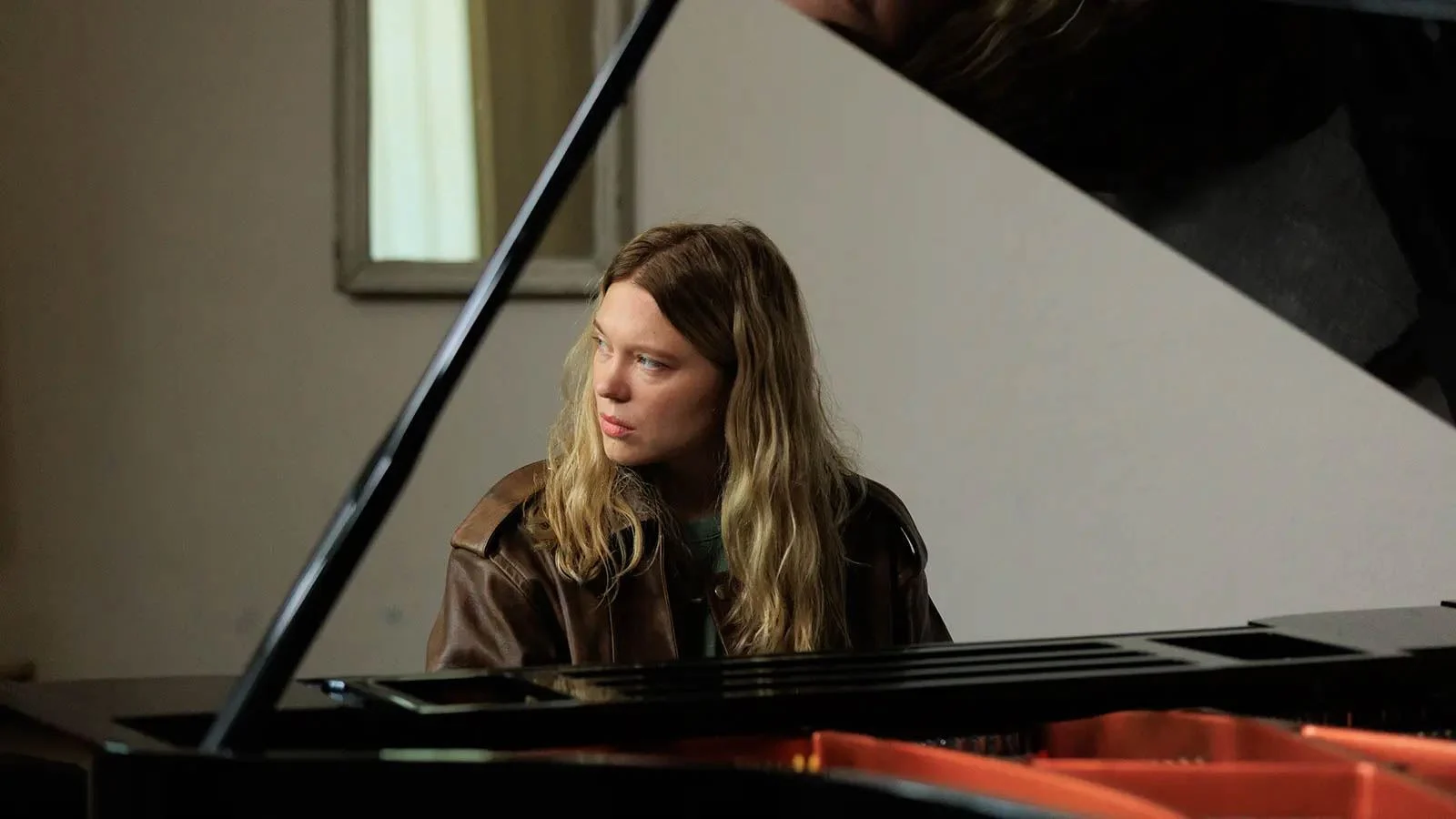
‘Gentle Monster’ opens on a family that looks like a postcard for creative, bohemian living. Lucy Weiss, an experimental musician played by Léa Seydoux, takes apart familiar pop songs at the piano while her husband Philip, played by Laurence Rupp, struggles through a creative burnout. This Netflix drama, a Cannes pickup that runs 114 minutes and lands on the service today, wants you relaxed before it pulls the floor away.
Writer and director Marie Kreutzer arrives here after ‘Corsage’, a production later touched by real scandal when one of its actors was convicted over child sexual abuse images. That history makes the premise feel personal before a single scene plays out. It also raises the stakes for how carefully the film has to tread.
The family leaves the city for the Bavarian countryside with their young son Johnny, played by Malo Blanchet, hoping a quieter life will help Philip recover. Then police arrive with a warrant and haul away his computers. At the station, an investigator named Elsa, played by Jella Haase, tells Lucy what her husband is suspected of, and the film turns into something far more uncomfortable than a domestic drama.
What won me over is how little the film lets Lucy perform her pain. Seydoux plays the shock in flinches, pauses and half formed denials, and the camera stays close on her face as she tries to decide what she can bear to believe. Judith Kaufmann’s cinematography gives the countryside a plain, unvarnished texture, so the horror never arrives dressed up as a thriller.
Rupp deserves just as much credit for refusing to play Philip as a cartoon predator. He is soft, evasive and often pathetic, which makes the earlier trampoline and camcorder scenes curdle in hindsight. The title refers to his online username, and that small reveal lands harder than any music cue could. Catherine Deneuve, as Lucy’s mother Eloise, adds a dry, protective sharpness that cuts through the shock.
The film does stumble when it leaves Lucy behind. Elsa’s home life, where her ailing father harasses his live in nurse, repeats the same idea about excusing the men we love, and it never builds into much more than an echo. It also stretches a story that could have been leaner, and the final stretch plays it a little too safe for a premise this volatile. Lucy is a musician, yet the score never quite gets the room to speak.
Even so, I left ‘Gentle Monster’ shaken and thinking about how little any of us can truly see inside a person we love. Seydoux gives one of the most controlled and quietly devastating performances of her career, and Kreutzer has the discipline to stay with the aftermath rather than the spectacle. The weak subplot and cautious ending keep it from greatness, but this is a serious, haunting piece of work that earns 8 out of 10.
Will you be watching 'Gentle Monster'?
Did ‘Gentle Monster’ hit you as hard as it hit me, and do you think the film should have pushed further in its final act? Tell me in the comments.