5 Things About ‘Memento’ That Made Zero Sense and 5 Things About It That Made Perfect Sense

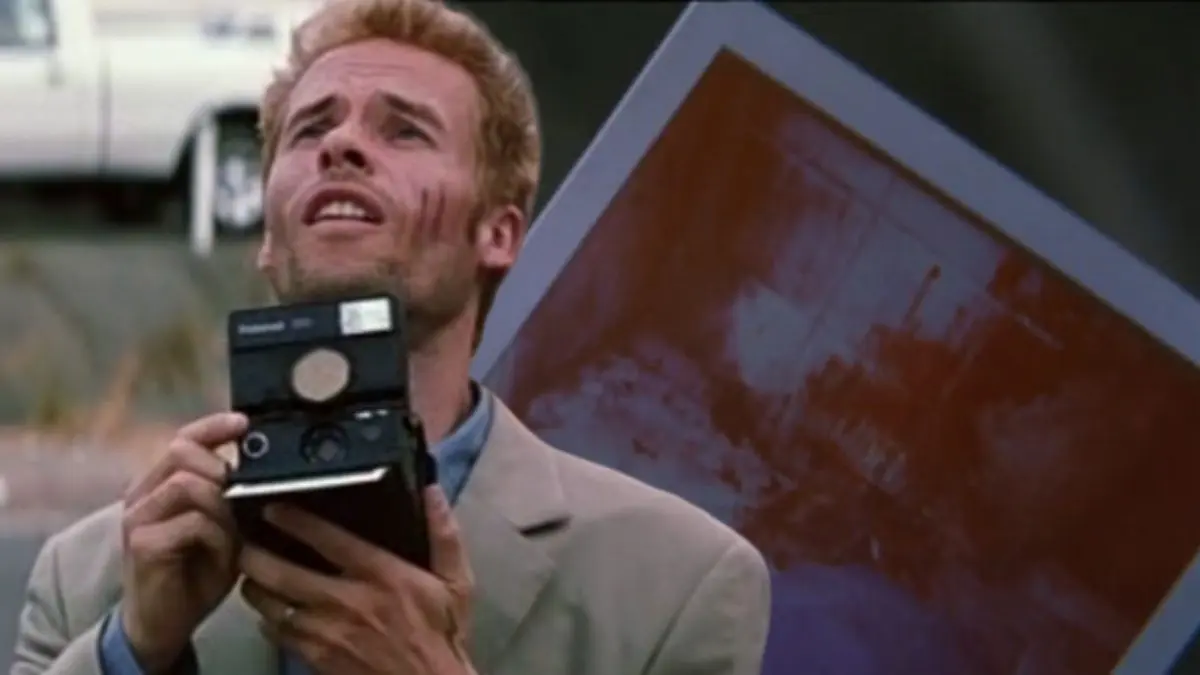

‘Memento’ builds its story in a way that pulls the audience into the same fog that surrounds Leonard Shelby. The movie presents a man who cannot make new memories and then asks viewers to follow a chain of cause and effect that runs in reverse. The result is a puzzle that uses images, labels, and routines to stand in for memory while hiding important information in plain sight.
Some parts of ‘Memento’ line up with known details about anterograde amnesia and with techniques people use to remember what matters. Other parts place characters and events in positions that do not line up with the rules the film sets for Leonard. Here are five things that seemed to break those rules and five that follow them closely.
Zero Sense: Complex actions with a short memory window
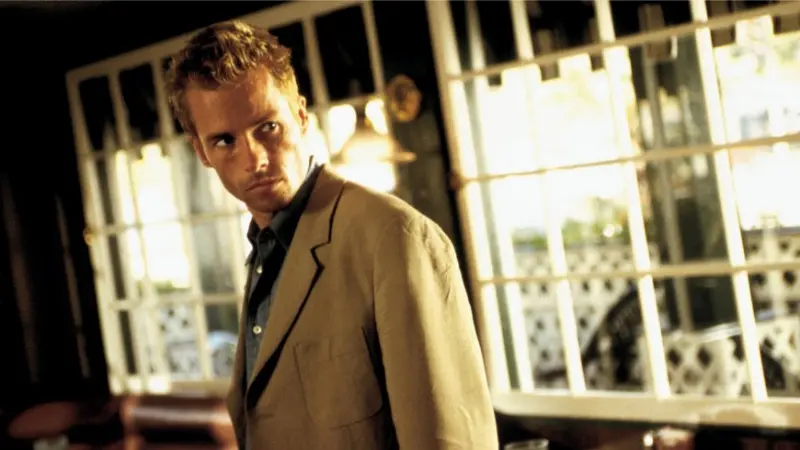
The film states that Leonard cannot store new long term memories after the incident with his wife. Despite this limit, he often completes strings of actions that require planning and recall across several minutes without interruption. He drives to new locations, follows people through town, buys supplies, and checks into motels that he has never seen before.
The script shows that he uses tattoos, notes, and photographs to compensate. Many of the actions still appear to require memory that lasts longer than the moments shown on screen. The gap between the stated condition and the range of tasks he completes creates a mismatch that the aids do not fully account for in the scenes as presented.
Perfect Sense: Reverse color timeline with forward black and white
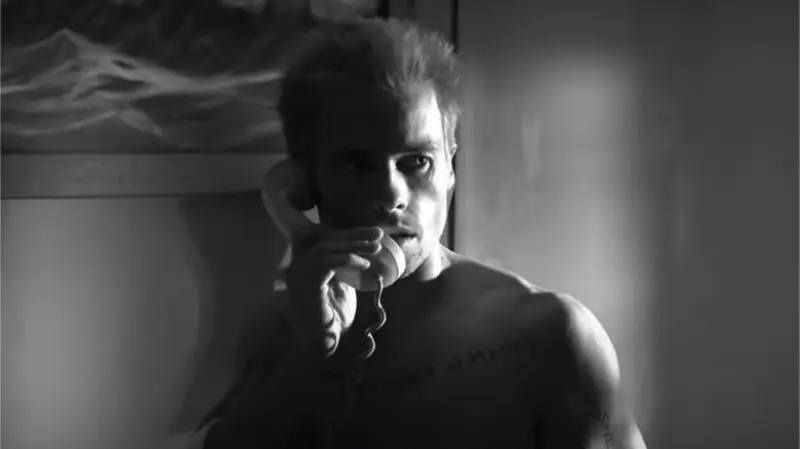
‘Memento’ splits its storytelling into two tracks that meet at the same point. The color scenes move backward one segment at a time while the black and white scenes move forward in time. Each color scene begins at the end point of the next one in the story order and the black and white phone call builds toward the same junction.
This arrangement mirrors Leonard’s experience. Viewers receive context only after a scene ends which imitates the feeling of arriving in the middle of events. The forward moving black and white thread supplies background that would normally appear earlier and the meeting point unifies both tracks into one chain.
Zero Sense: Instant photos that finish too fast
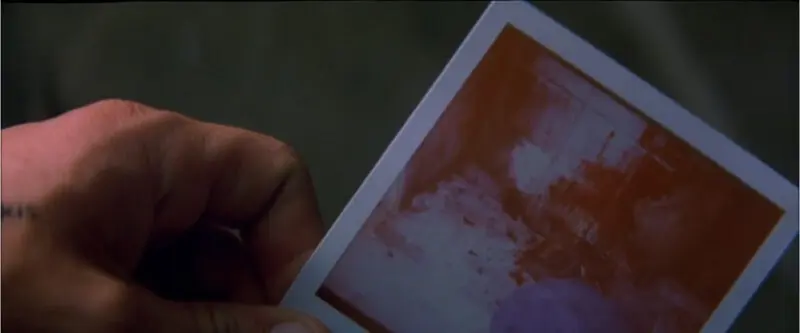
Leonard relies on instant photographs to label people, cars, and locations. Instant film needs a short development period at room temperature before details settle. Several scenes show him snapping a picture and then reading or writing on a fully developed image within moments.
The speed of the photo changes in these scenes does not match common use of instant cameras. The images often appear ready far sooner than the process would allow. Since the photographs function as records that must be trustworthy, the quick turnaround weakens the idea that the system works within normal limits.
Perfect Sense: Tattoos as a priority memory system
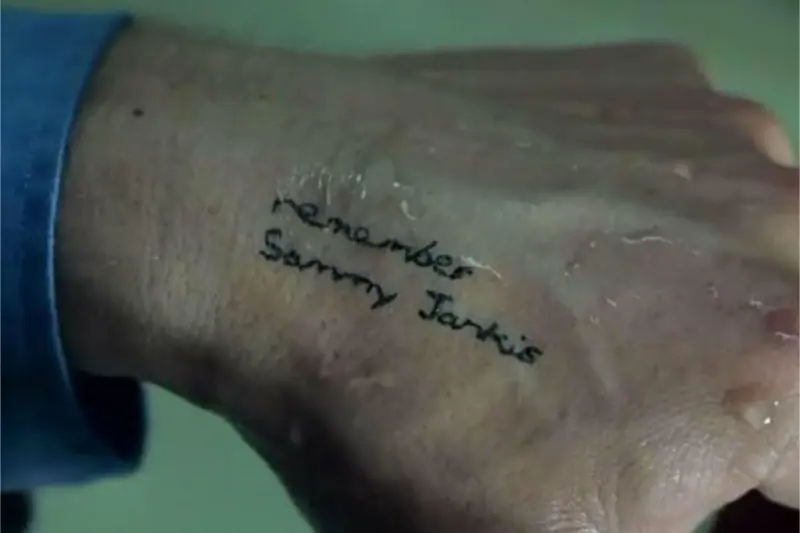
The film lays out a clear hierarchy for external memory. Permanent facts become tattoos in bold block letters that Leonard places on visible parts of his body so he cannot miss them when he dresses or looks in a mirror. Actionable items and transient details live on photographs with short notes that he can replace or discard.
This distinction matches real world strategies for memory support. High value information is fixed and always in view while lower value notes remain flexible. The placement of the most important statements on his chest and forearms shows a deliberate plan to keep critical facts at the front of his daily routine.
Zero Sense: Natalie’s choices when she knows the risk
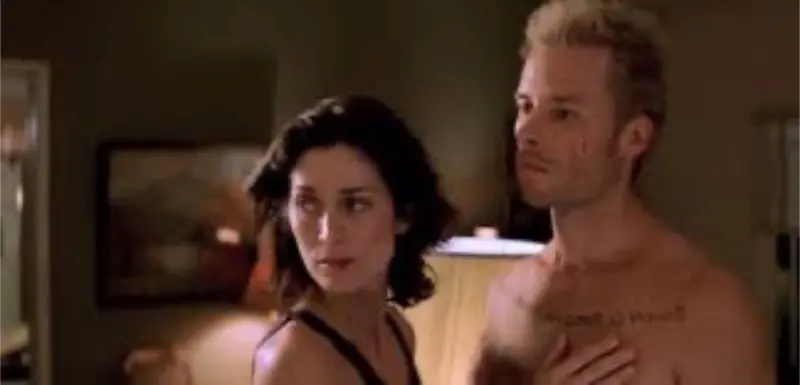
Natalie learns how Leonard’s condition works and even runs a harsh test by taking away his pen and provoking him until he forgets what happened. She understands that he will not recall an insult or a threat once his focus shifts. She also knows he can act on written instructions that bypass his ability to verify context.
Despite this knowledge, she gives him directions and names that connect to her own life. She points him at Dodd and then engages with Leonard again after the situation turns violent. Given her awareness of the hazard, her continued involvement places her in danger that her earlier caution makes difficult to justify within the film’s rules.
Perfect Sense: Self editing turns the narrator into a moving target
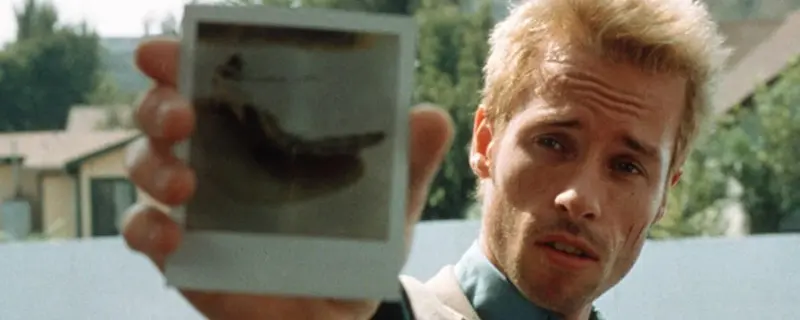
The story shows that Leonard can change the inputs that guide his future actions. He chooses which facts to write and which to ignore. He destroys images that would force him to revise his beliefs and he promotes select details onto his skin where they cannot be erased. He also records a license plate number and other identifiers that steer him toward a target.
This ability to curate his own record supports the film’s use of an unreliable narrator. The audience does not receive an objective chronicle but rather a filtered log that reflects what Leonard decides to accept. The structure explains how two people can recount the same past differently without the movie naming a single version as official truth.
Zero Sense: The car swap and the quiet response
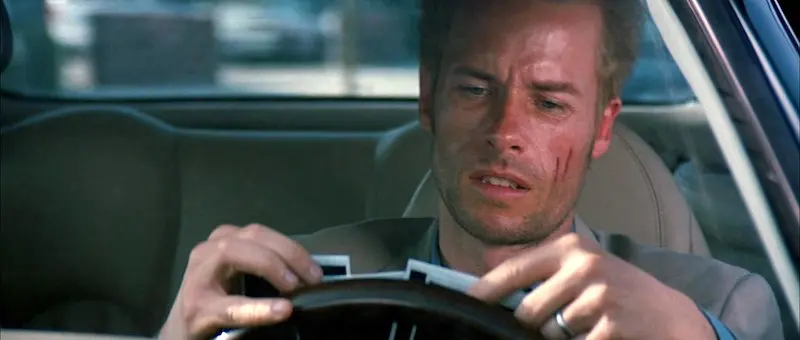
Leonard ends up with a different car and a suit that do not belong to him. He drives the Jaguar, parks it in visible places, and moves items in and out of the trunk. He also maintains a separate motel room while carrying items that connect to a recent crime.
The response from law enforcement in the city remains limited to a single contact who meets him in casual settings. There are no scenes of traffic stops or routine checks that might catch a driver in a car tied to a missing person. The limited attention around a conspicuous vehicle and a new suit creates a gap between expected scrutiny and what appears on screen.
Perfect Sense: Scene handoffs that act like memory resets
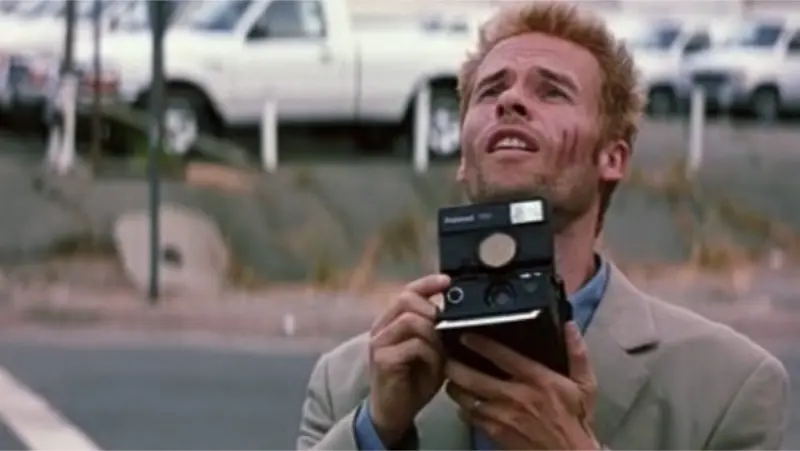
Every color sequence starts with a repeat of the end of the next segment in story order. This means the viewer experiences the same anchor moment from two directions. The repeated handoff supplies a built in reminder of where things stand while withholding the cause until the next scene plays in reverse order.
This pattern works as a mechanical stand in for memory loss. The viewer receives a fresh reset at the start of each color scene and then learns what led to it. The approach lets the audience build a mental map that matches Leonard’s limited access to the recent past.
Zero Sense: The insulin story and the wife’s fate
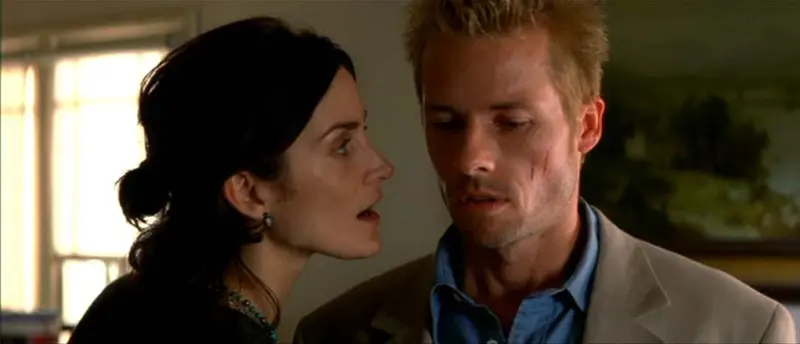
The film presents a set of shots that link needle marks on a woman’s arm with a man giving an injection in a kitchen. These images sit next to a story about an insurance case and a patient who could not form new memories. The combination suggests multiple paths to the same tragedy.
The result is a conflict with Leonard’s stated belief about his wife’s death after the attack in their home. The images raise the possibility that the events did not happen in the way he records them on his body and photographs. The film never provides a single timeline that closes this gap in a definitive way.
Perfect Sense: Visual motifs that teach the rules
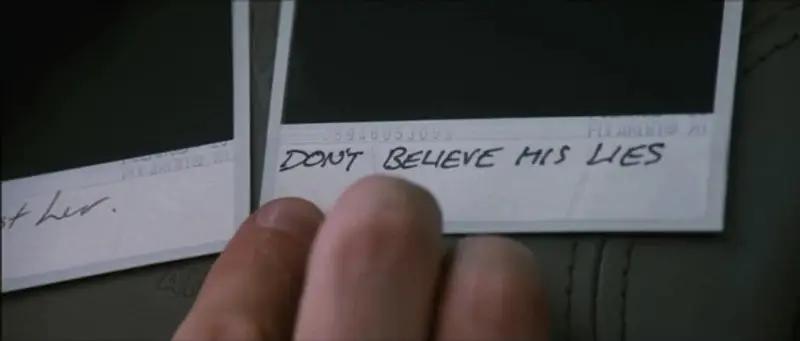
The movie opens with a photograph that fades instead of darkening. The shot runs backward to show the image unform and then return to a blank frame. That single moment teaches two ideas at once. Time will move in reverse in the main track and records will not hold still without a system to protect them.
Across the film, objects return as anchors that guide both Leonard and the audience. The motel layout, the car keys, the folded notes, and the placement of tattoos all show up in consistent patterns. These motifs give viewers a stable set of cues to follow even when the order of events moves in the opposite direction.
Share the ‘Memento’ moments that confused you or clicked for you in the comments so everyone can compare notes.