5 Ways ‘Kill Bill: Volume 1’ Aged Poorly (& 5 Ways It Aged Masterfully)


Quentin Tarantino’s revenge epic mixed kung fu cinema, samurai films, grindhouse style, and anime into one sharp edged package. Over time, parts of that blend have landed differently as viewing habits changed and new standards shaped what audiences expect from action and violence on screen.
Looking back at what the film does and how it does it shows where time pushed against it and where craft keeps it lively. Below are specific elements that reveal both sides, from production choices and release versions to visual design and cross medium storytelling.
Aged Poorly: Stylized gore now meets tighter gatekeeping
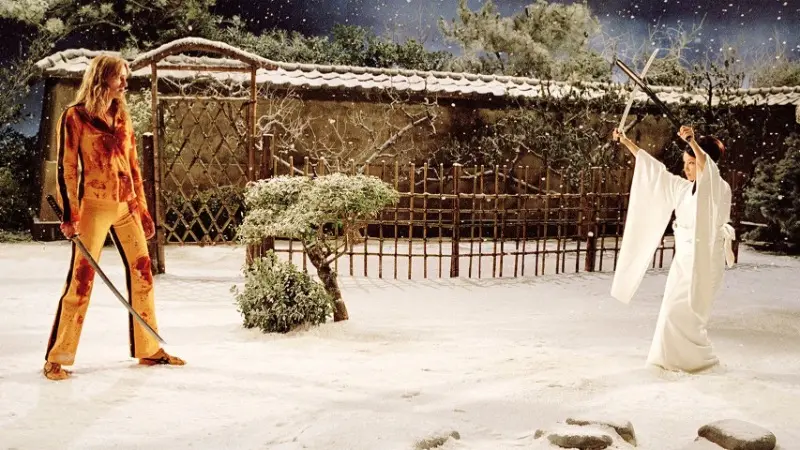
The film relies on practical blood rigs that produce high volume sprays inspired by older chanbara and exploitation cinema. Modern platforms attach stronger age gates and detailed advisories to this level of graphic violence. Airline edits and some broadcast versions reduce or obscure splatter through reframing or color changes, which alters choreography visibility and spatial clarity.
Several territories circulated different cuts to satisfy local standards. That created a patchwork of versions with scene length changes in the House of Blue Leaves sequence. New viewers often encounter the tamer version first on streaming, which changes how the action reads compared with the full export cut.
Aged Masterfully: Practical stunt work and clear geography
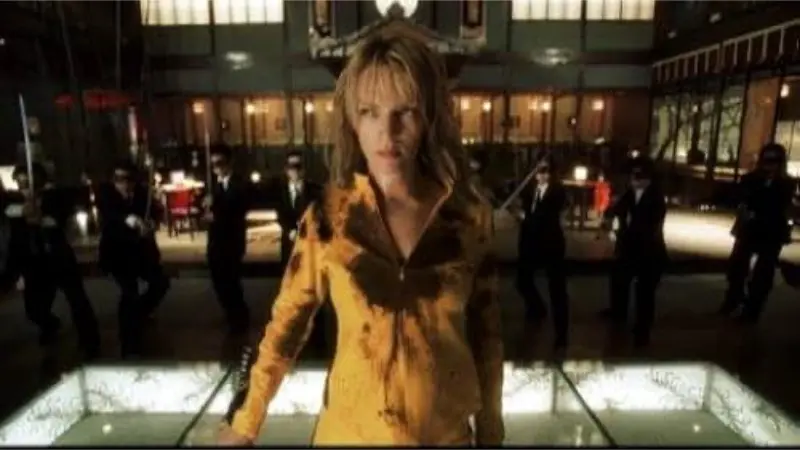
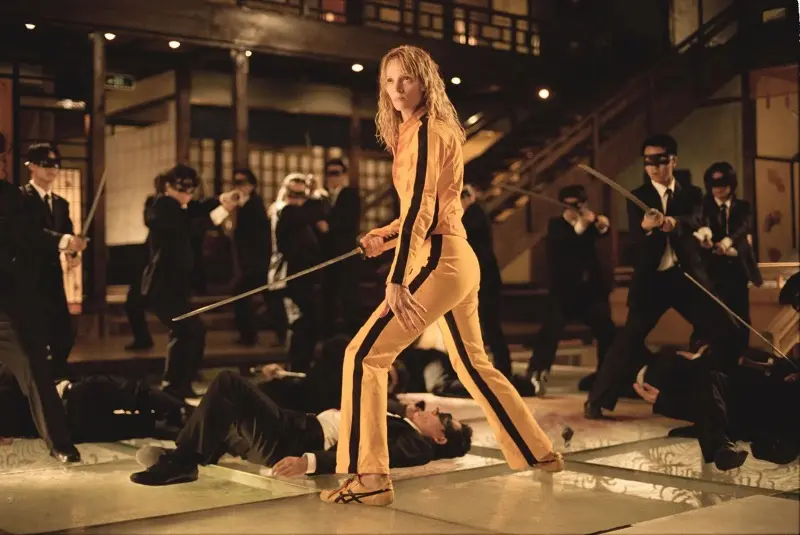
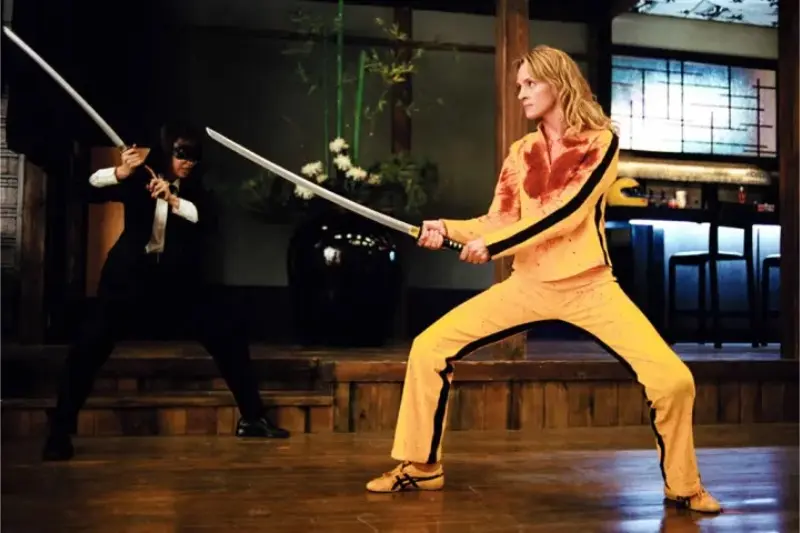
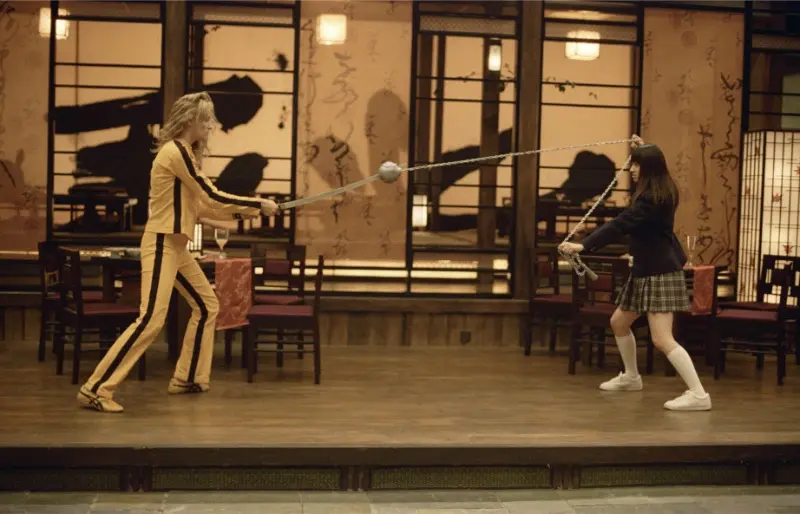
The production staged large ensemble fights with extensive wire assists, breakaway props, and real world set destruction. The camera often holds a wide frame so footwork, blade paths, and group movement remain readable without heavy digital stitching. That approach keeps timing and momentum easy to follow on today’s larger high resolution displays.
Long takes inside the restaurant set connect rooms, hallways, and the dance floor into one continuous environment. The result gives the viewer a consistent mental map that supports the escalation from one on one duels to crowd combat, which continues to play cleanly in modern home viewing.
Aged Poorly: Cultural borrowing faces closer scrutiny
The film pulls openly from Japanese samurai pictures, Hong Kong martial arts cinema, and grindhouse tropes. Contemporary productions often credit cultural consultants and sensitivity readers during development. Earlier workflows did not always document those steps, which places this film in a different procedural context.
Iconography such as schoolgirl uniforms, yakuza costuming, and dojo etiquette arrives through a collage of references rather than one source text. Current conversations about appropriation and context make that collage a frequent case study in classrooms and criticism, which frames the borrowing with more process focused questions than it received at release.
Aged Masterfully: The anime chapter remains a strong narrative tool
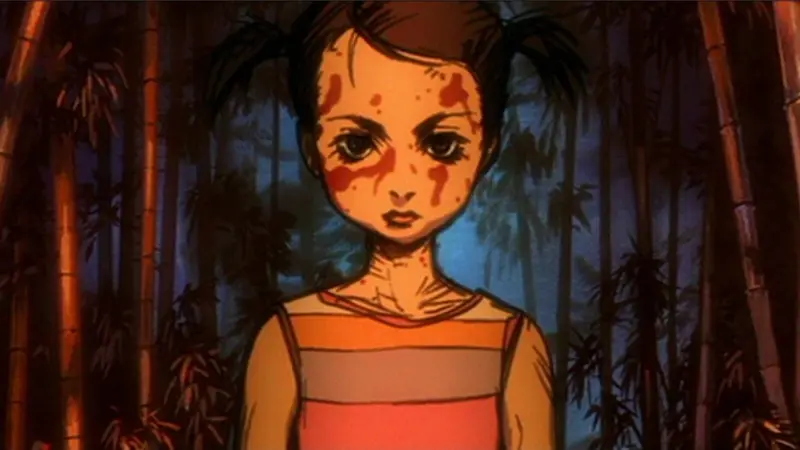
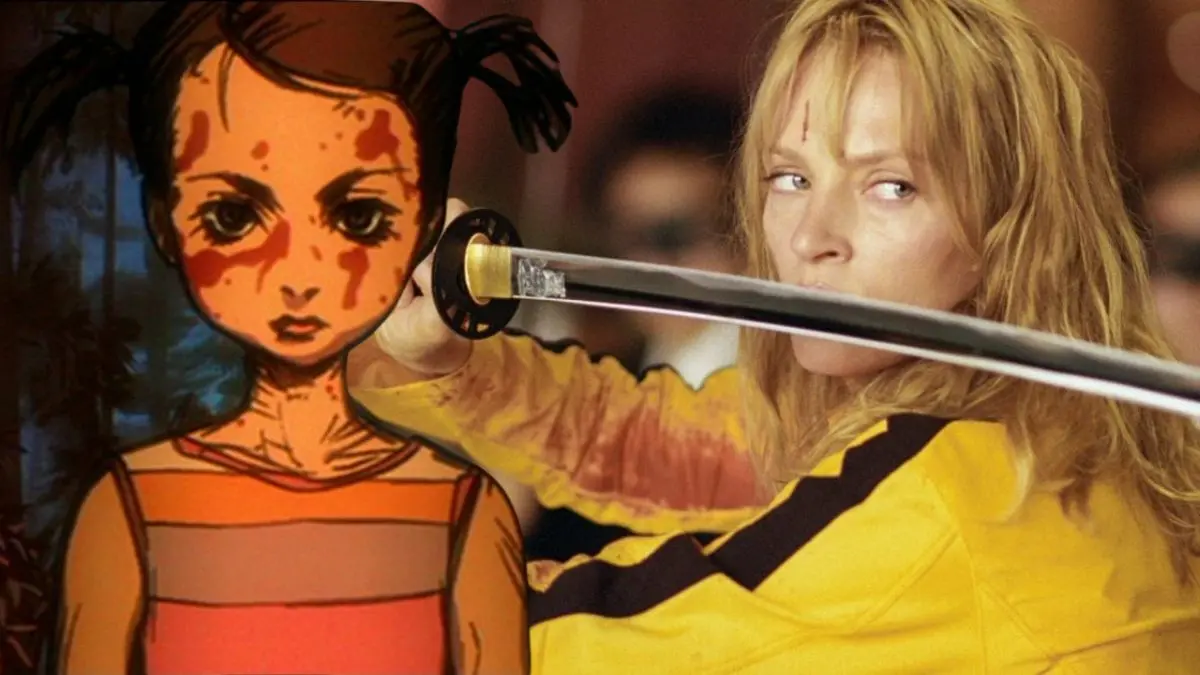
The O Ren Ishii backstory uses original animation created by a leading Japanese studio to portray violence and trauma that would be harder to stage in live action. The shift in medium lets the film show events with stylization that supports clarity without practical gore effects. The animation uses layouts and transitions that mirror live action coverage, which keeps pacing aligned with the surrounding chapters.
Mixing formats inside one feature now appears more often in global releases. This chapter stands as an early popular example that demonstrates how animation can carry exposition, tone setting, and character motivation without slowing the film’s forward movement.
Aged Poorly: Early 2000s color styling clashes with HDR displays
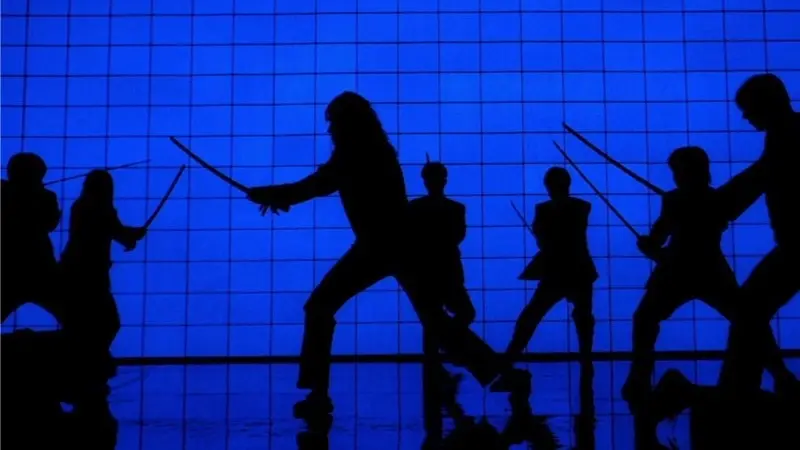
The image favors deep contrast, saturated primaries, and crushed shadows that matched the period’s theatrical projection standards. On modern HDR televisions, those choices can produce clipped highlights and dense blacks that hide texture in darker scenes. Viewers often adjust brightness to recover detail, which shifts the intended palette.
Digital grading pipelines have evolved with wider color gamuts and dynamic metadata. Many contemporary restorations create alternate HDR passes to preserve highlight detail. The existing home versions of this film reflect the original look, which can feel heavier on current screens that default to vivid factory modes.
Aged Masterfully: Chapter structure keeps a complex timeline accessible
The story uses titled chapters, on screen labels, and deliberate jumps in chronology to organize information. Each chapter completes a mini arc with its own setup, objective, and payoff, which helps viewers track progress without constant verbal explanation. The labeled structure also supports rewatching in segments, since chapter boundaries function like clear bookmarks.
This approach matches how many streaming viewers now pace sessions. Stopping at a chapter card and resuming later does not break comprehension. The technique also aids classroom breakdowns and video essays, since each segment contains its own craft choices that can be analyzed in isolation.
Aged Poorly: Multiple regional cuts create lasting confusion
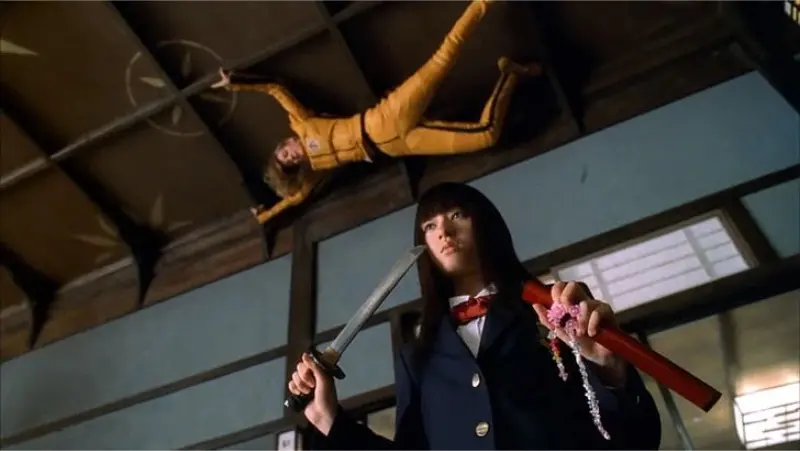
The Japanese release presents the House of Blue Leaves sequence in full color while the common North American version shifts to black and white during the most graphic passages. Physical media and streaming libraries vary on which cut appears, and the listing pages do not always specify version details. That inconsistency complicates comparisons and fan discussions.
Editorial differences also include longer inserts and alternate sound effects in some regions. Archival tracking of these variants is scattered across liner notes and interviews rather than centralized studio documentation. That leaves new audiences to piece together which edition they are watching through visual cues inside the scene.
Aged Masterfully: Visual design turned into durable pop language
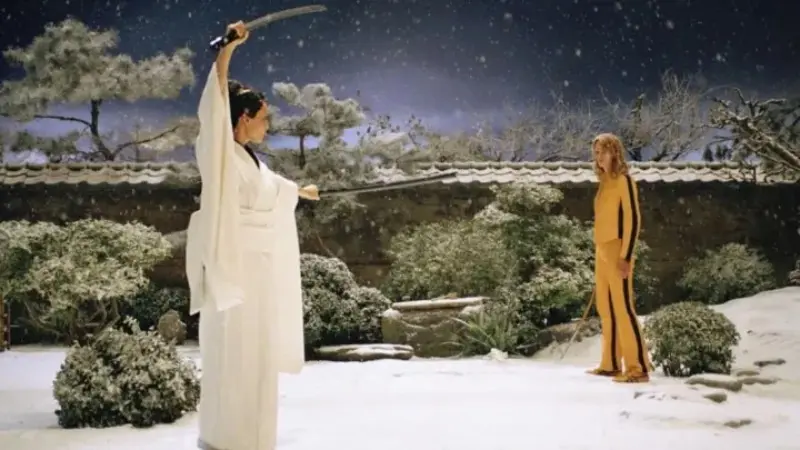
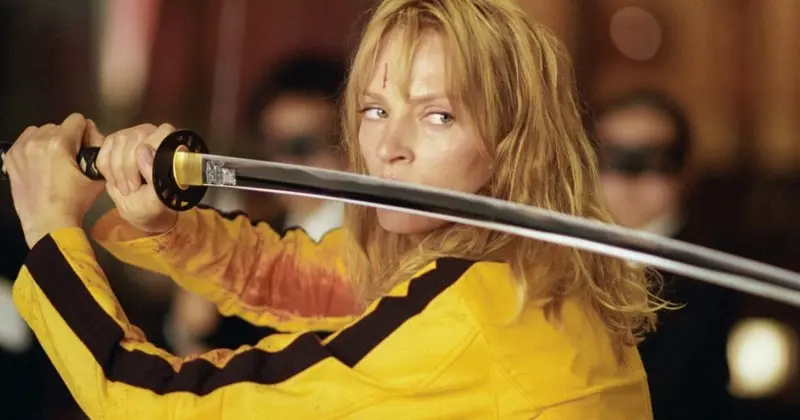
The yellow tracksuit, the Hattori Hanzo sword engraving, and the Crazy 88 masks formed a bundle of instantly readable symbols. Those elements appear in cosplay, advertising nods, and video game skins, which keeps the film’s visual language alive far beyond its original run. The props and wardrobe use clean shapes and bold color blocking that read at a glance in photos and short clips.
Homages to ‘Game of Death’, ‘Lady Snowblood’, and yakuza cinema signal lineage without requiring viewers to know the source films. The production built practical sets and weapons that interact with light and wear, which gives the imagery texture that still photographs well for posters, exhibitions, and behind the scenes features.
Aged Poorly: Minimal contemporary tech marks the story’s timeline
Characters rely on face to face encounters, landline calls, and handwritten lists. Tools like GPS tracking, encrypted messaging, and phone based surveillance do not factor into the plot mechanics. That places the revenge plan in a world with fewer digital footprints than viewers expect today.
Investigative beats unfold through travel, stakeouts, and word of mouth rather than database searches or location pings. The absence of smartphones reduces cross checking, which would change how near misses and chance meetings occur if the story were set in a present day environment.
Aged Masterfully: Editing grammar pays tribute while staying crisp
The film uses split screens, crash zooms, whip pans, and smash cuts that echo 1970s martial arts cinema and Italian westerns. These tools appear with clear motivation, such as isolating a duelists’ focus or bridging time inside a flashback. The editing rhythms remain easy to parse in an era of shorter attention spans because the shots carry strong directional cues and clean eyelines.
Practical transitions inside sets reduce reliance on invisible digital seams. A hallway walk can shift from everyday ambience to arena energy through lighting and framing changes executed in camera. That craft gives the action sequences a tangible beat that still aligns with contemporary expectations for precision and flow.
Share your take on which elements of ‘Kill Bill: Volume 1’ held up for you and which ones did not in the comments.