5 Things About ‘The Sixth Sense’ That Made Zero Sense and 5 Things About It That Made Perfect Sense


The first time people watch ‘The Sixth Sense’, they notice how carefully the story hides its biggest secret while showing the clues in plain sight. The film uses routines, framing, and small visual tells to guide viewers through Cole’s experiences and Malcolm’s sessions, building patterns that seem ordinary until the final reveal reframes every scene.
Looking back, some moments feel airtight while others raise questions about everyday logistics. The film leans on rules about how the dead perceive the world, plus a color system and temperature cues, to keep the puzzle consistent. At the same time, a few interactions and practical details appear tricky when you picture them outside the dramatic setup.
Zero Sense: Anniversary dinner

At the restaurant, Malcolm sits across from his wife for their anniversary and no one treats him like a customer. A server brings a single check to her side of the table, and no one offers menus or pours water for him. The setup works to sell his guilt and distance, yet the everyday process of dining out would usually involve staff greeting both seats and confirming an order.
The scene relies on silent beats between two people, which keeps the focus on the marriage strain. As a real world situation, a table reservation, order taking, and payment would normally create multiple points where staff acknowledge each person. The choice not to show any of those steps keeps the mood, but it leaves the practical flow unclear.
Perfect Sense: Ghost perception rules
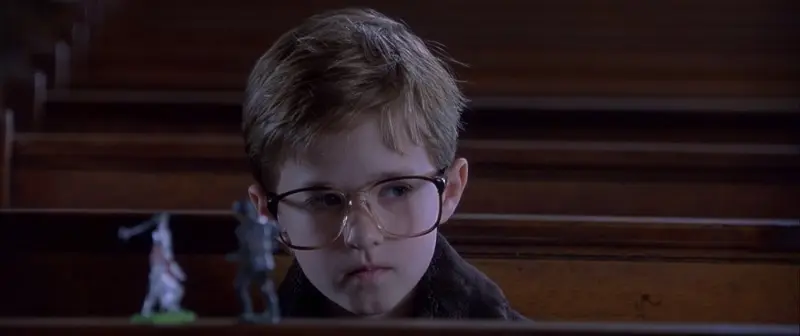
Cole explains that dead people only see what they want to see. The film supports this with repeated behaviors, such as Malcolm missing direct barriers and explaining away gaps in memory as work stress. He follows routines that feel normal to him, which lets him sit in rooms and move through familiar spaces as if nothing changed.
This rule also clarifies why conversations seem one sided. People do not respond to Malcolm, and he interprets their silence as emotional distance rather than absence of contact. By giving clear language to the rule through Cole, the story provides a simple framework that fits Malcolm’s scenes once the truth is known.
Zero Sense: Missing wedding ring
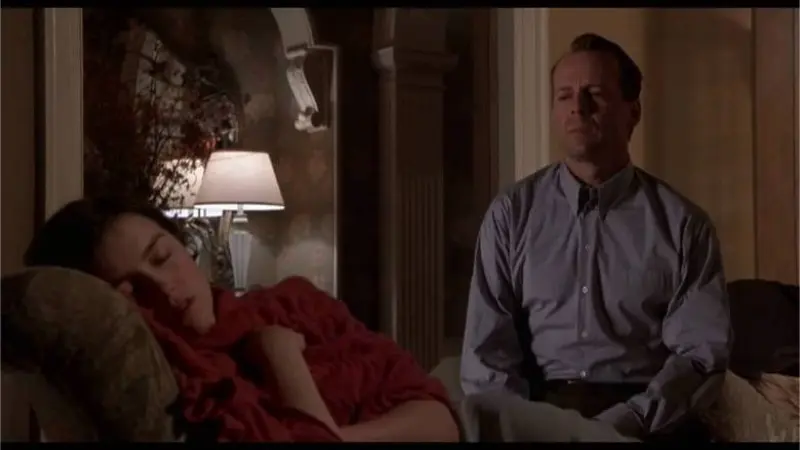
The twist hinges on a ring that is no longer on Malcolm’s finger, revealed when it falls and rolls on the floor. Earlier scenes show his left hand visible during daily activities and sessions. The lack of any natural notice from him raises a practical question because most people feel a ring’s absence when dressing, reaching, or holding objects.
The film directs attention away from his hand by framing shots around faces and doorways. It keeps Malcolm occupied with notes and tapes, which reduces moments where he might fiddle with jewelry. The reveal lands with impact, yet the everyday sensation of a missing ring remains a detail that feels hard to overlook.
Perfect Sense: Red color cues
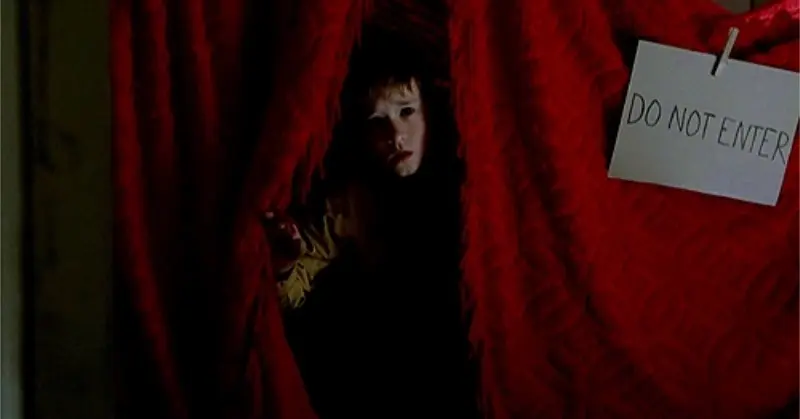
The production design uses red to mark thresholds connected to the spirit world. Items and surfaces linked to blocked paths or intense moments feature red accents, such as doors, balloons, and small objects that draw the eye. These choices guide viewers to look again at spaces where normal life meets a hidden presence.
Because the color appears at key transitions, it becomes a quiet signal that a boundary or encounter is near. The pattern stays consistent across settings, from home interiors to school spaces. This visual language helps viewers track when the story is crossing into moments that carry a supernatural charge.
Zero Sense: Case logistics
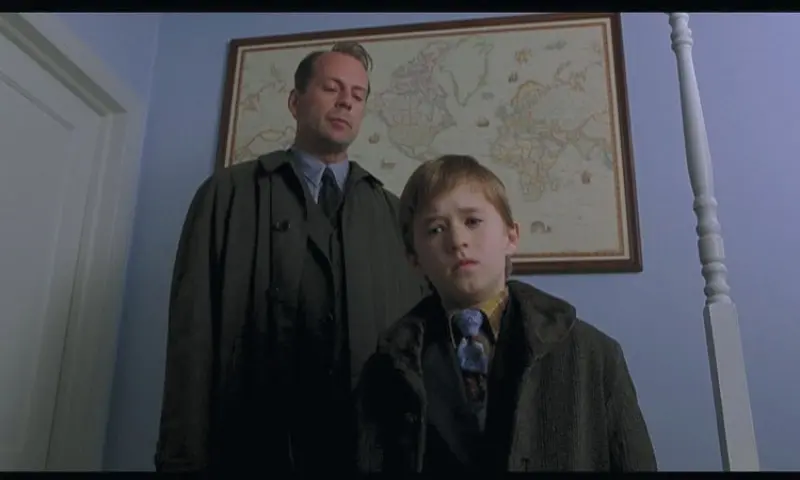
Malcolm resumes work with Cole without clear steps that would be needed in a clinical setting. Intake, parental consent, and scheduling are suggested by their meetings, but the film does not show the usual phone calls, paperwork, or referrals. For a therapist previously involved in a serious incident, the return to practice would normally include oversight and formal approvals.
The story benefits from moving straight into sessions to keep tension on Cole’s condition and Malcolm’s determination. It does not cover hospital coordination, billing, or supervision that often shape pediatric therapy. That choice keeps the plot lean while leaving questions about how the case would operate day to day.
Perfect Sense: Session tape evidence
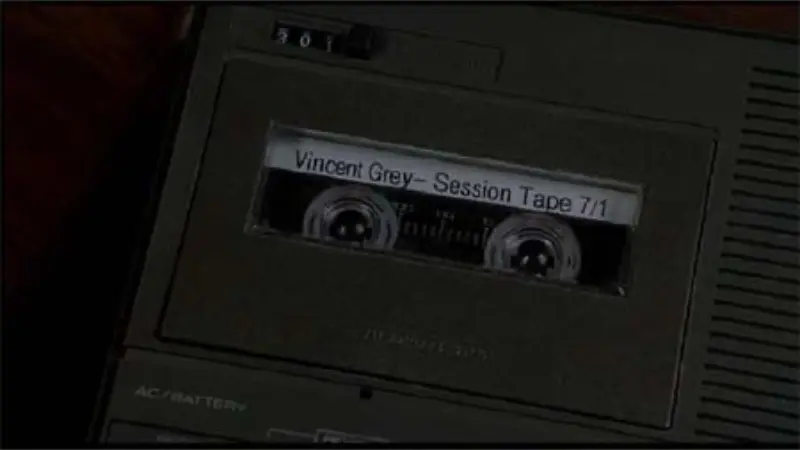
Malcolm revisits a tape from an old session and boosts the volume, revealing an extra voice in the background that speaks another language. This discovery links Cole’s claims with prior evidence, turning a therapist’s tool into a story device that bridges past and present cases. The moment reframes Malcolm’s earlier conclusions and pushes him to adjust his approach.
Using recorded material fits the character and the profession. Tapes preserve context, and reviewing them allows a second pass that can catch sounds missed during live conversation. The film uses this method to ground the supernatural claim in a concrete artifact that a skeptical person would accept.
Zero Sense: Basement door
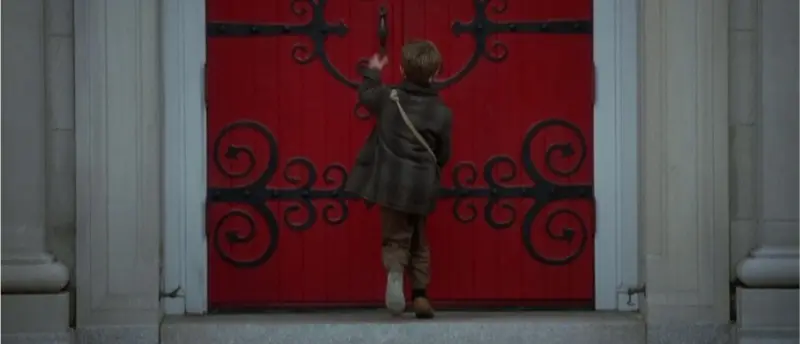
Malcolm often reaches for the basement door and finds it stuck. Later viewers notice a table blocks it from the other side, which he never moves. The repeated action suggests a routine of heading downstairs to work, but the physical obstruction raises a question about how he would have entered that space during the day.
The cutting pattern moves him from the door to the basement without showing the act of opening it. The effect sells time skips and mental focus, yet it blurs the physical step that would be needed to enter a blocked room. The choice builds mystery while creating a small continuity puzzle.
Perfect Sense: Cold breath cues

Cold spots appear when spirits draw near, shown by visible breath in indoor scenes and changes in sound design. This cue builds a measurable sign that ties to the rule set explained through Cole. The audience learns to watch for that breath as a warning that a presence is close.
Because the effect repeats in different locations, it reads as a consistent signal rather than a one time trick. The cue also keeps viewers alert in quiet scenes, since a chill can arrive without a loud scare. The film uses this pattern to connect emotional peaks with a physical marker that is easy to spot.
Zero Sense: Unseen meetings at home
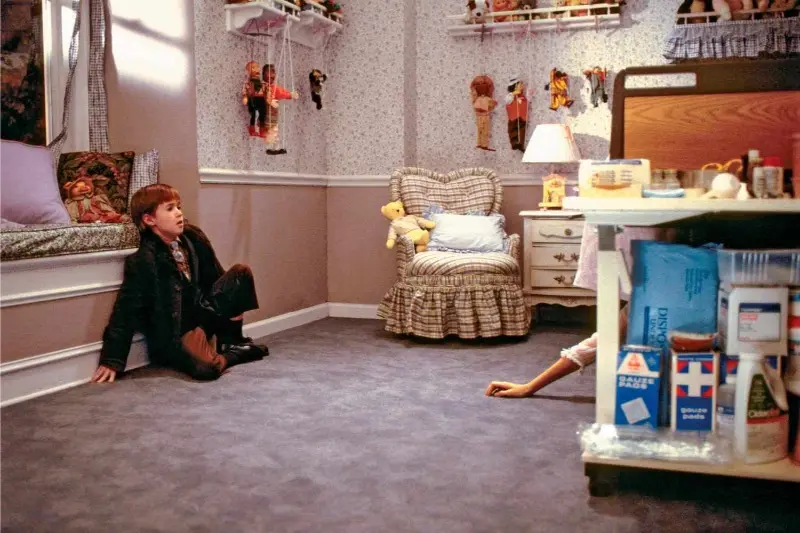
Malcolm meets with Cole in the apartment, yet Cole’s mother never acknowledges his presence in the room. The staging keeps them in shared spaces without direct exchanges between Malcolm and the parent, which helps the twist but complicates the logistics of appointments in a small home.
Household routines usually involve greetings, movement through doors, and brief chats about timing. The film frames scenes to avoid those interactions, which maintains the focus on Cole and his secret. The choice supports suspense while leaving ordinary social steps unexplored.
Perfect Sense: Kyra’s message and proof
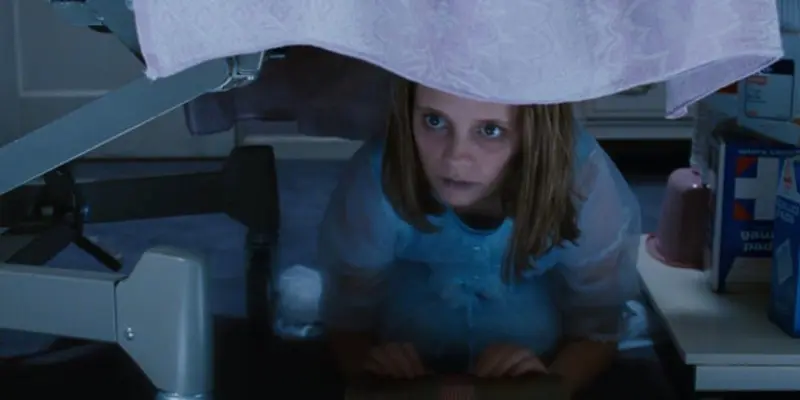
Cole visits a funeral gathering and delivers a box to a family member that contains a videotape. The recording shows a pattern of poisoning that explains the girl’s condition and death. This sequence uses clear steps that turn a haunting into action that protects a younger sibling.
The chain of events is simple and complete. Cole receives a request, finds the item, and ensures it reaches the right person during a public moment where others can confirm the truth. The outcome shows how his ability can resolve harm, which gives the story a path from fear to purpose.
Share the moments from ‘The Sixth Sense’ that felt confusing or completely airtight to you in the comments.