BBC Boss Matt Brittin Watched a Full AI-Made ‘Doctor Who’ Episode and Didn’t Hate It


‘Doctor Who‘ has survived regenerations, cancellations and reboots across more than six decades. It has outlasted plenty of predictions that its time was up. Even so, the idea of the show being made by a machine is one that few fans expected to hear discussed by the head of the BBC.
That is where the conversation went this week. The BBC’s new director-general, Matt Brittin, joined the corporation in May after 18 years at Google, and he has been open about wanting the broadcaster to experiment with artificial intelligence. Days before this week’s comments, he said on ‘Sunday With Laura Kuenssberg’ that he would allow an AI to present a programme within guardrails.
Now the BBC boss’s AI-generated ‘Doctor Who’ episode has become a talking point. Speaking at the Royal Television Society’s London Convention on Monday, Brittin told an audience that someone recently sent him a 50-minute episode of the series that was made entirely with AI, and, as Variety reported, he judged it “pretty good.” He was quick to add that it will not replace humans.
Brittin explained that nearly everyone now has the tools to create content close to the standard of a Hollywood studio, and he said six billion people have that ability in their hands. He noted that the results are not always perfect but that the technology keeps improving. His takeaway was that everyone is a creator, and not all of that creativity is bad.
What he did not say is just as notable. Brittin gave no details about who made the episode, whether it used existing ‘Doctor Who’ actors or generated new ones, or how the story played out. Deadline and Variety both noted the lack of specifics, which leaves fans with more questions than answers.
The remarks came in a conversation with BBC presenter Kirsty Young. Artificial intelligence was the dominant topic at the convention, which included Amazon’s international leadership. Prime Video’s Kelly Day told the same gathering that AI lowers costs, allowing more stories to be made, more diverse voices to be heard and more creative risks to be taken.
Brittin appeared to echo that optimism while stressing human creativity. According to Deadline, he spoke after Amazon’s executives and before Channel 4’s chief. It made for a striking lineup of broadcasters weighing in on how the technology could reshape television.
The comments arrived during a tough stretch for the corporation. The BBC is in the middle of a £500 million savings drive that has already led to hundreds of job losses. Deadline reported that channel closures are expected as soon as this week, with BBC Three understood to be in the firing line.
Brittin acknowledged the strain, saying he has conversations daily with people whose jobs are at risk. He explained that the BBC has to consolidate for the same reasons as everyone else, and that it will tell staff about changes as soon as it is ready. He also questioned whether keeping some underused linear channels running is the best use of licence fee money.
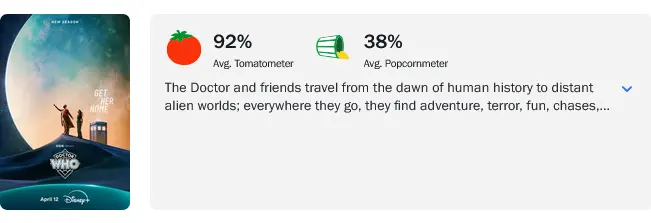
The show itself is heading into a transition. Deadline noted that ‘Doctor Who’ will return with a new creative team in a couple of years. Companies hoping to land the job have been urged to innovate and surprise the BBC while balancing high-concept science fiction with strong emotional narratives.
That context makes Brittin’s comment about an AI-made episode all the more interesting. The franchise is being prepared for its next chapter, and its leadership is publicly discussing what technology can do. Whether that will influence how the series is made remains to be seen.
New Doctor Who Disney Plus trailer! pic.twitter.com/P8bT1OLq9C
— Tharries (@TharriesYT) March 30, 2025
The most consistent theme in Brittin’s remarks was that AI will not replace human creators. He described the technology as something that lets more people make content, rather than something that removes the need for storytellers. It is a message aimed at both the industry and the audience.
Still, the willingness to say that an AI-generated episode was pretty good will likely fuel debate. Fans and creators alike will want to know where the line sits between experimentation and replacement. For now, Brittin’s comments offer a glimpse of how the BBC is thinking about the future.
The conversation is only beginning. As tools improve, broadcasters will have to decide how far to go. The answers may shape not just ‘Doctor Who’ but the entire television landscape.
What do you think of the BBC boss saying an AI-made Doctor Who episode was “pretty good”?
Have something to add? Let us know in the comments.