‘Colony’ Ending Explained: How Jun Ji-hyun’s Zombie Thriller Turns Survival Into a Battle of Wits


Yeon Sang-ho is back in infected territory, and this time the monsters are not just fast, they are connected. ‘Colony’ has become one of the most talked about Korean genre releases of the year, splitting audiences between those who see it as a bold reinvention of the zombie formula and those who found its back half frustratingly murky.
The film follows biotechnology professor Kwon Se-jeong, played by Jun Ji-hyun, who attends a biotech conference inside the massive Dongwoori Building alongside her ex-husband Han Gyu-seong. What starts as a networking event spirals into a nightmare within minutes, and the fallout is what everyone is still trying to piece together.
The Hive Mind Twist That Redefines The Outbreak
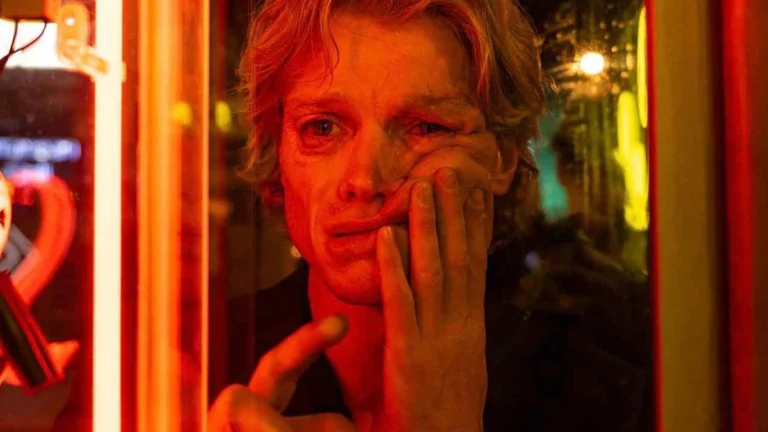
The chaos begins when former scientist Seo Yeong-cheol, played by Koo Kyo-hwan, unleashes a rapidly mutating virus during what he describes as a terrorist experiment meant to create a new humanity. The infection tears through the conference hall and the underground shopping center almost instantly, and victims vomit a strange white liquid before transforming into violent infected creatures.
Authorities immediately seal the building, and that decision becomes its own trap. Se-jeong and the remaining survivors are forced to move through a structure that is now actively working against them, the same sealed architecture that was imposed to prevent the virus from spreading in the first place.
What separates ‘Colony’ from a typical fast zombie movie is how the infected behave once the outbreak matures. The infected do not just attack, they evolve, mimic the people they used to be, and start behaving less like individual monsters and more like cells in a single shared organism. It is a genuinely unsettling shift, and it is the reason the film’s marketing has leaned so heavily on the word hive mind rather than simple zombie horror.
Colony Ending Explained And What Se-jeong Actually Does
By the final act, the infected have essentially become a networked threat rather than a group of individual monsters, and that is exactly what Se-jeong exploits. Reporting on the film’s climax notes that the infected eventually lose their target and blindly follow each other in a closed, repetitive loop, a natural glitch that Professor Se-jeong uses to trigger a system reset in the zombie horde.
That reset is only possible because Se-jeong is not working alone. In the end, it is because Gong and Se-jeong work together and share the knowledge they have that they are able to prevail. Their partnership becomes the emotional and strategic backbone of the third act, standing in contrast to Suh’s approach throughout the film.
Suh, the film’s antagonist, essentially defeats himself. It is because Suh fails to communicate with his zombies that it leads to his death, a detail that several critics have pointed to as the film’s clearest thematic statement. Communication, or the lack of it, is treated as the real difference between survival and annihilation in ‘Colony’.
Why The Second Half Divided Fans Of The Zombie Genre
Not everyone walked away satisfied. Some critics argue the film’s back half muddies its own internal logic, particularly around Suh’s powers. One breakdown asks why Suh does not simply mind control the zombies to stop them from pushing him into the fire, calling the second half incredibly sloppy and suggesting a more probable resolution could have salvaged the film.

That criticism echoes a broader reaction online, where viewers have debated whether the film earns its own twist. One recap even called the ending disappointing on its own terms, arguing that Colony doesn’t establish a love for humanity the way Train To Busan did, and is not meant to be read as a spiritual sequel to that film.
Other outlets have embraced the ambiguity as intentional. Coverage of the film’s tone points out that Colony is one of 2026’s most divisive Korean films, with some viewers calling it a brilliant reinvention of the zombie thriller rather than a retread of familiar beats.
Cast, Setting, And Where Colony Fits In The Zombie Genre
Beyond Jun Ji-hyun and Koo Kyo-hwan, the ensemble includes several recognizable names from Korean film and television. Colony has big names for its ensemble cast like Jun Ji-hyun, Koo Kyo-hwan, Ji Chang-wook, Kim Shin-rok, Shin Hyun-been and Go Soo, giving the film a prestige weight that matches its ambitious premise.
The setting itself is doing a lot of narrative work. Unlike sprawling outbreak films that move across highways and cities, this one stays locked in place. Colony narrows everything to a single architectural structure and refuses to open it up, forcing the film to generate tension through density rather than velocity.
That claustrophobia was clearly intentional from the start. The story is set almost entirely inside the high rise Dongwoo-ri Building, where the biotech company Chains Bio is hosting a conference on cell regeneration and shared consciousness, a setup that later becomes grimly ironic once the infected start forming their own version of shared consciousness.
The film also arrived with pedigree behind it. Colony first premiered at the Cannes Film Festival to a glittery reception before becoming a box office hit with its national theatrical release, and that combination of festival buzz and commercial success has kept the ending debate very much alive across Korean entertainment forums and international fan communities alike.
Whether ‘Colony’ sticks the landing or stumbles into its own hive mind logic seems to be the exact question audiences cannot stop arguing about, so if you have already seen how Se-jeong and Seol-hee turn the infected’s own glitch against them, it is worth asking what you think that final image of Suh’s downfall actually says about the cost of going it alone.