Netflix’s ‘Lord of the Flies’ Ending Explained: What the Show Keeps, Changes, and Adds to Golding’s Dark Classic

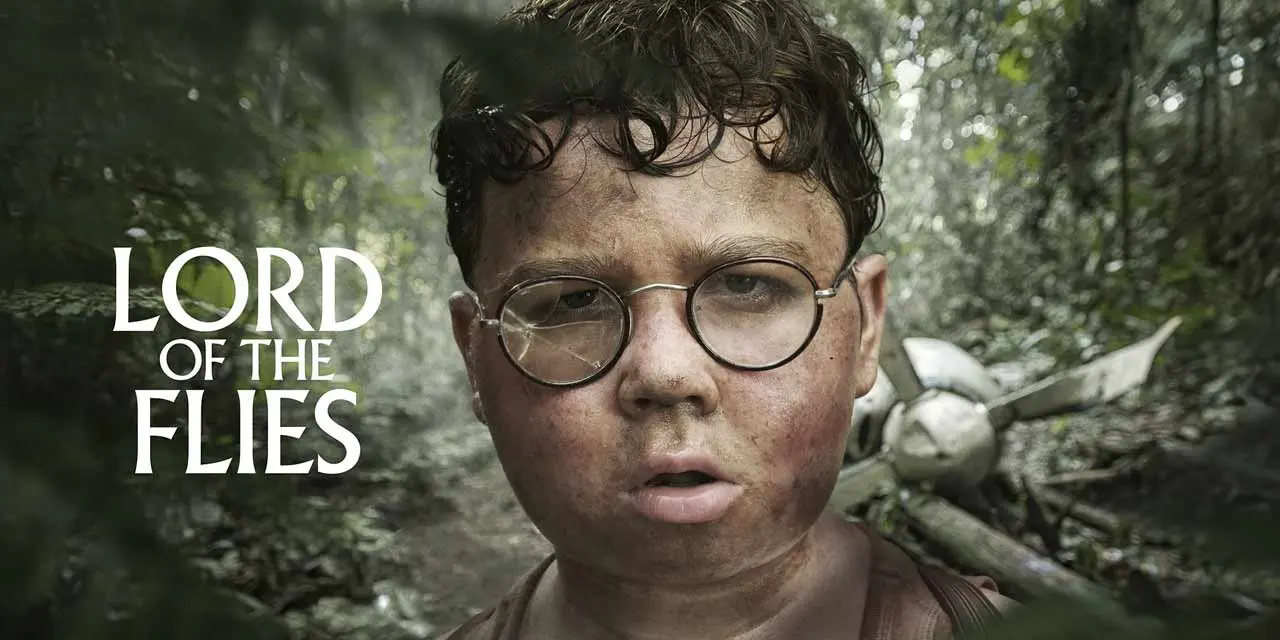

William Golding’s 1954 novel has haunted school curricula for over seven decades, and now, for the first time in its history, it has received a full television adaptation. Developed and written by Jack Thorne and directed by Marc Munden, the four-episode series originally aired on BBC One in February before landing on Netflix in the United States. The result is one of the most talked-about limited series of the year, and for good reason.
Adapted from Golding’s classic novel by Jack Thorne, co-writer of ‘Adolescence’, the series doesn’t make any major changes to the source material’s core allegory about the thin line separating civilization from savagery. But it does make several deliberate and significant choices that fans of the book will immediately notice, particularly in the way it handles its devastating finale.
What Happens at the End of the Netflix ‘Lord of the Flies’ Adaptation
The series ends as Ralph and the other survivors are finally rescued. Just as the boys stranded on the island fully embrace their savagery and attempt to kill Ralph, played by Winston Sawyers, a naval officer appears and rescues them. It is a conclusion that mirrors Golding’s text almost beat for beat, right down to the unsettling indifference of the adult who arrives too late.
Though the naval officer discovered the boys just as they prepared to murder Ralph, he treated their behavior as if it were simple children’s games, acting as though they were only playing at war even as Ralph explained that two of his friends had been killed. The officer’s dismissiveness lands as one of the adaptation’s most chilling moments, because it implies that the adults’ world is no more rational than the one the boys built and destroyed on the island.
By the final episode, the hunt for Ralph becomes more than just a conflict between two leaders. It represents the complete collapse of everything the boys tried to build, and the moment that changes everything. The fire Jack’s tribe sets to smoke Ralph out is not just a tactical move. It is the logical conclusion of everything the series has been building toward since the first episode.
How Netflix’s Ending Compares to Golding’s Book
In both the book and the series, the final moments find Ralph alone and on the run from Jack’s hunting squad before he happens upon a naval officer who has seen the smoke from their fire. In the book, Ralph doesn’t hesitate to claim his chiefdom when asked who is in charge, but in the series, he first looks to Jack, who appears to be in shock, before answering. That silent hesitation is a small but telling deviation, one that speaks volumes about how power and guilt have shifted between the two boys.
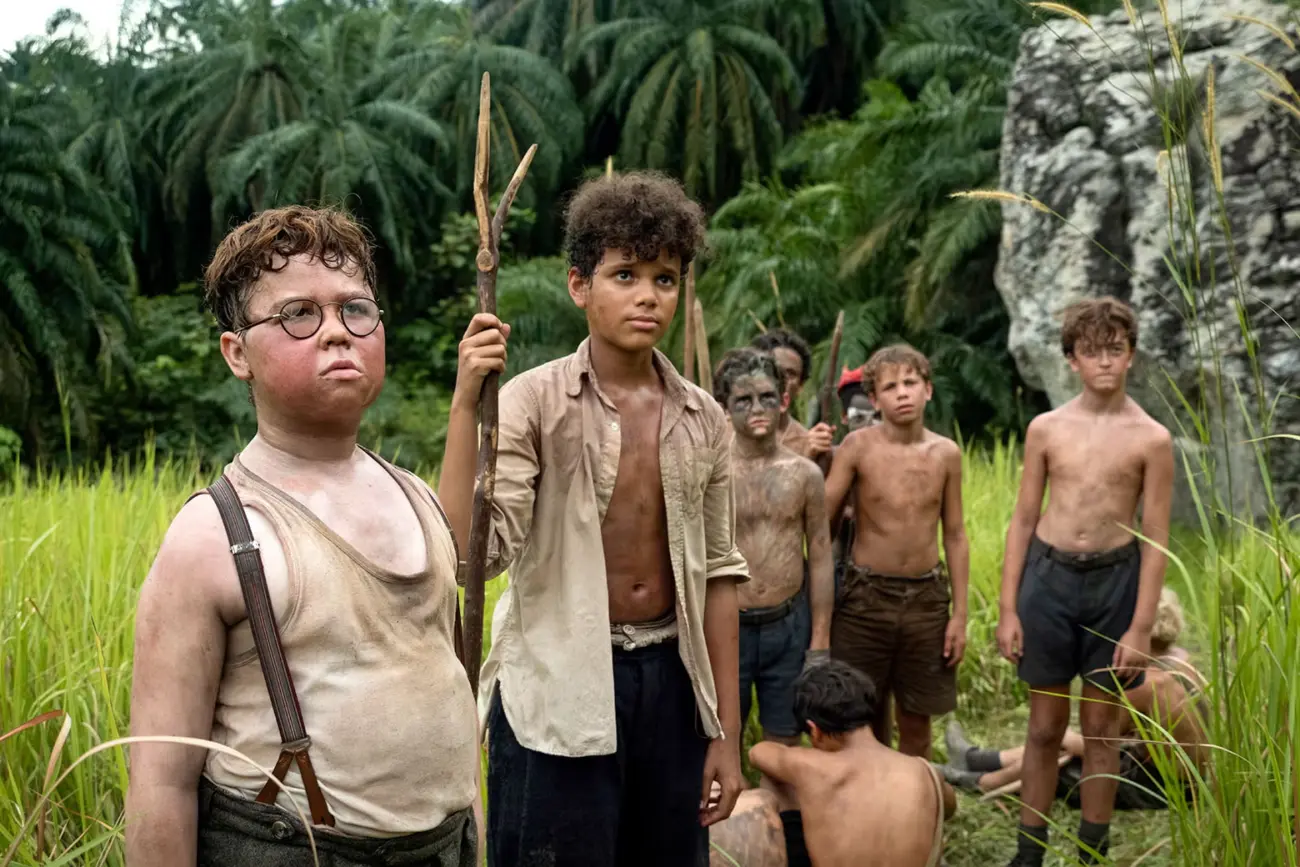
The most heartbreaking change Thorne makes is to alter the way Piggy dies. In the book, one of Jack’s boys dislodges a great boulder that knocks Piggy off the cliff and onto a rock below, killing him at once, while simultaneously smashing the conch shell. Thorne instead stages this as an unfolding tragedy, with Roger bashing Nicky over the head with a rock, after which Nicky dies slowly over the course of hours while hiding in the undergrowth with Ralph.
Another notable shift is that while the boys in the novel are all reduced to tears during their rescue, in the series, they do not cry as they are being rescued. The emotional restraint reads as something darker, suggesting these particular boys have already gone somewhere beyond the reach of childlike grief.
The Book vs Show Differences That Add New Emotional Depth
Netflix’s ‘Lord of the Flies’ adaptation is highly faithful to the book, but as the series delves into each character’s story, layers of nuance are added. This is especially true for Jack’s character. The boy had no real redeeming qualities in the 1954 novel, but in this version, we see a lot of hurt and loneliness that fueled his desire for more power and control.
In one important deviation from the book, Simon’s diary gently suggests that he is queer and has romantic feelings for Jack, adding a fascinating layer to their mercurial relationship. This addition is characteristic of Thorne’s approach throughout, using the series’ expanded runtime to excavate the interior lives of boys Golding largely kept as symbolic archetypes.
Purists may not like how much Thorne has added to this story and how these additions dilute the sense of archetype that drove the novel. But there is something in these backstories that softens the dark message. These boys broke bad, the adaptation seems to say, but it doesn’t mean we all will. That is perhaps the most significant philosophical shift between the two versions of the story.
What the Ending Really Means and Why It Hits So Hard in the Series
The ending of ‘Lord of the Flies’ explains that war and wilderness bring out the worst in us, and sometimes this worst version is scarier than the actual monsters out there. From the very beginning, the boys had been talking about a beast in the woods, but as it turned out, the real monster had always been inside them.
Creator Jack Thorne has been explicit about his intentions, saying that as a society there is a conversation happening right now about boys, and that a generation is being lost because of the hate they are ingesting, which has become an answer to their loneliness and isolation. In that context, the ending feels less like a period and more like a question mark left hanging over every viewer.
The Hollywood Reporter called it very close to a definitive adaptation, while Variety noted that simply watching these boys succumb to their worst instincts is harrowing enough to make you long to look away, even if you’d be missing some gripping drama. The critical consensus is that this version earns its darkness by rooting it in something undeniably human.
On Rotten Tomatoes, 91 percent of critics’ reviews are positive, with the site’s consensus reading that the series fleshes out Golding’s text with thoughtful observations about boyhood, sharpened by a uniformly terrific troupe of child actors. It is the rare adaptation that seems to have genuinely honoured its source while also arguing for its own reason to exist. Whether you’re a lifelong reader of the novel or coming to this story fresh, it’s worth asking yourself: when the naval officer looks at these boys and sees nothing but a game gone slightly wrong, whose side of that misreading do you actually find more frightening?