Danny Boyle Confirms His New Movie ‘Ink’ Used AI

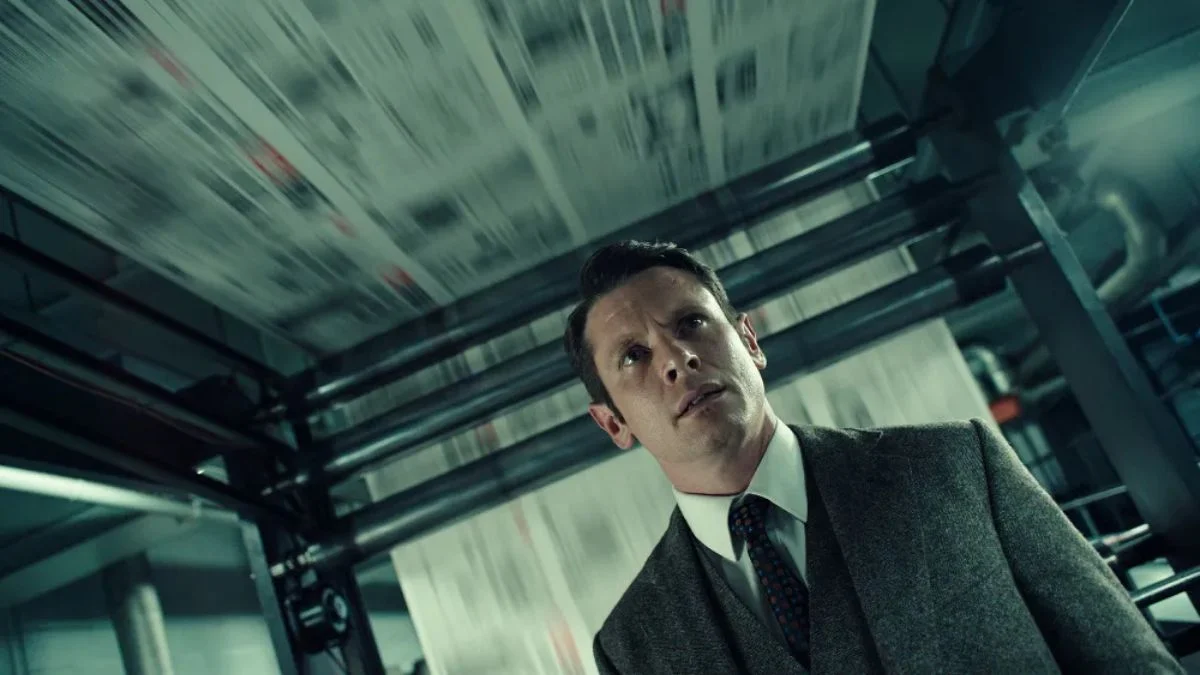

Generative AI has become one of the most contentious topics hovering over this year’s fall festival circuit, with directors facing increasingly pointed questions about whether their films quietly relied on the technology. Few filmmakers have addressed the subject as directly and unapologetically as one Oscar-winning veteran whose latest project just opened one of the world’s most prestigious festivals.
That director is Danny Boyle, whose new film chronicles the rise of Rupert Murdoch’s British tabloid empire and premiered as the opening film at the 83rd Venice Film Festival before moving on to screen at Telluride. Social media speculation had already begun swirling this week over whether certain archival-style images in the film, including recreations of the Kray brothers and a former U.K. prime minister, had been generated using AI tools.
Boyle has now confirmed those suspicions directly. Speaking to Vanity Fair in a video interview at Telluride, Boyle said his film “Ink” employed AI technology in the production of about 30 seconds of footage, according to TheWrap.
Boyle explained exactly how the technology was used, saying, “We animate a couple of old photographs, which you’ll have seen online the way that it does that.” He added that the production also used AI to generate a handful of digital mice that scurry around the newsroom set of The Sun, the British tabloid at the center of the film’s story.
Boyle connected that choice directly to a past controversy from earlier in his career, recalling backlash he received from PETA over his use of real chimpanzees in the opening sequence of 2002’s “28 Days Later.” He explained that the criticism pushed him to rely on computer-generated animals in his films ever since, and that AI has proven particularly effective for that specific purpose.
That practical framing positioned the technology as simply an extension of standard visual effects work rather than a wholesale replacement for traditional filmmaking techniques. Boyle was careful to distinguish this limited, animal-focused use of AI from more contentious applications of the technology within the industry, such as using it to replace human performers.
Boyle also weighed in more broadly on AI’s growing role in filmmaking during the same set of festival appearances, suggesting that his own opinion mattered less than how younger generations of viewers and creators ultimately come to view the technology. He argued that AI can serve as a genuinely useful tool provided it’s deployed respectfully, specifically calling for fair compensation whenever the technology is used to replace human actors in any capacity.
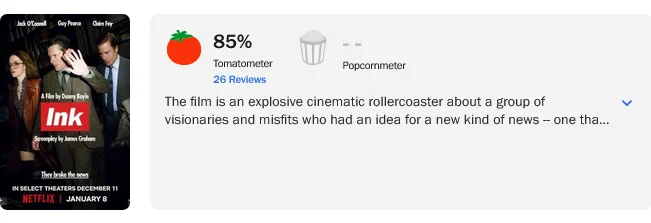
“Ink” is adapted from James Graham’s acclaimed stage play of the same name, chronicling media mogul Rupert Murdoch’s 1969 acquisition of The Sun and how editor Larry Lamb transformed the struggling publication into a bestseller after being poached from the Daily Mirror. The film stars Jack O’Connell as Lamb, alongside Guy Pearce as Murdoch and Claire Foy rounding out the principal cast.
Principal photography took place in London beginning in October of last year, with additional filming locations including Saltaire, Hebden Bridge and Halifax in West Yorkshire. The film is produced through StudioCanal, Media Res and House Productions, with Boyle serving as a producer alongside Tessa Ross, Michael Ellenberg and Tracey Seaward.
Netflix is distributing the film, which arrives as part of a growing wave of festival titles facing scrutiny over AI usage this season. Boyle’s willingness to address the technology’s role in his film so directly and specifically stands in contrast to the vaguer, more defensive responses some other filmmakers have given when confronted with similar questions.
With “Ink” continuing its festival run following premieres at both Venice and Telluride, Boyle’s comments add a notable data point to the broader industry conversation about how, and how much, generative AI should factor into modern filmmaking. Whether audiences view his limited, animal-focused application of the technology as a reasonable compromise or a slippery slope remains an open question as the film heads toward wider release.
What do you think about Danny Boyle using AI for about 30 seconds of Ink?
Have something to add? Let us know in the comments!