From ‘(500) Days of Summer’ to ‘Past Lives’: The Unrequited Love Movies That Keep Breaking Our Hearts


There is something quietly devastating about watching someone love another person who simply cannot love them back the same way. Movies about unrequited love have existed as long as cinema itself, and audiences have never stopped gravitating toward them. They are the stories that feel most honest, most uncomfortably familiar, and most emotionally charged.
The genre spans decades and tones, from screwball comedies to spare indie dramas, yet its grip on viewers never loosens. One-sided love stories add depth to drama and conflict, with love triangles, star-crossed lovers, and unrequited crushes sitting among the most popular sub-genres in romantic film. Whether a story ends in loss, in growth, or in aching silence, it is in that emotional gap where some of the most memorable cinema is made.
Why One-Sided Love Stories Connect With Audiences
Unrequited love movies are not always about romantic feelings that simply go unreciprocated. Often, love is one-sided because it is never openly acknowledged or labeled as such, and that ambiguity is what makes for some of the most entertaining and emotionally complex films around. The conflict is built in from the very start, and audiences feel every ounce of it.
A one-sided love story has the power to move and touch audiences, as the plights of characters in these films can endear, frustrate, and amuse viewers in equal measure. That emotional range is rare in any genre, and it is precisely what keeps people returning. There is a strange relief in seeing one’s own romantic confusion reflected back on screen.
Films in this space often challenge the pervasive Hollywood notion that all romantic stories must conclude with a happily ever after, embracing instead the messy reality of modern relationships and acknowledging that breakups are sometimes simply a matter of two people growing in different directions. That kind of honesty resonates in a way that a perfect ending rarely can.
‘(500) Days of Summer’ and the Anti-Romance That Changed Everything
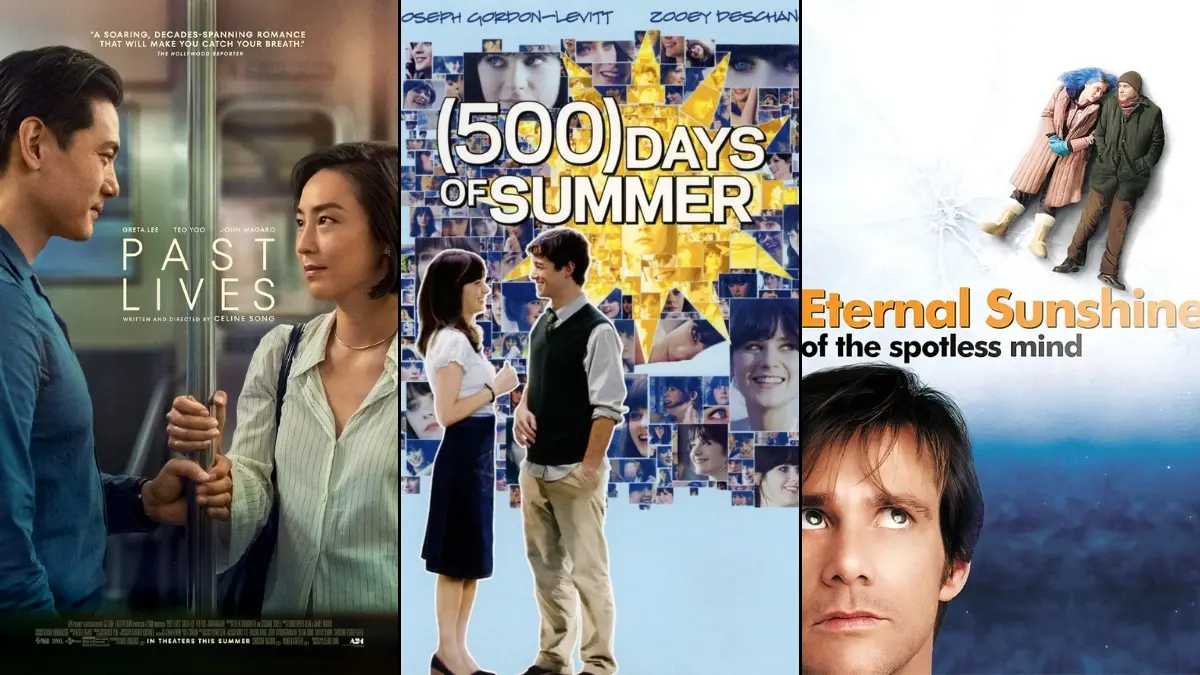
‘(500) Days of Summer’ features Joseph Gordon-Levitt as Tom Hansen, an aspiring architect turned greeting card writer who falls for his co-worker Summer Finn, played by Zooey Deschanel, with the story narrated through a non-linear timeline that captures the heartache of unfulfilled expectations. The film arrived as a quiet corrective to a decade of predictable romantic comedies.
Director Marc Webb’s breakthrough hit, written by Scott Neustadter and Michael H. Weber, resonated deeply with audiences worldwide for its charmingly cynical take on modern romance. Fans of the film loved how it broke away from traditional, saccharine Hollywood tropes to deliver a grounded, honest, and highly relatable exploration of expectation versus reality in dating.
‘(500) Days of Summer’ is widely regarded as the classic version of the unrequited love story, with Summer being completely honest about her intentions at least at first, while Tom builds an entire imagined future that she never actually promised him. The heartbreak is not caused by cruelty but by mismatched longing, and that distinction is the film’s sharpest and most enduring insight.
‘Eternal Sunshine of the Spotless Mind’ and the Heartbreaking Science of Memory
Few films have dissected the experience of loving someone who no longer loves you back with the same level of invention as ‘Eternal Sunshine of the Spotless Mind’. The film follows Joel Barish, played by Jim Carrey, and Clementine Kruczynski, played by Kate Winslet, who undergo a cutting-edge procedure to erase memories of each other after a painful breakup, only for Joel to realize mid-erasure that he cannot bear to let her go.
Intentionally disorienting and surreal in its exploration of Joel’s memories, the film features Carrey’s best dramatic performance to date, with Winslet serving as a grounding presence to the raw vulnerability he brings to the lovelorn role. Together they create something that feels less like a movie and more like the interior of a grieving mind.
At its core, ‘Eternal Sunshine of the Spotless Mind’ examines the nature of love and the complexity of human relationships, delving into the fragility of memory and the profound impact of shared experiences on personal identity and emotion. It challenges viewers to contemplate the role of those memories in defining their emotional landscapes and whether erasing pain is ever truly the answer.
‘La La Land’ and the Bittersweet Sting of Love That Could Not Last
‘La La Land’ arrived looking like a fairytale and ended like real life. It is not about a love that failed but about a love that helped its characters grow, even if it could not last forever, with Mia and Sebastian’s story landing somewhere between joyous victory and quiet tragedy. That tension is what drew audiences back to it again and again after its release.
Director Damien Chazelle always intended the bittersweet ending to be the entire point of the film. He described the goal as giving viewers the sense that even if the relationship is over in practical terms, the love is not over, and that the love lasts beyond the circumstances that ended it. It is a distinction that elevates the film far above standard romantic drama.
Producer Marc Berger revealed to The Hollywood Reporter that he, director Chazelle, and producer Jordan Horowitz made a pact that under no circumstances would the two lead characters end up together, because the things people pressured them to change were exactly the things that made the film feel original and new.
‘Past Lives’ and the Modern Language of Longing
When it comes to the quiet, modern reinvention of unrequited love in cinema, ‘Past Lives’ stands entirely apart. Korean Canadian filmmaker and playwright Celine Song’s directorial debut is a semi-autobiographical romantic drama about Korean writer Nora, played by Greta Lee, living in New York who reunites with her childhood sweetheart Hae-sung, played by Teo Yoo, after twenty years apart. It is a film about what time takes and what it leaves permanently behind.
The film received critical acclaim and was named one of the top ten films of its year by the National Board of Review and the American Film Institute, earning five nominations at the Golden Globe Awards including Best Motion Picture in Drama, as well as Academy Award nominations for Best Original Screenplay and Best Picture. No small achievement for a story built almost entirely on glances and hesitation.
The Celine Song written and directed film tells the story of two kids in South Korea who never seem to have the right time to let a romance bloom from their friendship, leaving the audience wondering what could have been right alongside the characters themselves. It weaves in the Korean concept of In-Yun, asking whether two people were truly meant to be one, and meditating on cosmic connections both found and lost across lifetimes.
‘Past Lives’ is arguably the defining romantic film of its era precisely because it refuses easy answers. The love is real. The longing is mutual. And yet nothing resolves cleanly. That emotional complexity is exactly what modern audiences seem to crave, and if this film proved anything, it is that the most devastating stories are often the ones where nothing dramatic happens at all. If Nora and Hae-sung’s final scene left you sitting with feelings you could not quite name, we would love to know which moment from the film has stayed with you the most.