How ‘House of the Dragon’ Rewrote the Battle of the Gullet and Made It More Personal

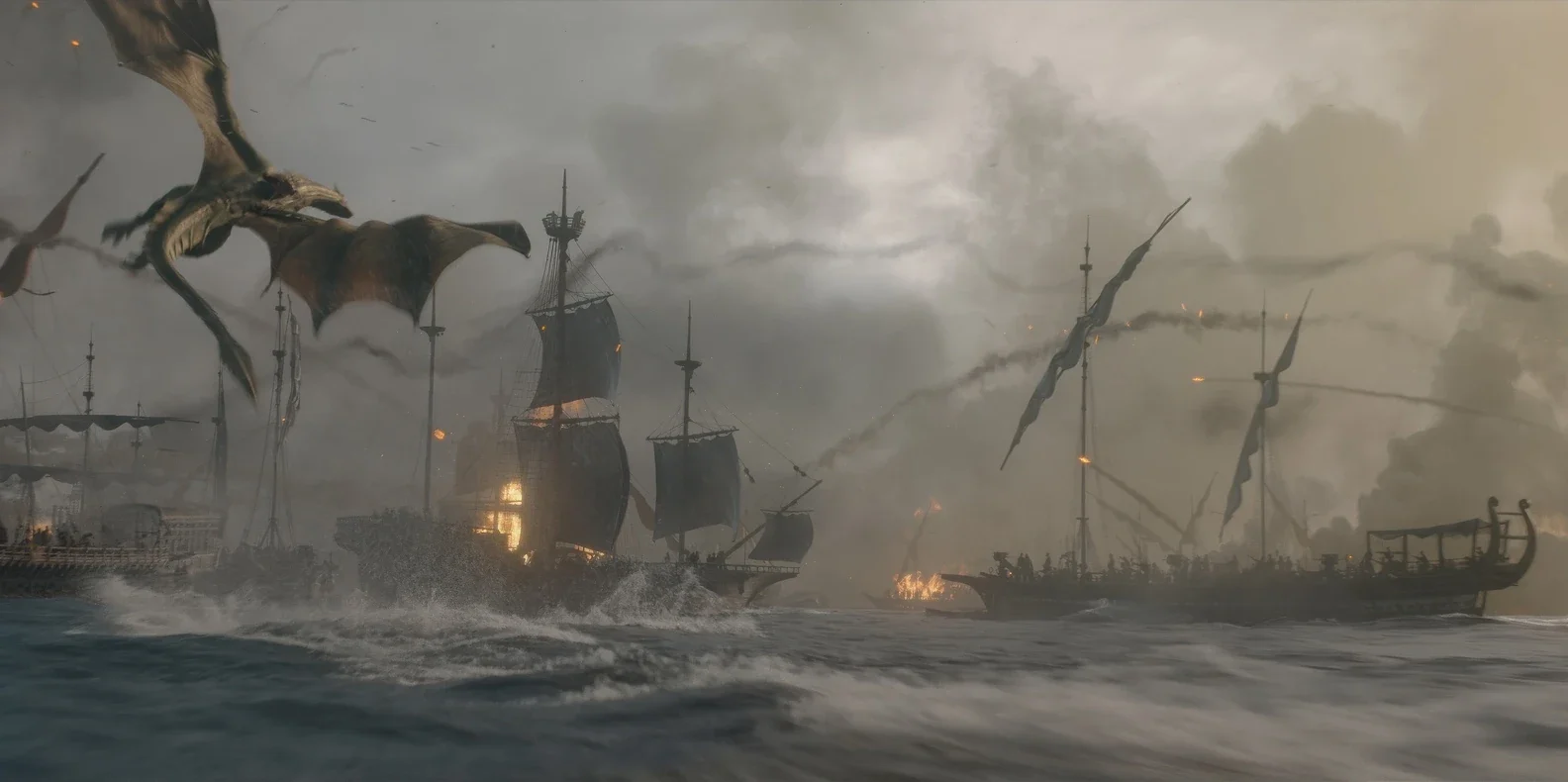

The season three premiere of ‘House of the Dragon‘ finally delivered one of the most anticipated sequences in the entire Dance of the Dragons, and it arrived with enough fire and fury to justify the long wait. The battle barely fills four pages in George R.R. Martin’s ‘Fire and Blood’, but showrunner Ryan Condal’s adaptation turns it into one of the most punishing sequences in the war between the Blacks and the Greens. For fans of the source material, though, the spectacle came loaded with surprises.
The show took the broad strokes of the events as told in Martin’s ‘Fire and Blood’ and added many new flourishes, whether in character motivations, the circumstances of the battle itself, or entire characters present in and absent from the action. It is arguably the most ambitious adaptation gamble ‘House of the Dragon’ has made yet, and the reactions are already dividing book readers and newcomers alike.
Rhaena Targaryen’s Role Replaces the Dragonseed Nettles
The biggest adaptation choice in the season three premiere is the inclusion of Rhaena Targaryen, Daemon Targaryen’s daughter with Laena Velaryon, in the battle. In the book, Rhaena remained in the Vale, where she enjoyed a life of luxury and bonded with a hatchling dragon named Morning. Meanwhile, a dragonseed known as Nettles claimed Sheepstealer and rode the dragon to battle when the Triarchy approached the Gullet.
In ‘Fire and Blood’, Nettles is a young peasant girl who manages to claim Sheepstealer as her own when Team Black desperately tries to recruit dragon-riders. Symbolically, her significance is meant to represent the idea that one need not be of special lineage in order to claim a dragon, a massive hit to the “Targaryen supremacy” image cultivated by the conquerors.
The show tells a different story. After many long nights chasing after Sheepstealer, Rhaena claims the dragon and takes him to the Gullet to fight alongside Jacaerys and her sister Baela Velaryon. However, being a wild dragon, Sheepstealer hardly obeyed his new rider. The consequence of that disobedience is what makes the show’s version of events so much more gut-wrenching.
When Rhaena orders Sheepstealer to attack, he turns on friend and foe alike, torching the Blacks’ own ships and chasing down Jace and Vermax, a moment that recalls Aemond losing command of Vhagar when it killed Lucerys and Arrax back in season one. The parallel is clearly intentional, and it adds a layer of tragic irony that the books simply do not contain.
The Dragonseeds Are Missing, and So Is the Lost Prince Storyline
In ‘Fire and Blood’, Team Black brings a full complement of dragonriders to the Gullet. Jacaerys rides Vermax, accompanied by Ulf White on Silverwing, Nettles on Sheepstealer, Addam of Hull on Seasmoke, and Hugh Hammer on Vermithor. In the show, only Jace and Baela actually fly to war, while the three dragonseeds are held back to ambush Aemond, whom Rhaenyra believes is bound for Harrenhal.
Another key difference concerns Rhaenyra and Daemon’s younger sons. In the books, Aegon the Younger and Viserys are about nine and seven when the civil war begins. Because of this, they are part of the Battle of the Gullet, travelling on a ship that is intercepted by the Triarchy during the naval siege. Viserys is kidnapped during this altercation and is taken away for years before returning home, while Aegon the Younger escapes on his critically injured dragon, who never recovers.
In the show, Aegon and Viserys are toddlers and were already packed off to Pentos back in the season two finale. They are nowhere near the Gullet during the battle, and the lost prince storyline now looks unlikely to appear at all. This is arguably the single most consequential departure from the source material given how much of later Targaryen history hinges on Viserys’ fate.
That lost prince arc carries enormous weight in the books. Viserys ends up a prisoner of war in Lys, where he marries into the wealthy Rogare family. Once it is known he has survived, he returns to King’s Landing early in Aegon’s reign, and the Rogare family becomes intertwined in Westerosi politics in ways that prove crucial to the Targaryen family’s history for generations. Whether the show finds another way to tell that story remains one of the most pressing questions heading into the rest of the season.
The Death of Sharako Lohar Rewrites a Major Survival
In the books, the Lyseni Admiral Sharako Lohar survived the battle. He made it out alive alongside twenty-eight of the ninety Triarchy ships that sailed into the Gullet. The show has a very different ending in mind for the character.
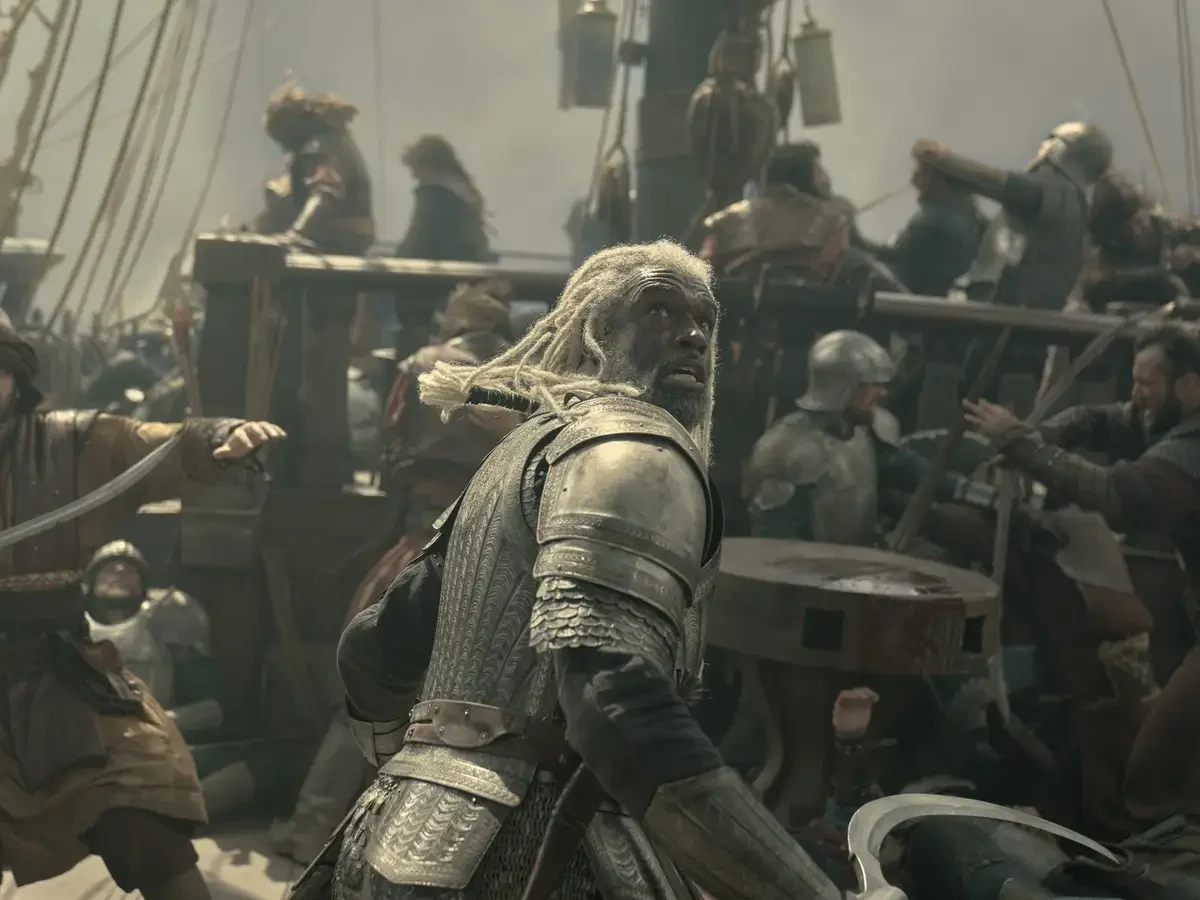
In ‘House of the Dragon’, Alyn of Hull kills Sharako Lohar after an impressive fight in the water, but this is not something that happens in ‘Fire and Blood’. It is a significant creative choice that closes off a chapter the books keep open, streamlining a storyline that might otherwise have demanded more screen time in future episodes.
Jace’s recovered body in the show gives Rhaenyra a direct and visceral grief that fuels her revenge arc, while Alyn killing Lohar adds emotional resonance and eliminates Lohar’s later book-driven aftermath. These changes make the battle less sprawling but more personal, aligning with the show’s focus on character-driven drama.
Rhaenyra Is Locked Away, and Jace’s Death Carries New Weight
In the show, Rhaenyra is quick to leap into action and appears set to ride her dragon Syrax into the thick of battle, until her son Jacaerys abruptly orders her knights to keep her locked in her room. It is a jarring and unexpected move for the stubborn prince, and one that is nowhere to be found in ‘Fire and Blood’.
In the book, Jace has already taken command of the war campaign by this point in the story, so it stands to reason he would naturally be the first to enter the fray from dragonback. Instead, the show opts for a push-and-pull dynamic between the Queen and her heir, so that it hits harder when this directly leads to Jace’s own death.
In both the book and the show, Jace and Vermax die in a very similar fashion. As Fire and Blood records, thousands died in the battle, yet none of these losses were felt so deeply as that of Jacaerys Velaryon, Prince of Dragonstone and heir to the Iron Throne. The show honors that emotional weight, even if the road to that moment has been substantially redrawn.
Rhaena and Sheepstealer inadvertently causing Jacaerys’ death can only set up Rhaenyra’s distrust in Rhaena going forward, while giving Daemon the opportunity to finally prove himself as a father and protect his daughter’s honor, just as he did for Nettles in the source material.
It is a clever restructuring that keeps the emotional core of those relationships intact, even as the plot mechanics shift around them significantly. If you have been debating whether these changes strengthen or undermine what makes the Battle of the Gullet so devastating in the pages of ‘Fire and Blood’, this is the moment to make your case.