


10 Movie Moments That Are Impossible to Forget



Some scenes do more than advance a story. They seep into culture, get quoted in everyday talk, and show up in tribute videos and parodies for years. Filmmakers plan these sequences with precision, from camera placement and lighting to sound and editing, so the moment lands exactly as intended.
This list brings together ten scenes that audiences continue to talk about long after the credits roll. Each entry focuses on what happens in the scene and how it was crafted, including the people who built it and the techniques that made it work on screen.
The Shower Scene in ‘Psycho’ (1960)
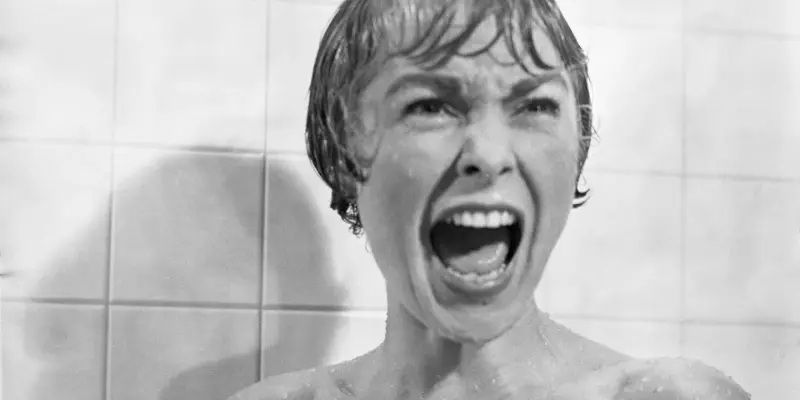
Alfred Hitchcock staged the murder of Marion Crane with a rapid series of cuts, shrieking strings by Bernard Herrmann, and meticulous camera setups that avoided explicit violence while suggesting everything. Janet Leigh performed the role with body double Marli Renfro used for specific shots, and the production used chocolate syrup to stand in for blood since it read well on black and white film.
The sequence runs under a minute yet contains dozens of edits assembled to control rhythm and shock. Saul Bass created detailed storyboards for the action, and the crew used a combination of close framing, quick insert shots, and sound to sell the stabbing without showing the knife entering flesh. The result changed expectations for how suspense scenes could be constructed.
“I Am Your Father” in ‘The Empire Strikes Back’ (1980)
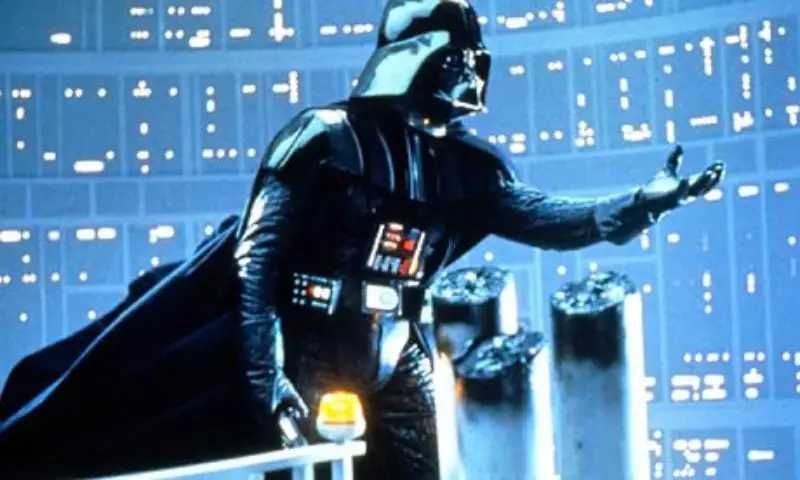
The duel between Luke Skywalker and Darth Vader in Cloud City leads to the revelation that shifts the direction of the series. Director Irvin Kershner limited knowledge of the true line during production, using alternate dialogue on set to preserve secrecy, with the final words recorded later by James Earl Jones.
To stage the scene, the team built multi level sets that allowed for long tracking moves during the lightsaber fight. John Williams scored the moment with cues that support the shock of the reveal, and visual effects artists composited the deep reactor shaft environment around the actors to create a sense of vast space.
The Bow of the Ship in ‘Titanic’ (1997)
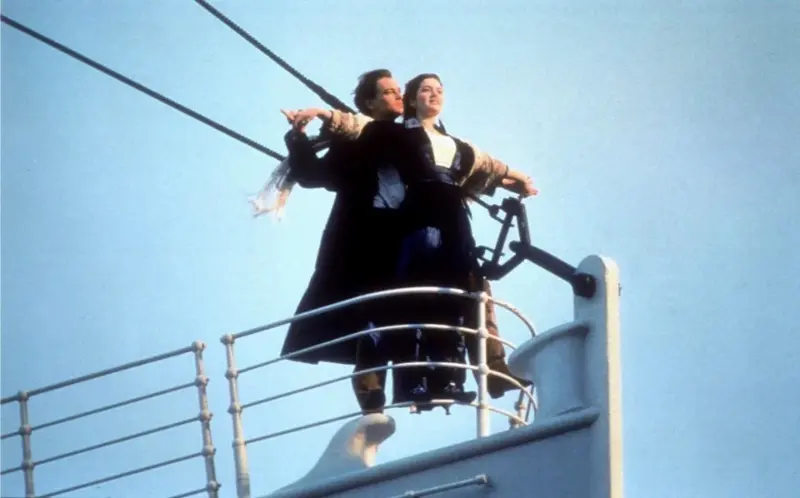
Jack and Rose step onto the bow of the RMS Titanic as the wind and sea stretch out ahead, accompanied by James Horner’s score. The production built a large exterior section of the ship at Fox Baja Studios in Rosarito, positioning the bow set over a water tank so the camera could capture an open ocean horizon.
The scene was photographed during ideal light to emphasize the sea and sky, with safety rigs and harnesses secured out of frame. The combination of practical set design, controlled weather effects, and a sweeping crane move created a shot that studios and theme parks continue to replicate for photo backdrops and promotional displays.
The Opening Attack in ‘Jaws’ (1975)
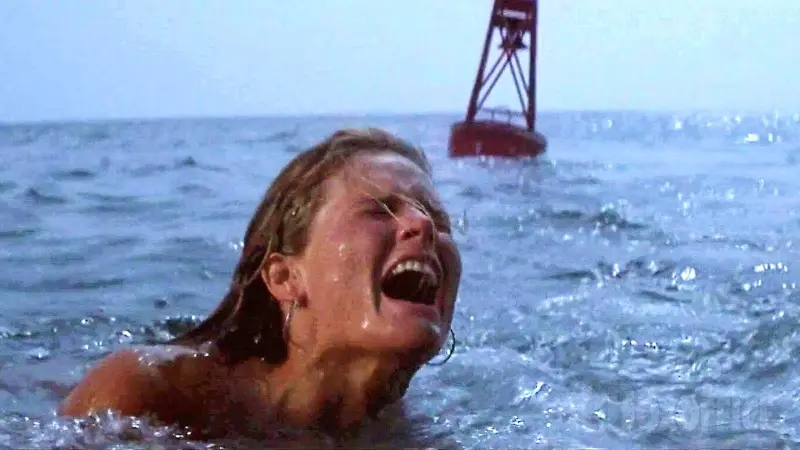
A nighttime swim turns into a terrifying pull beneath the surface as the unseen shark drags a victim back and forth. Steven Spielberg filmed the scene off Martha’s Vineyard with stunt performer Susan Backlinie attached to a system of lines and pulleys that allowed crew members to yank her suddenly in different directions.
Mechanical issues with the full size shark kept it off camera early in the film, so the production relied on point of view shots, water level framing, and John Williams’s two note motif to signal danger. This approach established a template for suspense that later thrillers used when hiding a monster or threat from view.
Bullet Time on the Rooftop in ‘The Matrix’ (1999)
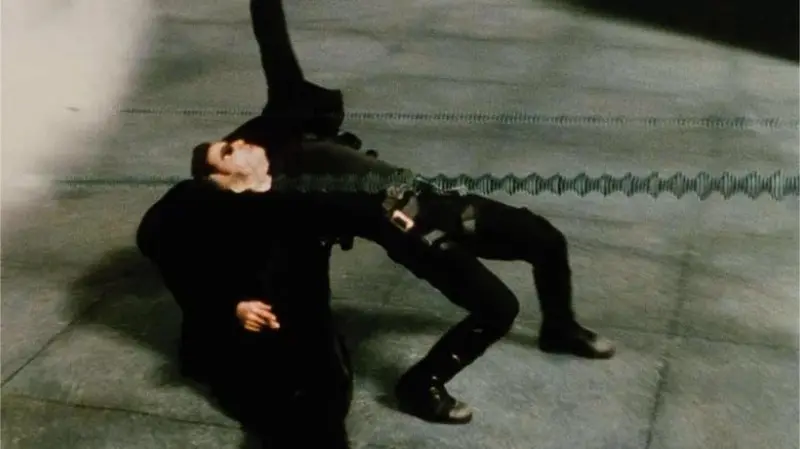
Neo bends backward as bullets slice the air, while the camera appears to glide around him at extreme speed. Visual effects supervisor John Gaeta and the team used an array of still cameras firing in sequence to capture multiple angles in a fraction of a second, then interpolated frames to create smooth motion.
The production combined green screen work, digital backgrounds, and practical wire rigs to make the movement possible. The effect became a widely adopted technique in action cinema and advertising, with the term bullet time entering common technical vocabulary for time slicing camera arrays.
Running the Steps in ‘Rocky’ (1976)
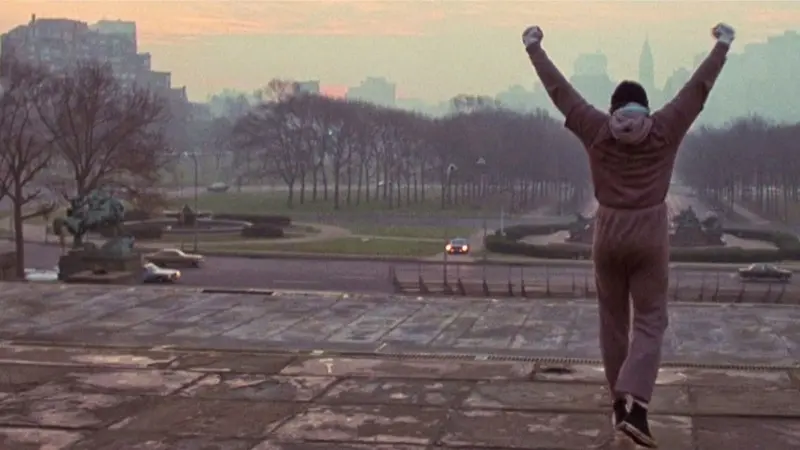
Rocky Balboa charges up the steps of the Philadelphia Museum of Art and raises his arms as the training sequence peaks. The film made early use of the Steadicam, invented by Garrett Brown, to move with the actor through streets and up the stairs while keeping the image stable.
The montage stitched together locations across Philadelphia, using music by Bill Conti to build tempo as the route grows longer and faster. The steps became a public fitness landmark after the release, and a statue of the character was later installed near the base for visitors and local events.
The Chestburster in ‘Alien’ (1979)
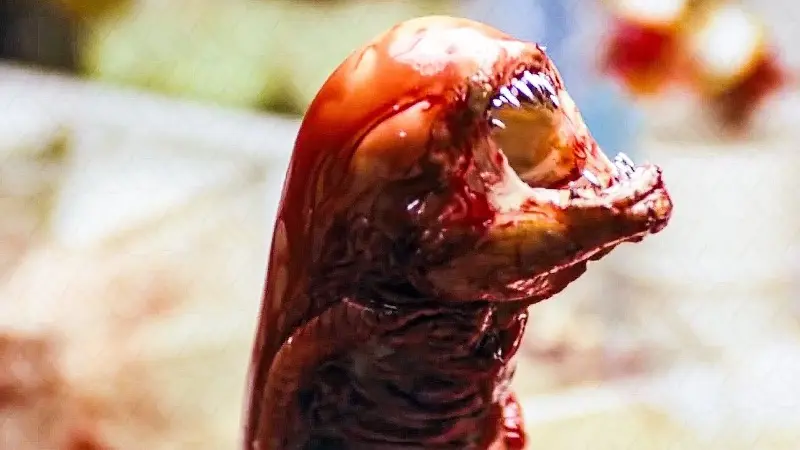
A quiet meal aboard the Nostromo ends when a creature erupts from Kane’s chest, sending the crew into chaos. Director Ridley Scott staged the effect with practical rigs and concealed tubes that pumped fluid and propelled the creature through a breakaway shirt, with John Hurt wearing a special appliance for the gag.
To amplify shock, the cast was not briefed on the exact volume and direction of the blood effects, which created genuine surprise when the spray hit the table and performers. The scene was filmed at Shepperton Studios with multiple cameras rolling, allowing editors to cut between reactions and the animatronic insert without repeating the messy setup.
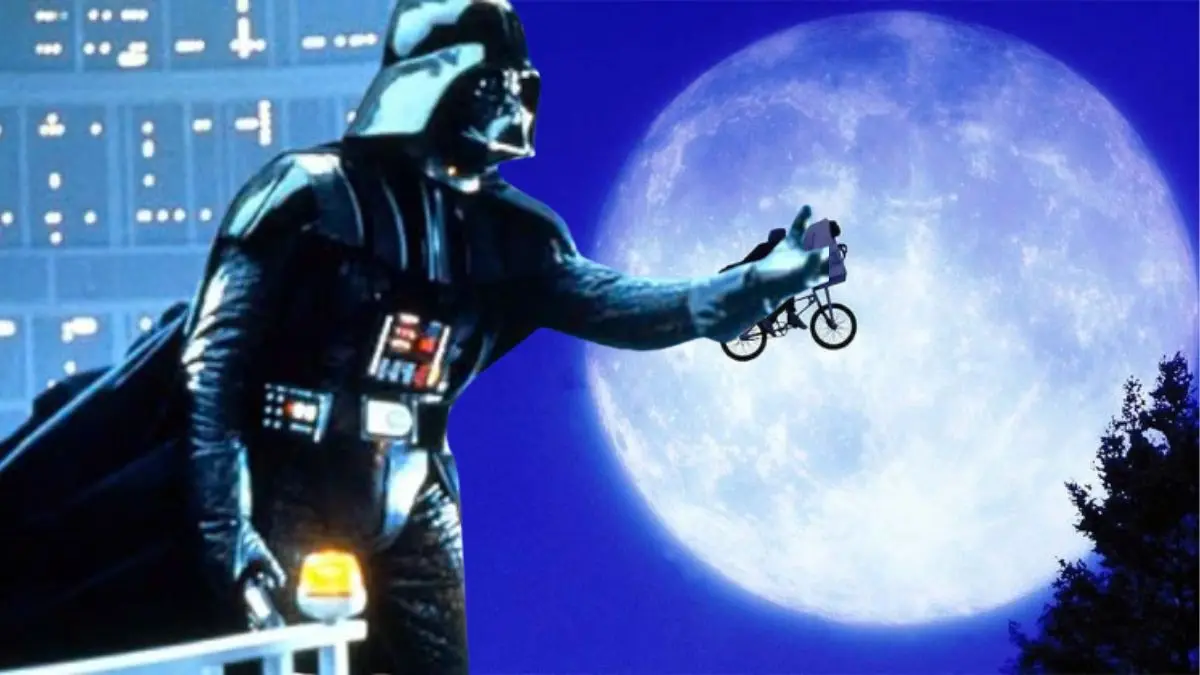
The Moonlit Bike Flight in ‘E.T. the Extra Terrestrial’ (1982)
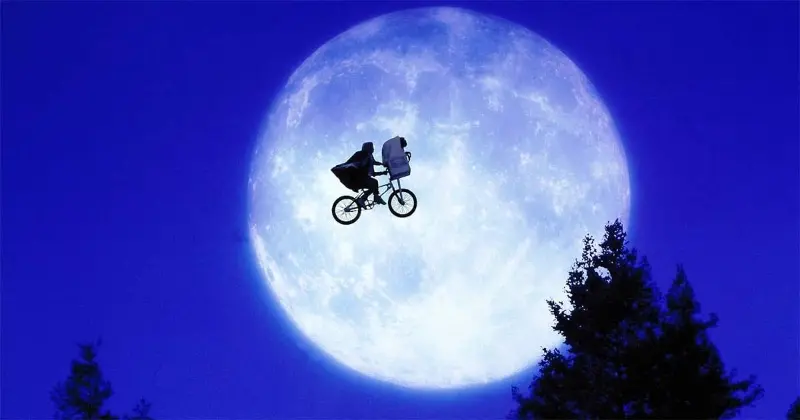
Elliott and E.T. rise above the treetops as the bicycle silhouette crosses a bright full moon. Industrial Light and Magic combined blue screen photography with matte work to create the sky and lunar backdrop, while performers rode rigged bikes against controlled lighting to match the key and fill on the composite.
The image became the emblem for Amblin Entertainment and appeared in the company logo in later years. Allen Daviau’s cinematography and John Williams’s orchestration cue the lift into the air with a musical swell that editors matched to the moment the wheels leave the ground.
The Baptism Montage in ‘The Godfather’ (1972)
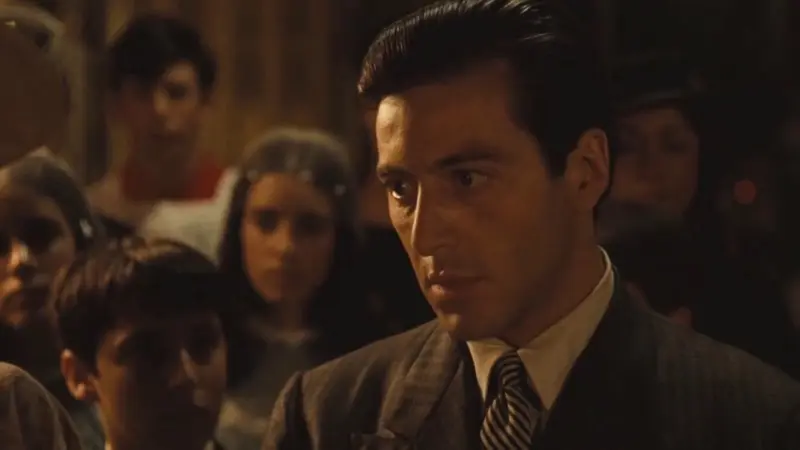
Michael Corleone stands as godfather at a church baptism while his men carry out a series of coordinated hits. Francis Ford Coppola intercut the sacred rite with the violence using parallel editing, contrasting organ music and vows with images of the assassinations unfolding in different locations.
Editors Peter Zinner and William Reynolds shaped the rhythm of the sequence to move between the ceremony and the killings with escalating intensity. The baptism scenes were filmed in Old St. Patrick’s Cathedral in New York City, and Nino Rota’s score underlines the transitions between the church and the outside world.
The Portals Open in ‘Avengers Endgame’ (2019)
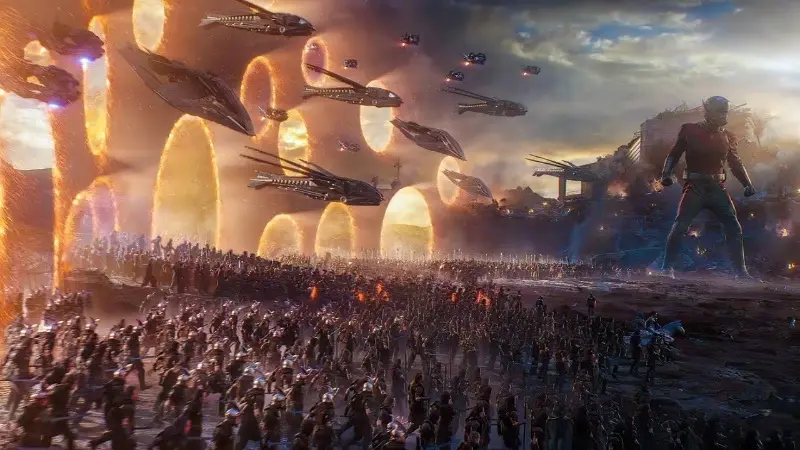
As Captain America faces Thanos and his army, circles of light appear and returning heroes step onto the battlefield. Directors Anthony and Joe Russo coordinated a large ensemble day with motion capture performers, digital doubles, and live action plates so Industrial Light and Magic could layer crowds and energy effects around the principal actors.
Composer Alan Silvestri titled the cue for the moment Portals, and the sound team built the swell of voices and environmental effects to match each arrival. The sequence was planned with detailed previs and timing charts so the camera finds each group on cue before the final charge begins.
Share the scenes that stayed with you in the comments so everyone can compare notes on which moments they still think about.

