Netflix’s New Reality Show Is Already Being Called One of the Most Controversial Series Ever Greenlit


Reality television has never been shy about borrowing from history’s most uncomfortable moments, but Netflix’s latest unscripted project may have found the most provocative source material yet. The streamer has built a reputation for greenlighting ambitious, boundary-pushing projects, and its newest announcement is already generating exactly the kind of reaction that comes with attaching a camera crew to one of psychology’s most infamous studies.
That study is the Stanford Prison Experiment, conducted in 1971 by psychology professor Philip Zimbardo. More than 70 students responded to an ad seeking participants for the research, with 24 men ultimately selected and randomly assigned roles as either prisoners or guards inside a mock prison, earning $15 a day for what was originally planned as a two-week study.
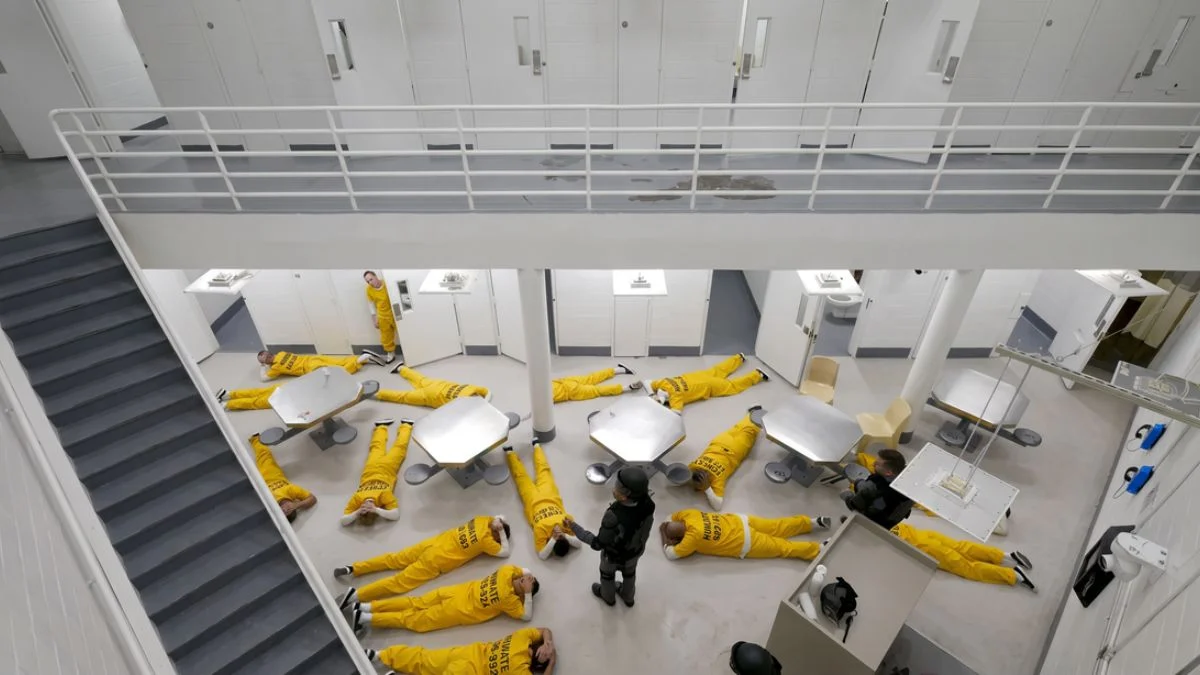
Netflix has now announced ‘The New Stanford Prison Experiment,‘ an unscripted series that reimagines that premise for a modern audience. The show will place 30 willing participants inside a real prison, randomly assigning them roles as guards or prisoners, with the goal of examining how people respond when placed inside a system built on power, hierarchy and control.
The series is set to premiere on October 21, with its debut season consisting of six episodes running 45 minutes each. Unlike its 1971 predecessor, which was shut down after less than a week once the assigned guards began mistreating the prisoners, Netflix’s version is being framed as a structured examination of whether people inevitably conform to the roles they’re given or whether individual morality can resist those pressures.
The original Stanford study has remained one of the most cited, and most criticized, pieces of research in the history of psychology. Despite its serious ethical flaws, including the psychological harm inflicted on participants during the abbreviated study, it has continued to shape public understanding of how situational power dynamics can influence behavior.
That controversial legacy has followed the announcement of Netflix’s series almost immediately, with the very premise of recreating the experiment as entertainment drawing sharp reactions from viewers questioning whether the format can responsibly handle such a fraught subject. The show’s inspiration is clear from its title alone, and the streamer appears to be leaning directly into that provocative connection rather than distancing itself from it.
Netflix has previously shown a willingness to greenlight projects built around ethically complicated or historically sensitive material, betting that audience curiosity will outweigh any discomfort with the source material. Whether ‘The New Stanford Prison Experiment’ manages to say something meaningful about power and human behavior, or simply repackages a widely criticized study for streaming entertainment, will likely become one of the more debated questions in reality television once the series actually premieres.
With six weeks still to go before its release, the show has already proven capable of generating exactly the kind of conversation that tends to follow a Netflix project built around genuine controversy.
Do you think Netflix can handle the Stanford Prison Experiment’s legacy responsibly?
Have something to add? Let us know in the comments.