‘One Piece’s Sun God Nika Explained: The Ancient Legend Behind Luffy’s Most Powerful Form

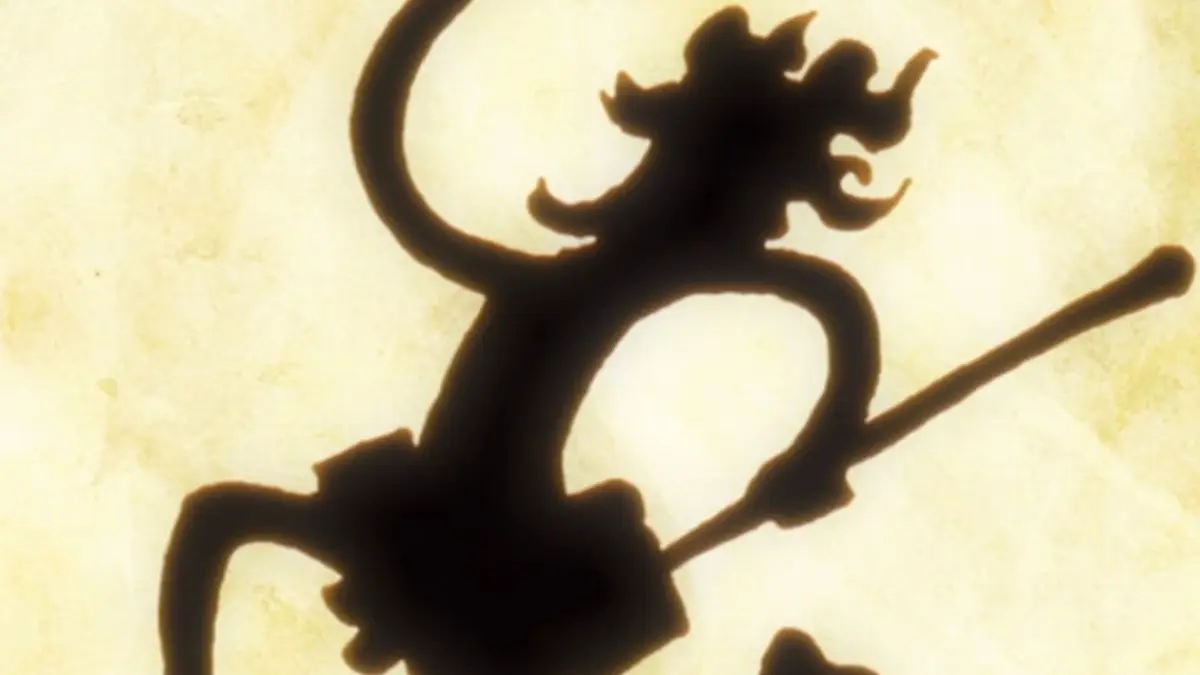

Few reveals in manga history hit as hard as the moment ‘One Piece’ pulled back the curtain on the true identity of Luffy’s Devil Fruit. What fans had long accepted as a simple rubber-based Paramecia ability turned out to be something far more ancient, far more sacred, and far more dangerous than anyone could have predicted. At the center of it all is a figure whose very name the World Government has spent centuries trying to erase.
Sun God Nika is not just a name. He is a myth, a prophecy, and now, a living force wearing the face of the most beloved pirate in anime history. To understand what Luffy has truly become, you first have to understand the legend that preceded him by thousands of years.
The Ancient Legend of the Sun God
Nika is a mythical warrior from ancient times, revered as the Sun God by enslaved peoples, and his legend was first mentioned in the story by Who’s-Who during his imprisonment by the World Government. The revelation lands with enormous weight precisely because it was never supposed to reach the public. According to Vegapunk, Nika’s existence is only recorded in the most ancient of texts, having been otherwise erased in more modern documents, largely covered up by the hands of the World Government to keep the whole world from knowing of his existence.
According to the legends, Nika is a heroic figure, a friend to slaves, and a constant source of adoration, believed to have spread joy and brought smiles wherever he went, which is why he is often depicted with a smile. This is not accidental imagery. Every element of the Sun God’s myth is a direct mirror of Monkey D. Luffy’s personality, from his inability to walk past someone in need to the unshakeable grin he carries into every battle.
One of the guards during Who’s-Who’s imprisonment would tell him stories of a warrior who fought for the freedom of slaves and sought the liberation of all oppressed peoples, particularly the Fish-Men. As a result of those stories, Who’s-Who began to pray to Nika for his own freedom, and after the guard later disappeared, he concluded the World Government was behind it because they wanted to stop the legend from spreading.
Luffy’s Devil Fruit Awakening and the Warrior of Liberation
The true nature of Luffy’s Devil Fruit is revealed upon its awakening as a Zoan type called Hito Hito no Mi, Model: Nika, granting the user a rubber body and allowing them to transform into Sun God Nika. This bombshell recontextualizes every single fight Luffy has ever had, revealing that his so-called “rubber powers” were never a Paramecia quirk but rather the physical inheritance of a god.
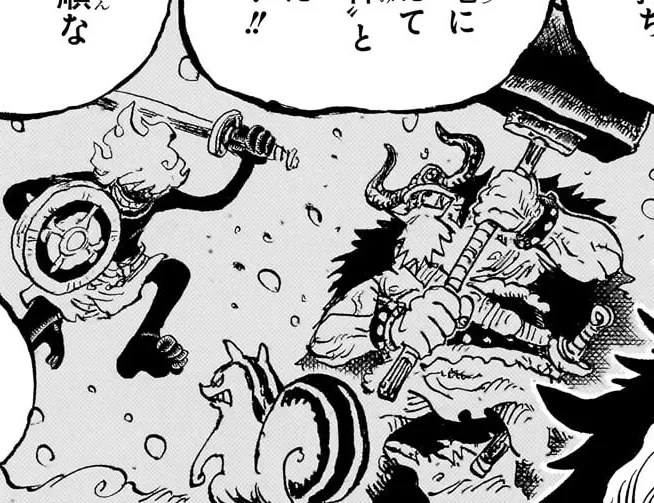
The World Government changed the name of the fruit to the Superhuman Gum-Gum Fruit to hide the existence of the fruit, and they tried to find the fruit for 800 years, but every time they attempted to seize it, as if the fruit itself had a will, they failed. The implication is staggering. The fruit itself chose its bearer, slipping through the World Government’s grasp for centuries until it landed in the hands of a seven-year-old boy from Fushia Village.
Luffy’s Gear 5 was seen as a close reincarnation of Nika, suggesting his Devil Fruit powers were awakened after many years of waiting since Joy Boy obtained the same Devil Fruit. The lineage runs deep, connecting Luffy not just to a legendary warrior but to the very idea of freedom itself as a living, recurring force in the world.
Nika’s Connection to Elbaph and the Giants
The giants of Elbaph see Nika as the Sun God, with even the accursed prince Loki claiming the title when he led a rebellion against his father, and the giants idolize Nika wholly, even if they believe he may be a destroyer god rather than a savior. This duality is what makes the character so compelling from a narrative standpoint.
The Elbaf arc confirmed through a mural drawn by the Giants during the Void Century that the Sun God Nika did indeed exist, and the Harley read aloud by Nico Robin in Chapter 1138 states that the enslaved prayed and the Sun God appeared. That single line reframes the entire mythology of ‘One Piece’, placing Nika’s origin not in power or birthright but in the desperate prayers of the oppressed.
The Buccaneers were also aware of Nika as a concept and would mimic the Nika dance, the pose Luffy struck during his fight with Kaido after unlocking Gear 5, believing that Nika would one day save them as they were being wiped out. These details quietly seeded the revelation long before it arrived, rewarding attentive readers who had been paying close attention to the series’ mythology.
The Real-World Inspirations Behind the Sun God
Nika’s epithet, “Sun God,” is based on the concept of a solar deity, a common mythos across several real-world cultures that represent the sun or aspects of it, and because of the sun’s importance to life as a whole, most solar deities are recognized as symbols of power, strength, and prosperity. Eiichiro Oda has always built his world on real cultural foundations, and Nika is arguably his most layered creation yet.
Nika’s name is an alternate spelling for Nike, the Greek goddess of victory, and can be used as a term meaning to “win” or “conquer.” Nika’s name may also be derived from “IC XC NIKA,” a Christian symbol meaning “Jesus Christ conquers,” with “NIKA” being the Greek word for “conquer.” The deliberate layering of victory symbolism into the character’s very name is exactly the kind of detail that makes ‘One Piece’ feel like a story built on decades of careful intention.
Nika appears to draw inspiration from Sun Wukong, one of the main characters of the classic Chinese novel ‘Journey to the West.’ The trickster energy, the rubber-like unpredictability, the transformation-based combat and the instinct to free those who are shackled all trace back to one of literature’s most iconic liberation figures. Nika’s most fitting real-world parallel may be the Brazilian Curupira, mythical creatures of the Amazon whose statues bear a striking resemblance to Nika’s appearance, a connection made more significant by Oda’s own acknowledged affinity for Brazil.
The legend of Sun God Nika is ultimately the story of ‘One Piece’ itself, a story about the undying will to be free that no government, no warlord, and no ancient conspiracy can ever truly extinguish. Now that the Elbaf arc is actively deepening the lore, fans everywhere are rethinking everything they thought they knew about Luffy’s destiny, so what does your read of the Sun God mythology say about where this story is ultimately headed?