Paramount Just Handed Almost Half the Company to Middle Eastern Governments, and Washington Is Furious

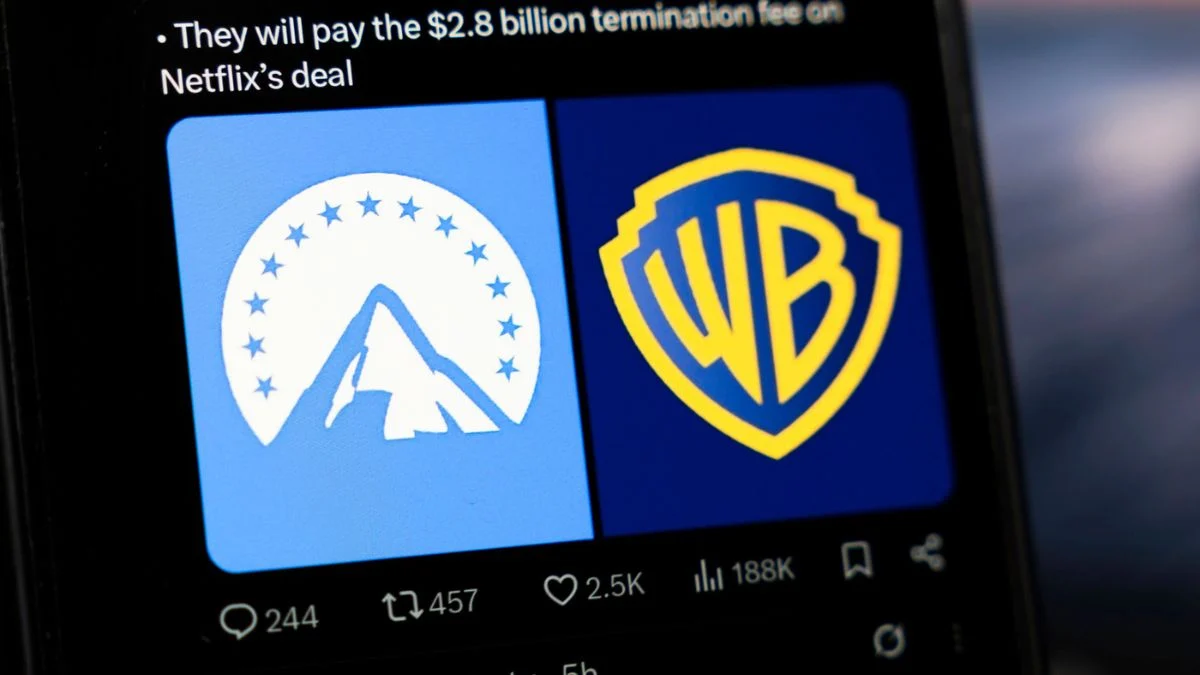

Paramount’s blockbuster merger with Warner Bros. Discovery has been inching toward the finish line for the better part of the year, clearing one regulatory hurdle after another while facing mounting scrutiny over exactly who is bankrolling the deal. The $110.8 billion takeover, backed heavily by Oracle co-founder Larry Ellison, has already survived antitrust review and a shareholder vote, but one lingering question kept coming up: how much of the combined company would end up in foreign hands.
That question has loomed especially large given the identity of some of the deal’s biggest financial backers. Sovereign wealth funds from Saudi Arabia, Qatar, and the United Arab Emirates have quietly become some of the most important sources of capital fueling David Ellison’s media ambitions, and Democratic lawmakers have spent months pressing federal regulators to take a hard look at that arrangement before signing off.
Those concerns didn’t stop the Federal Communications Commission from giving its blessing. The agency issued a declaratory ruling approving foreign investors to own 49.5% of the non-voting equity in the merged Paramount-Warner Bros. Discovery company, with roughly 38.5% of that stake controlled by the three Middle Eastern sovereign wealth funds. The FCC went a step further, also permitting up to 100% indirect foreign equity interest in Paramount in the aggregate, a threshold nearly double the agency’s usual 25% cap on foreign ownership in U.S. broadcast and media companies.
Crucially, the ruling keeps those foreign investors out of the driver’s seat. The stakes are structured as non-voting Class B shares, meaning the Ellison family and RedBird Capital Partners will retain control of all voting stock in the combined company, with no other equity participant holding any governance rights. Saudi Arabia’s Public Investment Fund is expected to hold roughly 15.1% equity, the UAE’s sovereign wealth fund around 12.8%, and the Qatar Investment Authority about 10.6%.
The approval followed a national security review conducted by Team Telecom, the interagency committee that assesses foreign participation in the U.S. telecommunications sector, which recommended clearing the deal on the condition that Paramount commit to specific data protection and access restrictions for its foreign investors. Paramount framed the outcome as validation of a deal it has argued is necessary for survival in a media landscape increasingly dominated by tech giants.
In a statement, the company said it appreciated the commission’s careful review and was pleased the petition was granted, adding that a combined Paramount-Warner Bros. Discovery would have the scale and resources needed to compete, invest, innovate, and deliver premium content to audiences worldwide.
Not everyone at the FCC agreed with that framing. Democratic Commissioner Anna Gomez issued a sharp dissent following the vote, warning that the ruling hands outsized influence to some of the world’s most repressive governments. She argued that an investment of this size in one of America’s largest media companies does not simply buy equity, but secures leverage over what the company ultimately says and produces.
The pushback wasn’t confined to the commission itself. A group of Senate Democrats, including Sen. Maria Cantwell, had already sent letters earlier in the year demanding a rigorous review, arguing that foreign governments hostile to press freedom could gain unprecedented sway over a media conglomerate central to American journalism and culture. Media advocacy group Free Press also formally opposed Paramount’s request, warning regulators that allowing this level of foreign equity risked turning a major domestic news outlet into a potential propaganda vehicle.
The FCC ultimately rejected those arguments, concluding in its ruling that the foreign investors would not be positioned to exert meaningful influence, let alone control, over decisions involving Paramount or its licensees. The agency framed the decision as consistent with its long-standing policy of encouraging foreign capital investment in the broadcast industry, even as critics continue to argue the scale of this particular arrangement is unprecedented.
Even with the FCC’s approval secured, the merger still isn’t fully in the clear. A federal judge has temporarily blocked the takeover ahead of a trial set for next March, where a coalition of a dozen U.S. states is challenging the deal on antitrust grounds. European regulators also still need to weigh in before Paramount and Warner Bros. Discovery can officially become one company.
For now, the FCC’s green light marks one of the biggest milestones yet in one of the most closely watched media mergers in years, even as questions about foreign influence over American news media are unlikely to quiet down anytime soon.
What concerns you most about the FCC approving nearly 50% foreign ownership?
Have something to add? Let us know in the comments.