‘Percy Jackson’ Star Margaret Cho Reveals the Alarming Hollywood Power Tarantino Had After ‘Pulp Fiction’

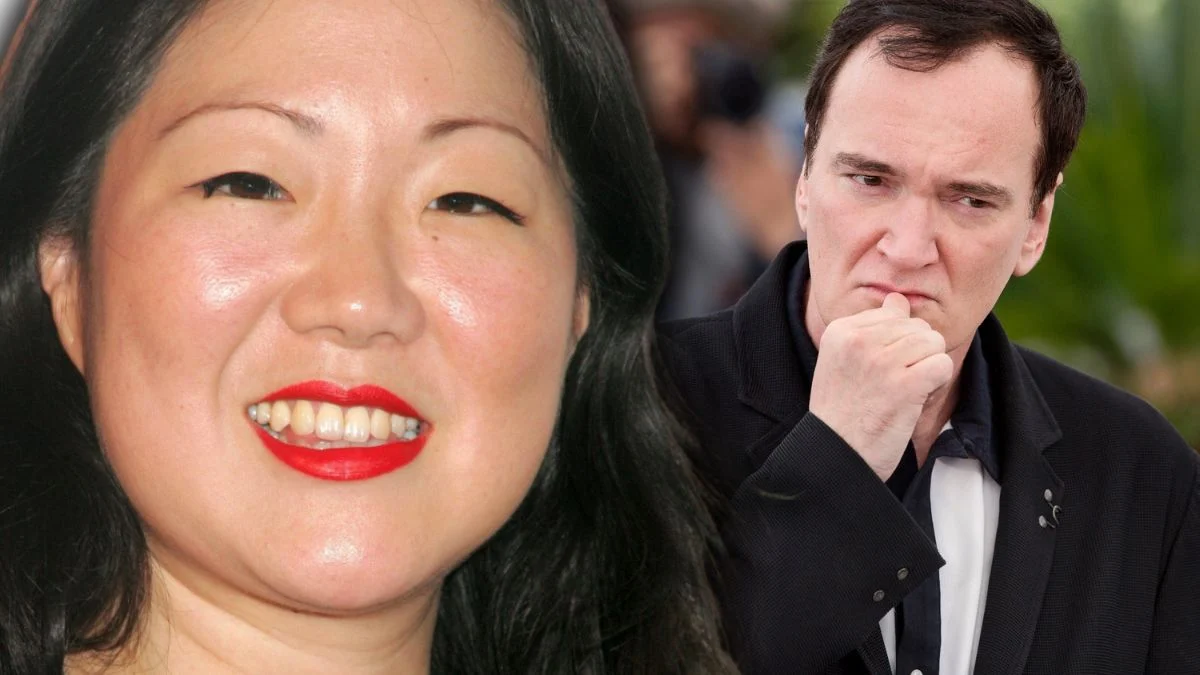

Few filmmakers have ever arrived in Hollywood with the force of Quentin Tarantino in the mid-’90s. ‘Pulp Fiction’ turned him from a cult favorite into one of the most talked-about names in the business almost overnight. Now someone who stood right next to him during that moment is describing what it felt like, and Margaret Cho’s account of Tarantino’s post-‘Pulp Fiction’ fame is far from starry-eyed.
The film premiered at the 1994 Cannes Film Festival and promptly won the Palme d’Or. Made on a modest $8 million budget, it went on to gross nearly $214 million, which made it a rare critical and commercial smash. That success changed how the entire industry treated its director.
Cho and Tarantino dated in the early ’90s, after meeting at the Snake Pit, a famed Hollywood bar, shortly after ‘Reservoir Dogs’ came out. He also guest-starred on her sitcom ‘All-American Girl’ in 1995, in an episode that aired about a month before he won his first Oscar. Their relationship ended before ‘Jackie Brown’ arrived in 1997.
Cho now revisits that era on an upcoming episode of the Dinky Podcast, with the full interview set to drop on November 3. Entertainment Weekly has reached out to a representative for Tarantino for comment.
What stuck with Cho was the sheer level of deference. She described the awards season right after ‘Pulp Fiction’ as a time when people fawned over Tarantino everywhere the couple went, and she said she had never seen that degree of ass-kissing before or since. At Directors Guild events, she recalled, the whole table rose when he walked in, including legends like Billy Wilder and Martin Scorsese.
The same thing happened at Hollywood restaurants, where people embraced him. Cho recalled actors trying to pull him aside to pitch scripts and projects, and it left her unsettled. In her words, “nobody should have that much power.”
Despite the frenzy, Cho said Tarantino stayed pretty level-headed. He drove a dented, barely drivable Geo Metro, which she called about the worst car anyone could have in the ’90s. He would hand it to the valet at events while people fell at his feet.
She also understands why it happened. In her view, Tarantino changed Hollywood in the ’90s in a revolutionary way, so the industry simply fell around him.
Their relationship was not all awards-season chaos. Cho recalled that Tarantino bought out the inventory of Video Archives, the video store where he once worked, and that the two of them watched about 8,000 movies together. She described that stretch as being like film school and called the time together a good one.
She still speaks of him warmly. Cho called him an incredible artist and one of the greatest American treasures, and said she is proud of him.
The two remain friendly, though they don’t talk the way they used to. Cho attributes that to the fact that Tarantino doesn’t have a phone or email anymore. In 2019, he appeared on an episode of ‘The Margaret Cho Podcast’, so the connection has never fully gone away.
That gives her comments a different weight. They aren’t a swipe at a former partner but a look at what unchecked adoration looks like from the plus-one seat.
Stories about Hollywood power tend to focus on the person at the center, not the partner watching from the side. Cho’s account shows how quickly an industry can reorganize itself around one successful director, and how strange that looks to someone who isn’t caught up in it.
It also adds to a larger body of recollections about the era, as figures who knew Tarantino before and after ‘Pulp Fiction’ look back at the film’s impact. With the full Dinky Podcast episode arriving on November 3, there’s likely more to come.
Did Hollywood Give Quentin Tarantino Too Much Power After Pulp Fiction?
Have something to add? Let us know in the comments!