‘Rick and Morty’ Season 9 Episode 2 Ending Explained: What the Red Button Really Means for Rick

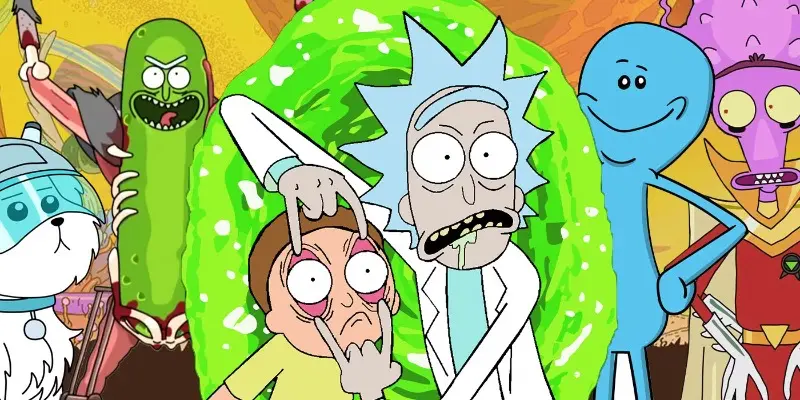

‘Rick and Morty‘ has always weaponized its comedy to deliver genuinely devastating emotional gut punches, and ‘Ricks Days, Seven Nights’ proves season 9 has no intention of easing up. The second episode of the new season aired on May 31, 2026, on Adult Swim, and it left fans with a lot more to process than the typical interdimensional chaos.
The episode is emotionally charged and quite mature while dealing with questions of free will, Rick’s expectations from life, and his perennial quest to fit in. What looks like a breezy vacation premise on the surface turns out to be one of the more philosophically rich episodes the show has produced in years.
Rick’s Secret Vacation Identity as Ted
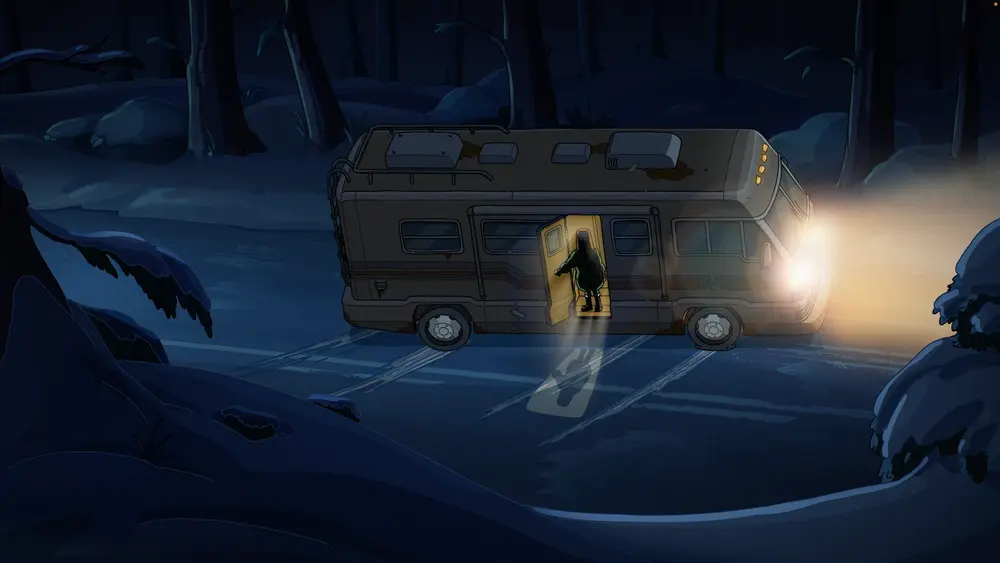
‘Ricks Days, Seven Nights’ begins with Rick fixing his RV’s tire before entering Marjorie’s bowling alley, where he meets up with a group of friends who call him “Ted.” It quickly becomes clear this is not a one-time alias. Rick soon learns that he takes a yearly trip to a planet 400 light years away from home, wiping his brain each time to enjoy a couple of weeks as someone else entirely.
They know Rick as a humble PVC product seller named Ted, who visits them during his two-month winter vacations each year, and they have a jolly good time bowling and fishing.
The contrast between this warm, low-stakes existence and Rick’s usual reality is quietly devastating. The episode invites viewers to see Rick’s “Ted routine” as more than escapism, suggesting it reflects a deeper need to step away from the exhausting weight of being the smartest being in the universe.
The episode was written by Jess Lacher and directed by Brian Kaufman, and is rated TV-MA-LSV. The writing here is particularly sharp in the way it uses the bowling alley setting to represent everything Rick’s real life is not, namely comfort, predictability, and genuine belonging.
The Hologram Failsafe and the Identity Crisis
Things begin to unravel when Ted’s vacation is disrupted. Trying to test his own defense mechanism, Ted stabs his hands, which triggers a failsafe as pre-recorded holographic messages of Rick start playing to explain the truth about Ted’s existence. Hologram Rick offers Ted two choices: press the blue button to forget everything and continue the vacation, or press the red button to become Rick again.
Ted, too confused to realize what is happening, chooses neither, and leaves his RV. He then reflects on the strange revelation that he is a being who exists for someone else’s entertainment, and while coming to terms with the truth about his identity, spends the night with Marjorie.
This moment is the emotional core of the episode. The show draws a direct line between Ted’s existential crisis and the broader question of what it means to be Rick Sanchez.
The issue of existential dread explored through manufactured sentience is a recurrent topic in ‘Rick and Morty,’ most prominently seen in the third season, and ‘Ricks Days, Seven Nights’ returns to the same territory to highlight Rick’s yearning for a stable, quiet life. The audience is asked to genuinely mourn something that was never quite real in the first place.
Marjorie’s Death and the Collapse of Ted’s World
The episode does not let the emotional stakes stay theoretical for long. A fight breaks out in the bowling alley when drones arrive trying to retrieve Rick, and it ends with Marjorie’s death. Rick is deeply saddened by this and works on a spaceship with his friends to travel back to his home reality.
Rick lost his “Ted” family, and they had even begun loving the “Rick” side a little too much, which is ultimately what makes the tragedy land so hard. The drones represent the intrusion of Rick’s real identity into the life Ted built, and Marjorie becomes collateral damage in a conflict she never knew existed. The episode reminds viewers of a simpler life Rick could have had if Rick Prime had never changed the course of his life with the Omega Device.
What the Red Button Ending Actually Means
Returning to his reality, Ted decides to destroy any sign of his past life, including his picture with Marjorie. He then requests Morty to push the red button, in hopes of ending his inner torment. The mechanics of the moment are deliberately ambiguous, and the emotional payoff is anything but clean.
After pressing the red button, Morty becomes surprised upon speculating whether the mechanism has worked, as Rick appears to be just the same. Rick mentions the irony: the mechanism has worked, which means Rick has returned to his old self, but he has not been able to heal the wounds he sustained while living Ted’s life. That single exchange contains the whole tragedy of the episode. Being Rick again does not mean being okay.
That “red button” moment with Morty was devastating, with Rick broken by pressing it and saying goodbye to Ted. What impressed many viewers was how it felt like Rick and Ted were somehow in play at the same time. The episode also acknowledges, as Summer points out, that Rick and Morty’s dynamic may not be the healthiest, though there is no denying that Morty cares about Rick even when things fall apart.
The Post-Credits Scene and What It Signals for Season 9
In the post-credits scene, Rick tries to begin another vacation on a planet full of squid aliens under another persona, but Summer and Morty quickly put it to an early end before it goes too far. It is a comedic beat, but it carries real weight after everything the episode just put the audience through.
Rick still sees himself as a destructive force that does nothing but hurt those who he lets get close to him, and based on the episode, some of that work ahead is going to be painful. Season 9 is clearly positioning Rick’s psychological fragility as a recurring thread, not just a one-off storyline. Evil Morty’s defeat from the premiere has also set up what could be a major future return, with speculation already tying his next appearance to the upcoming ‘Rick and Morty’ animated film.
Two episodes in, season 9 is making a strong case that ‘Rick and Morty’ at its best is not just about the madcap sci-fi inventiveness but about what it costs to be someone like Rick Sanchez. Whether you saw the red button moment coming or it completely blindsided you, share your reaction and what you think it means for the rest of Rick’s arc this season.