The Complete Spider-Man Movie and TV Timeline, From 1977 to the Spider-Verse


Before there was Tobey Maguire swinging between New York skyscrapers, or Miles Morales leaping through parallel dimensions, there was Nicholas Hammond climbing up the side of a building on a CBS soundstage. The story of ‘Spider-Man‘ on screen is longer, weirder, and richer than most fans realize, spanning nearly five decades of live-action television, blockbuster trilogies, franchise reboots, and genre-redefining animation.
Across twelve theatrical entries, three animated films, and three separate live-action continuities, Spider-Man has become the most-adapted superhero in modern cinema. Getting that full picture means going all the way back to where it started, long before any of the films that dominate modern pop culture conversation.
Every Spider-Man Movie and Show in Order at a Glance
Before diving deeper into each era, here is the full chronological release order of every major Spider-Man screen entry:
- ‘The Amazing Spider-Man’ TV Series (CBS, 1977–1979)
- ‘Spider-Man’ TV Movie (1977)
- ‘Spider-Man Strikes Back’ TV Movie (1978)
- ‘Spider-Man: The Dragon’s Challenge’ TV Movie (1981)
- ‘Spider-Man’ (2002)
- ‘Spider-Man 2’ (2004)
- ‘Spider-Man 3’ (2007)
- ‘The Amazing Spider-Man’ (2012)
- ‘The Amazing Spider-Man 2’ (2014)
- ‘Spider-Man: Homecoming’ (2017)
- ‘Spider-Man: Into the Spider-Verse’ (2018)
- ‘Spider-Man: Far From Home’ (2019)
- ‘Spider-Man: No Way Home’ (2021)
- ‘Spider-Man: Across the Spider-Verse’ (2023)
- ‘Spider-Man: Brand New Day’ (2026)
- ‘Spider-Man: Beyond the Spider-Verse’ (2027)
The 1977 CBS Series That First Brought Spider-Man to Life
‘The Amazing Spider-Man’ premiered on CBS on September 14, 1977, running for two seasons and a total of 13 episodes, with each episode clocking in at around 40 to 45 minutes. The show starred Nicholas Hammond as Peter Parker, and while it took considerable creative liberties with the source material, it marked the first time Spider-Man had ever been portrayed in live-action.
The series aired sporadically on CBS, with a pilot film in the fall of 1977, five episodes in the spring of 1978 as a midseason replacement, six hour-long episodes in the fall and winter of 1978, and a final two-hour episode that concluded the run in the summer of 1979. The pilot and select two-part episodes were packaged for theatrical release outside the United States, effectively creating the franchise’s earliest film entries.
Hammond appeared in three television films alongside the series, including ‘Spider-Man’ in 1977, ‘Spider-Man Strikes Back’ in 1978, and ‘Spider-Man: The Dragon’s Challenge’ in 1981, making him the first live-action film portrayal of the character.
‘Spider-Man Strikes Back’ combined two episodes from the TV series and centered on a story involving the dangers of nuclear weapons, while ‘The Dragon’s Challenge’ sent the hero on a globe-trotting political adventure involving a Chinese minister accused of conspiring against Chairman Mao.
The Sam Raimi Trilogy That Changed Everything
It was only in the 2000s that Sam Raimi’s Spider-Man trilogy marked the web-slinger’s proper cinematic debut, launching a legacy that would eventually see two more actors take on the role in live-action movies. The trilogy starring Tobey Maguire ran from 2002 to 2007 and fundamentally reshaped what superhero cinema could look like commercially and culturally.
The first film introduced audiences to Peter Parker by day and Spider-Man by night, with the iconic upside-down kiss cementing its place in pop culture while hauling in a massive $825 million at the global box office.
The films introduced antagonists including Green Goblin, played by Willem Dafoe and later James Franco, and Doctor Octopus, played by Alfred Molina, alongside love interest Mary Jane Watson, played by Kirsten Dunst, and the iconic J. Jonah Jameson, brought to life by J.K. Simmons.
‘Spider-Man’ made $821.7 million, which grew to $890.9 million by ‘Spider-Man 3’, while ‘The Amazing Spider-Man’ franchise, featuring Andrew Garfield in the role, earned $757.9 million for the first film and a slightly lower $709 million for its sequel. Directed by Marc Webb, Garfield’s two-film run from 2012 to 2014 co-starred Emma Stone and had its devoted supporters, but the underperformance of the second entry ultimately paved the way for a third reboot.
Tom Holland’s MCU Spider-Man Films in Order
After making his debut in ‘Captain America: Civil War’, Tom Holland’s Peter Parker starred in his very own solo film with ‘Spider-Man: Homecoming’, which took great strides to differ from its predecessors while keeping the character’s core traits from the comics, earning around $878 million worldwide. The MCU integration gave the character a new energy and a sense of shared universe stakes that the previous franchises had lacked.
‘Spider-Man: Far From Home’ became the first Spidey movie to top $1 billion at the worldwide box office, with much of its success attributed to the fever-pitch hype following ‘Avengers: Endgame’.
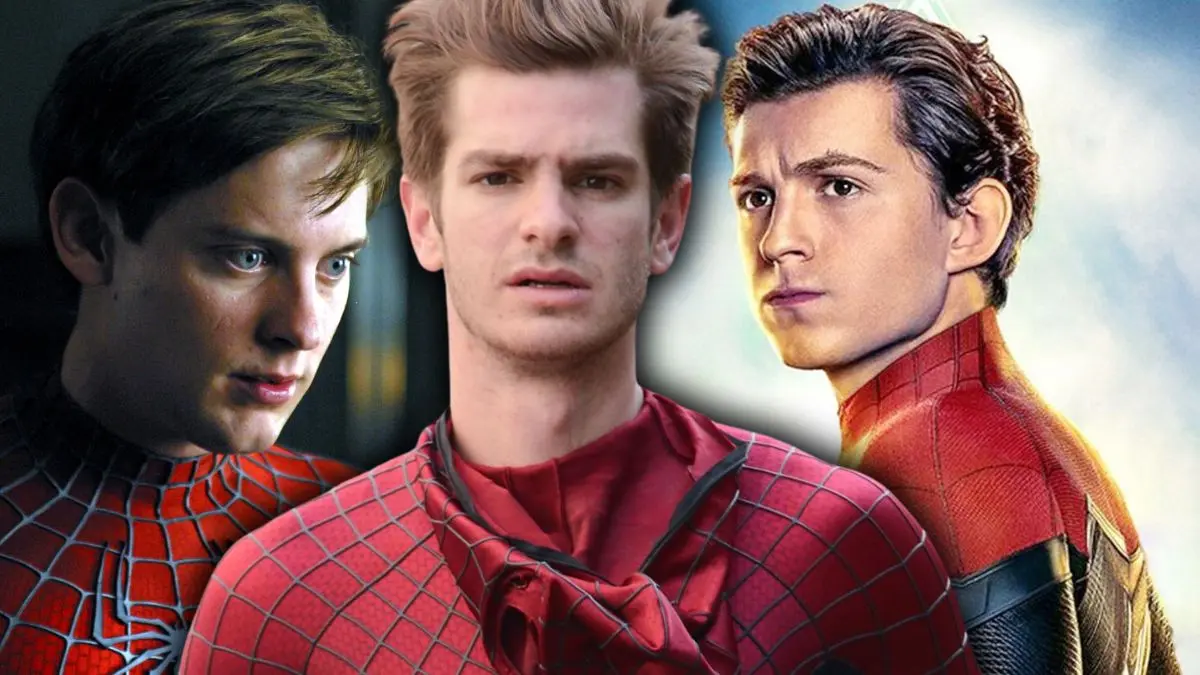
What followed surpassed every expectation. ‘Spider-Man: No Way Home’ in 2021 was an unprecedented cinematic event, bringing in Tobey Maguire and Andrew Garfield from their respective cinematic dimensions to help Holland’s Spider-Man in his moment of need.
All three Spider-Men had impeccable chemistry on screen, and as the actors described, it truly felt like Maguire, Garfield, and Holland’s Spider-Men were brothers, with No Way Home ultimately reaching $1.9 billion globally. Marvel Studios and Sony have officially confirmed a fourth Tom Holland Spider-Man film, currently titled ‘Spider-Man: Brand New Day’, scheduled for theatrical release in 2026.
The Spider-Verse Animated Films and What Comes Next
Miles Morales made his big screen debut in 2018 with ‘Spider-Man: Into the Spider-Verse’, which won the Academy Award for Best Animated Feature Film and grossed $394 million worldwide. The film’s revolutionary visual style, blending comic book paneling with immersive animation, sent shockwaves through the industry and redefined what animated superhero storytelling could achieve.
‘Spider-Man: Across the Spider-Verse’ proved even bigger, managing to surpass the entire gross of its predecessor in just 12 days of release and ending its run with $690 million worldwide. The story picks up with Morales on the run after discovering that his father’s future death was a so-called canon event he could not change, eventually finding himself trapped in a parallel universe where a version of himself works as the villainous Prowler.
The concluding chapter, ‘Spider-Man: Beyond the Spider-Verse’, is set to release on June 18, 2027, and will wrap up the trilogy that began with ‘Into the Spider-Verse’ while continuing the story of Brooklyn high schooler Miles Morales as he joins Spider-People from parallel universes to face threats across multiple realities. Producers Phil Lord and co-directors Bob Persichetti and Justin K. Thompson have said they knew how important the franchise was and decided they needed to take the time to make sure they got it just right.
From Nicholas Hammond cautiously climbing a skyscraper in 1977 to Miles Morales sprinting through collapsing dimensions, the ‘Spider-Man’ screen legacy is unlike anything else in superhero history. With ‘Brand New Day’ and ‘Beyond the Spider-Verse’ both on the horizon, this franchise shows no signs of stopping. Which version of Spider-Man holds the top spot in your personal ranking, and do you think the animated Miles Morales films have finally surpassed the Raimi trilogy as the definitive take on the character?