The DCU vs. DCEU Box Office Showdown Reveals a Surprising Twist in DC’s First Two Movies

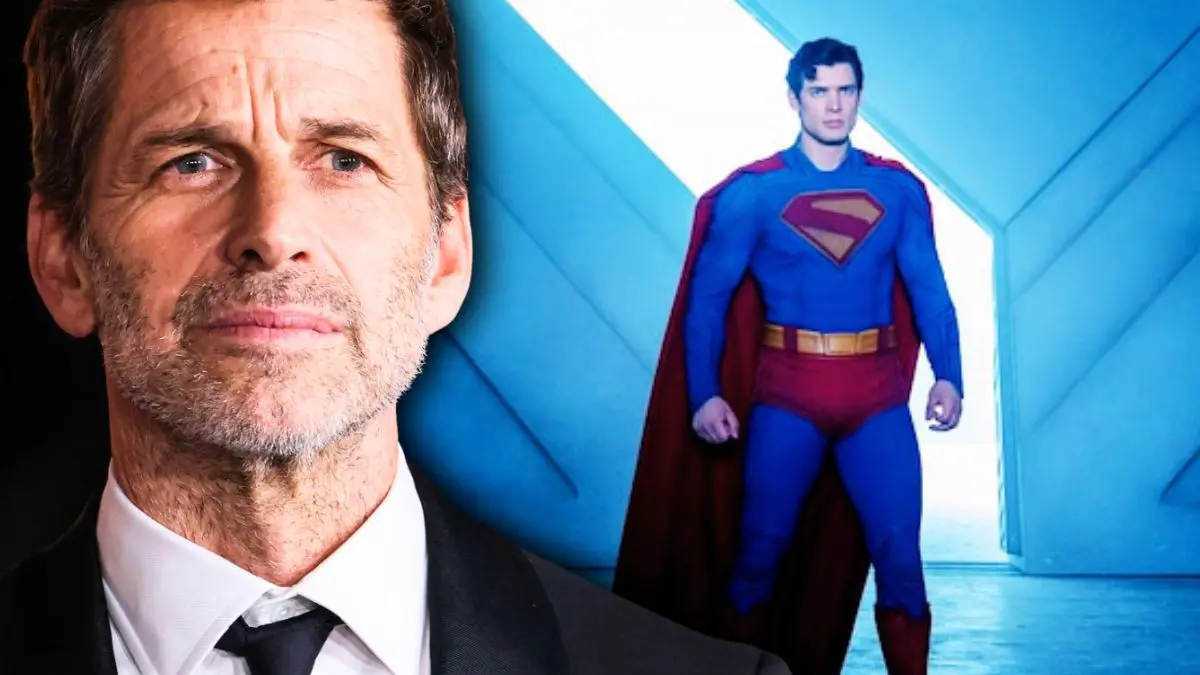

When James Gunn relaunched the DC Universe in 2025, fans immediately started measuring it against Zack Snyder’s original DCEU, and now that both franchises have two films in the rearview mirror, the numbers tell a genuinely fascinating story. ‘Superman’ and ‘Supergirl’ kicked off the new era, while ‘Man of Steel’ and ‘Batman v Superman: Dawn of Justice’ launched the old one, and putting their box office and critical receptions side by side shows just how much has changed, and how much has stayed exactly the same.
Both universes, it turns out, started strong with their first installment before stumbling with the second, a pattern that should make Gunn and company more than a little nervous heading into the rest of their slate.
How The DCU’s First Two Movies Performed At The Box Office
‘Superman’ launched the rebooted franchise with a domestic opening weekend gross of $125,021,735, eventually settling at a domestic total of $354,223,803 against international earnings that pushed its worldwide haul to $618,723,803. The film carried a reported production budget of $225,000,000, meaning it cleared that figure comfortably once marketing and distribution costs are factored in.
‘Supergirl‘, the second theatrical entry in the new DCU, opened to a considerably smaller $18,401,264 on its first day across 3,602 theaters, and through its opening weekend the film had accumulated $37,102,018 domestically.
Industry reporting noted that Supergirl’s $175 million budget means the film likely needs strong holds in the coming weeks just to approach profitability, with some analysts projecting it may struggle to crack $300 million worldwide, less than half of what ‘Superman’ managed in its own run.
That drop off between the first and second DCU films caught a lot of people by surprise, especially given how much goodwill ‘Superman’ generated heading into the summer.
How The DCEU’s First Two Movies Performed At The Box Office
Looking back at the original DCEU, ‘Man of Steel’ opened domestically to $116,619,362 in 2013, finishing its run with $291,045,518 domestically and $670,145,518 worldwide, on a budget of $225,000,000. It is worth noting that figure makes its production budget identical to that of 2025’s ‘Superman’ down to the dollar.
‘Batman v Superman: Dawn of Justice’ followed three years later in 2016, opening to a massive $166,007,347 domestically, the biggest debut of any film discussed here, and went on to gross $330,360,194 domestically and $874,362,803 worldwide.
Its production budget came in at $250,000,000, the highest of the four movies.
Interestingly, ‘Batman v Superman’ actually out-earned ‘Man of Steel’ at the box office despite what was about to happen with critics, proving that name recognition and marketing muscle can carry a film a long way regardless of quality concerns brewing behind the scenes.
How Critics Responded To The DCU’s New Era
The critical reception for James Gunn’s ‘Superman’ settled at a certified fresh score, with one report noting the film became the only Superman movie in history to eclipse a 90% Popcorn Meter mark on Rotten Tomatoes while landing around an 83 percent critics’ score. Audiences, by contrast, were even more enthusiastic, with the film posting a remarkably high approval rating that outpaced every other live action Superman movie ever released.
‘Supergirl’ told a very different story. The film’s Tomatometer score settled at a “rotten” 57% score on Rotten Tomatoes based on 148 reviews, a notable dip compared to its predecessor.

For context, one outlet pointed out that the previous DCU entries fared considerably better, with ‘Creature Commandos’ holding a 95% score, ‘Peacemaker’ Season 2 a 94%, and ‘Superman’ an 83%.
What stands out most about ‘Supergirl’ is the gap between critics and viewers. The film’s audience score landed at a 77 percent, a 19 percent jump over critics, suggesting general moviegoers connected with Milly Alcock’s performance even when professional reviewers did not. Several critics did single out the cast for praise even within otherwise negative reviews, with one writer noting Jason Momoa’s performance as Lobo became one of the most consistently mentioned positives across reviews.
How Critics Responded To The Original DCEU
‘Man of Steel’ fared similarly to ‘Supergirl’ in that it generated a genuinely split reaction, landing at an approval rating of 56% based on 340 reviews, with an average rating of 6.2 out of 10 on the review aggregator. The film’s critics consensus acknowledged that the film’s exhilarating action and spectacle can’t fully overcome its detours into generic blockbuster territory, a sentiment that echoes some of what was later said about Supergirl’s tonal inconsistencies.
If ‘Man of Steel’ was a mixed bag, ‘Batman v Superman’ was an outright disaster with the critical establishment. The film landed at a brutal 29% on the Tomatometer, with critics largely thinking it was overwrought and over-long, while general audiences responded considerably warmer with a fresh score in the low sixties.
The official critics consensus summed it up by stating the movie smothers a potentially powerful story and some of America’s most iconic superheroes in a grim whirlwind of effects driven action.
What’s striking is how the audience-critic gap pattern repeats itself almost exactly between the two franchises, with both ‘Batman v Superman’ and ‘Supergirl’ earning noticeably warmer receptions from ticket-buyers than from professional critics, even though the films themselves are tonally about as different as DC movies can be.
Why The Sophomore Slump Pattern Matters For DC’s Future
Both DC eras followed a near identical trajectory of a beloved, well reviewed introduction followed by a more divisive, lower scoring second chapter, even though decades and a complete creative overhaul separate the two franchises. It is a pattern that puts real pressure on whatever comes next, particularly with ‘Clayface’ arriving this fall and ‘Man of Tomorrow’ set to follow in 2027 as Gunn’s planned course correction.
One report framed the stakes plainly, noting that doing back to back films before steadying the ship puts a lot of weight on a single corner of the DC Universe while Gunn juggles his dual roles as both filmmaker and studio head. Whether that mirrors the eventual struggles that derailed the Snyder era or simply represents a normal growing pain for a young franchise remains to be seen, but the historical parallel is hard to ignore.
With both DC universes hitting that same shaky second step, do you think the new DCU is destined to follow the DCEU’s bumpier road ahead, or can ‘Clayface’ and ‘Man of Tomorrow’ get this era back on track before things spiral the way they did after ‘Batman v Superman’?