The Hidden Meaning Behind Leo’s Unholy Drawings in Netflix’s ‘The Body’

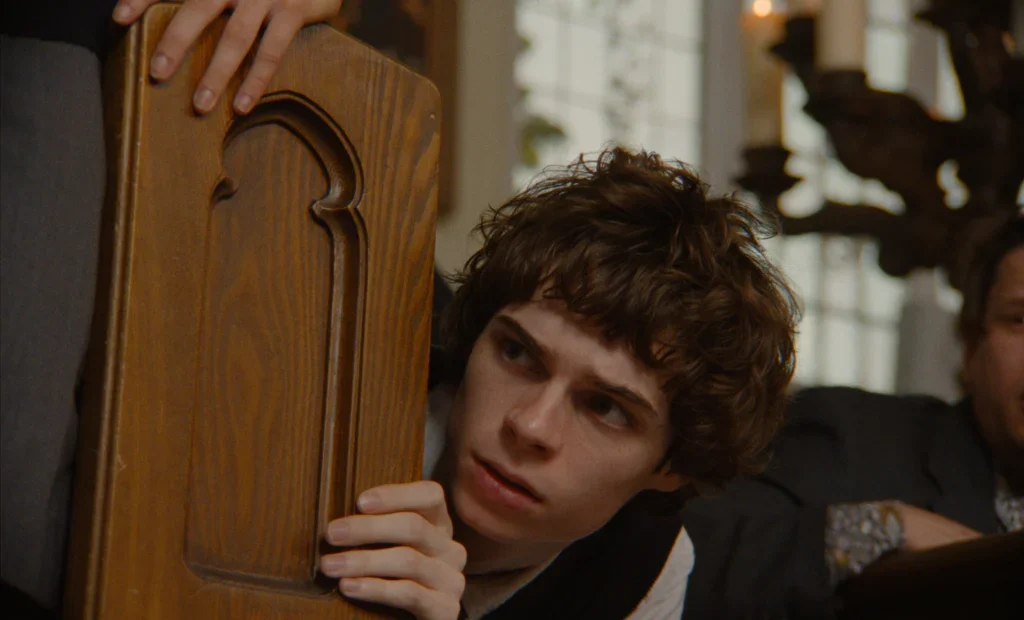
Streaming platforms have witnessed an unprecedented wave of teen psychodramas fusing volatile adolescent angst with haunting supernatural dread. Netflix entered this evocative cultural space with its 2004-set psychological thriller ‘The Body‘, which explores the rigid social hierarchies and spiritual anxieties simmering beneath the surface of a private Catholic academy. The eight-episode saga quickly captivated viewers by chronicling an elite high school dance team that descends into collective delirium following a secretive Halloween initiation.
Crafted with early-2000s nostalgia, the production juxtaposes glossy low-rise denim and pop hits against the suffocating pressures of religious conformity. When Deadline confirmed the ensemble cast featuring Kristina Bogic, Sofia Wylie, and Jackson Kelly, genre enthusiasts anticipated a provocative collision between ‘Carrie’ and ‘Jennifer’s Body’. Yet behind the competitive rivalries and sinister town rumors, the narrative burrows deeply into how unaddressed guilt twists the human psyche into profound hysteria.
Helmed by showrunner Quinn Shephard, who previously earned acclaim for ‘Under the Bridge’, the story treats youthful isolation as a volatile powder keg waiting to detonate. The series intentionally roots its eerie narrative in small-town claustrophobia where gossip spreads faster than truth. Within this oppressive atmosphere of surveillance and piety, even the most private personal secrets can trigger communal outrage.
The Mystery Behind Leo Anderson’s Notebook
At the epicentre of the school’s escalating suspicion is Leo Anderson, an anxious and observant outsider portrayed with quiet vulnerability by Kelly. While his manipulative sister Lisbeth schemes to secure a coveted position on the Lions dance squad, Leo retreats into the solace of his private sketchbook. The overarching mystery darkens considerably when Leo is revealed to be obsessively drawing Grace Franklin, the virtuous student whose sudden, drug-induced coma plunges the community into spiritual crisis.
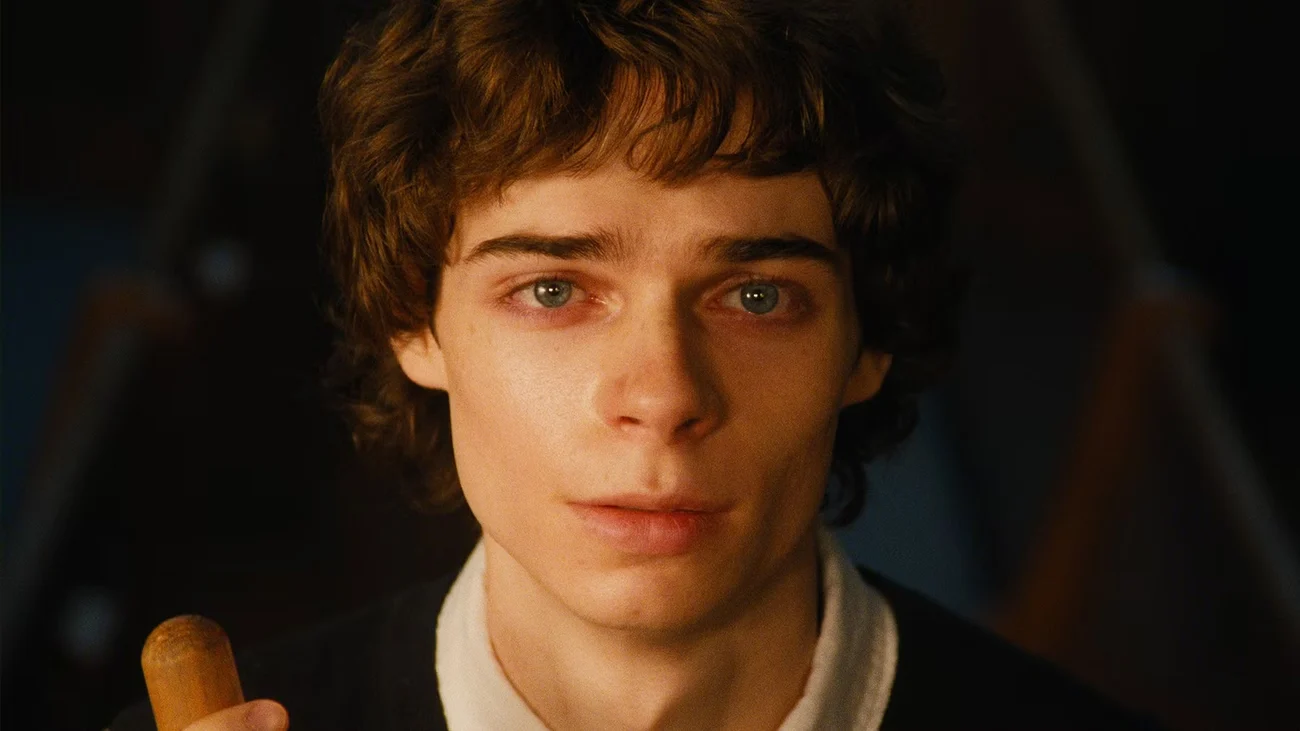
Rather than crude juvenile sketches, Leo’s hidden notebook contains intricate and disturbing compositions that merge pure devotional adoration with forbidden teenage desire. In the third episode, titled ‘Unholy Thoughts’, classmates discover that Leo illustrated Grace completely nude and bound in a state of suspended torment. The provocative imagery deliberately mirrors classical portraits of the Agnus Dei, reimagining the comatose high school girl as the sacrificial Lamb of God.
Leo envisions Grace not merely as a romantic interest, but as an ethereal substitute for Jesus Christ worthy of private worship. When Grace’s father confiscates the artwork and delivers it to Leo’s unstable mother Catherine, the scandalous illustrations ignite a public catastrophe at the school. To the conservative faculty and frightened classmates, the intimate religious imagery is instantly misconstrued as the predatory obsession of a dangerous deviant.
Religious Trauma and the Agnus Dei Symbolism
To comprehend the disturbing nature of the artwork, viewers must look closely at the Anderson family’s traumatic upbringing in West Virginia. Leo and Lisbeth only recently arrived at St. Mark’s after fleeing an extremist Pentecostal commune led by their deceased father, who perished during a lethal serpent-handling ritual. Consequently, Leo’s shocking illustrations are not rooted in predatory hostility, but in an emotionally sheltered mind struggling to process intense romantic feelings through severe dogmatic conditioning.
Because Leo privately prayed to Grace and placed her on a sacred altar, her tragic hospitalization utterly shatters his psychological stability. The grief-stricken teenager becomes convinced that his sinful lust and heretical artwork somehow provoked divine wrath, directly causing Grace’s life-threatening coma. This destructive guilt drives Leo into dangerous situations, including a brutal confrontation where local athletes subject him to ritualistic torment at the swimming pool.
The portraiture encapsulates the central motif of ‘The Body’, illustrating how rigid fundamentalism forces adolescents to criminalize their own natural awakenings. For Leo, drawing Grace represents the only vehicle through which he can reconcile his spiritual terror with intense earthly yearnings. Instead of confronting reality, the surrounding student body seizes upon his private art as convenient proof of sinister corruption.
Faith, Paranoia, and Quinn Shephard’s Vision
The thematic weight of Leo’s artwork reflects the show’s incisive examination of how easily isolated groups succumb to contagion and moral panic. Speaking about these volatile psychological dynamics in an interview with MovieWeb, series creator Quinn Shephard explained, “I’ve always been really interested in group think and mass hysteria as a theme.” Shephard highlighted how religious devotion can seamlessly transform from a pursuit of salvation into an instrument of societal persecution.
As the debut season moves toward its shocking conclusion, the sketchbook acts as the spark that unmasks the profound hypocrisy gripping both the students and town elders. Catherine ultimately incinerates Leo’s illustrations during a manic episode, attempting to purge what she views as demonic filth from their home. Though his private art is reduced to ashes, Leo emerges from the ordeal not as a predator, but as an innocent soul devastated by ideological repression.
What did you think of the tragic meaning behind Leo’s symbolic artwork in ‘The Body’?