The Real Story Behind ‘The Wizard of the Kremlin’: Meet the Man Who Actually Made Putin

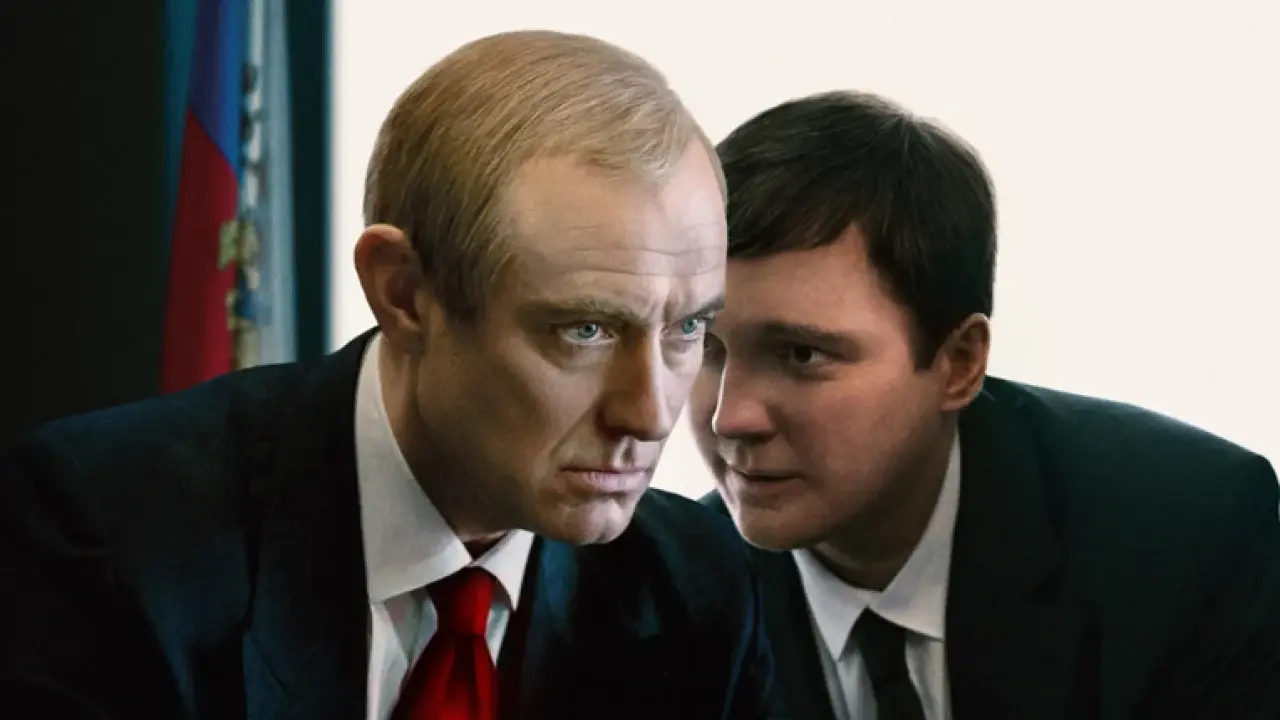

Few films arriving in theaters right now carry as much political electricity as ‘The Wizard of the Kremlin’.
Directed by Olivier Assayas, who co-wrote the screenplay with Emmanuel Carrère, the film is a political satire rooted in Giuliano da Empoli’s acclaimed 2022 novel and follows a fictional government official named Vadim Baranov during the final years of the Soviet Union and the turbulent start of the Russian Federation, while a young Vladimir Putin rises to power.
The film stars Paul Dano and Jude Law in a story that blurs the boundary between historical speculation and chilling fact.
What makes the film impossible to dismiss, despite its mixed reviews, is the real human being hiding behind its fictional protagonist. Loosely based on true events, the narrative is structured around conversations in 2019 between retired Kremlin strategist Vadim Baranov and an American journalist played by Jeffrey Wright, unfolding in chapters that trace Baranov’s trajectory from post-Soviet artist to trusted advisor to Vladimir Putin.
The truth that powers this story is stranger, and darker, than any screenwriter could invent.
Vadim Baranov and the Vladislav Surkov Real Story
The character at the heart of everything is not Putin but Baranov, and understanding who inspired him is the key to understanding the film’s unsettling weight.
It was while carrying out research for his previous nonfiction work devoted to the advisers of populist leaders that da Empoli became familiar with the figure of Vladislav Surkov, to whom he eventually wished to devote a novel, saying Surkov was so romantic that he freed and pushed the author to become a novelist.
Vladislav Yuryevich Surkov served as First Deputy Chief of Staff of the Presidential Administration of Russia from 1999 to 2011, where he played a central role in shaping domestic political strategy and was widely credited with formulating the concept of sovereign democracy. He was, in short, the architect of modern Russian political mythology, and da Empoli found him irresistible as a subject.
Although Surkov was a close advisor of Putin for almost two decades, da Empoli turned him into a fictional character and complex human being with a family and real-life dilemmas of his own, letting the man get under readers’ skin in a way that dry nonfiction analysis rarely achieves. The transformation of this real political operator into the literary Baranov is precisely what gives the story its unsettling intimacy.
For Baranov, power is a form of artistic expression like avant-garde theater, and Surkov, by whom the character is inspired, is the founder of key concepts in Kremlin ideology including sovereign democracy and the vertical of power. Da Empoli himself, a former political adviser, understood this creative-power nexus from the inside.
How the Film Depicts Putin’s Rise to Power
In ‘The Wizard of the Kremlin’, Baranov recounts his life story from his university days in the early 1990s to his career as a theatre and TV director who eventually became Putin’s “man behind the tsar”, overseeing the Chechen War, the monopolisation of power, and the Ukrainian invasion. Jude Law plays Putin with a performance that critics have consistently singled out as one of the film’s strongest elements.
Advised by Baranov, the Tsar responds to historical demands for authority during events such as the Second Chechen War, the presidential election of 2000, the sinking of the Kursk, the hostage-taking of the Moscow theater in 2002, and the Orange Revolution in 2004. These are not invented plot points but documented chapters of recent history, reimagined through the eyes of the man who helped script them.
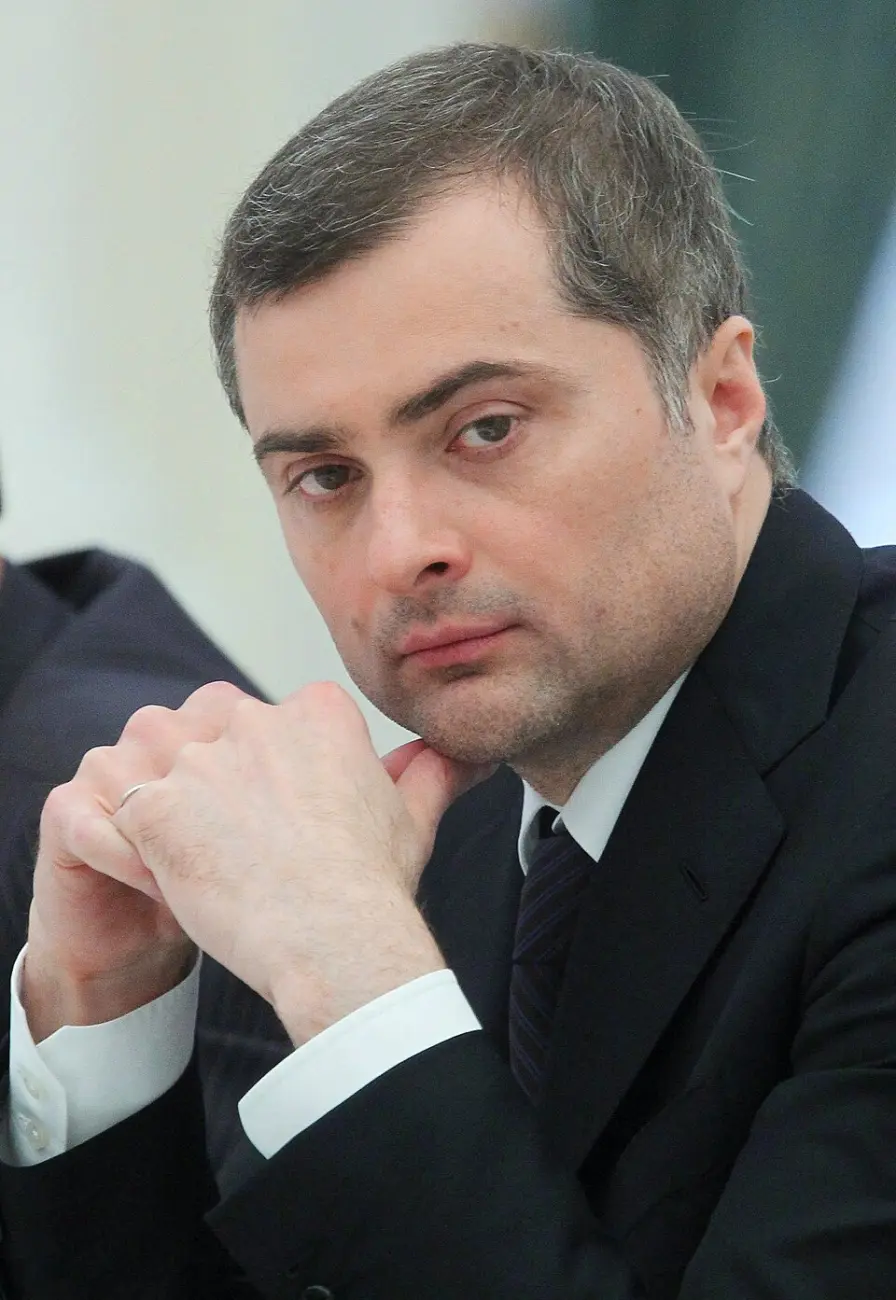
In the late 1990s, Surkov suddenly had the chance to help Putin, then the head of the FSB, succeed Boris Yeltsin as president of Russia, with media mogul Boris Berezovsky and other oligarchs who had accumulated immense wealth deciding that Russia needed order and a strong leader. The film captures this moment of historical pivot with what several critics have described as both theatrical flair and ideological weight.
Russia, in the early 1990s, is depicted as chaotic post-Soviet terrain where a brilliant young man charts his path from artist to reality TV producer before becoming spin doctor to a rising KGB agent, with Baranov shaping the new Russia and blurring the boundaries between truth and lies, belief and manipulation.
The Novel’s Journey from Acclaimed Fiction to Controversial Film
The road from da Empoli’s book to Assayas’s film is itself a story worth telling. The novel won the 2022 Grand prix du roman de l’Académie française and narrowly missed the Prix Goncourt in the fourteenth round, decided by five votes to five, with the Goncourt President casting the final decision. It became a literary phenomenon in France and Italy before its English translation arrived in 2023.
The novel was published in April 2022, less than two months after the start of the Russian-Ukrainian war, and booksellers immediately placed it both in the literature section and on tables devoted to current events. Its timing made it feel less like a work of fiction and more like an urgent political document.
The film had its world premiere in the main competition of the 82nd Venice International Film Festival on 31 August 2025, where it was nominated for the Golden Lion. Critical reception has been divided, with some praising the film’s ambition and performances while others have found its pacing a challenge.
The film adaptation is considered engaging and often effective, even if at times it remains superficial in its depiction of the Russian power system, with the protagonist portrayed with nuance and credibility, and certain traits of Vladimir Putin’s character rendered with intelligence and restraint. A notable point of discussion is the film’s altered ending, which departs sharply from the source novel.
What the Jude Law and Paul Dano Performances Bring to the Story
The film runs two hours and sixteen minutes and sees Paul Dano as Baranov, Jude Law as Putin, Alicia Vikander as the magnetic Ksenia, Jeffrey Wright as the American journalist, and Tom Sturridge in a supporting role. The ensemble has drawn considerable attention from industry observers.
Critics at Rotten Tomatoes noted that Law is terrific, bringing a choking sense of ominous tension whenever he is on screen, though he is not on camera nearly enough to justify the film’s runtime, while a Metacritic score of 54 out of 100 based on 21 critics indicates mixed or average reception overall.
Audience reactions have been equally divided along cultural and political lines. Some viewers have found the film a richly layered portrait of how authoritarianism is manufactured, while others have taken strong issue with how much humanity is extended to the story’s real-world inspirations.
Andrew Ryvkin, a journalist who actually worked under Vladislav Surkov himself in early-aughts Moscow, has written about his own experience with the real political operator the film is built around, describing Surkov’s teachings on what he called pop propaganda.
Whether you walk out of ‘The Wizard of the Kremlin’ convinced by its vision of how one man shaped the modern world’s most powerful autocracy, or frustrated by the liberties it takes with the truth, the real-life story of Vladislav Surkov raises a question the film itself never quite manages to settle: if the architect of Putin’s power was this brilliant, this creative, and this self-aware, what does that say about the system that welcomed him?
Share your take on whether ‘The Wizard of the Kremlin’ does justice to that uncomfortable truth, or whether the real story deserved a bolder cinematic hand.