The Real Wall Street Story Behind ‘Margin Call’ and Why It Hits Harder Than You Think

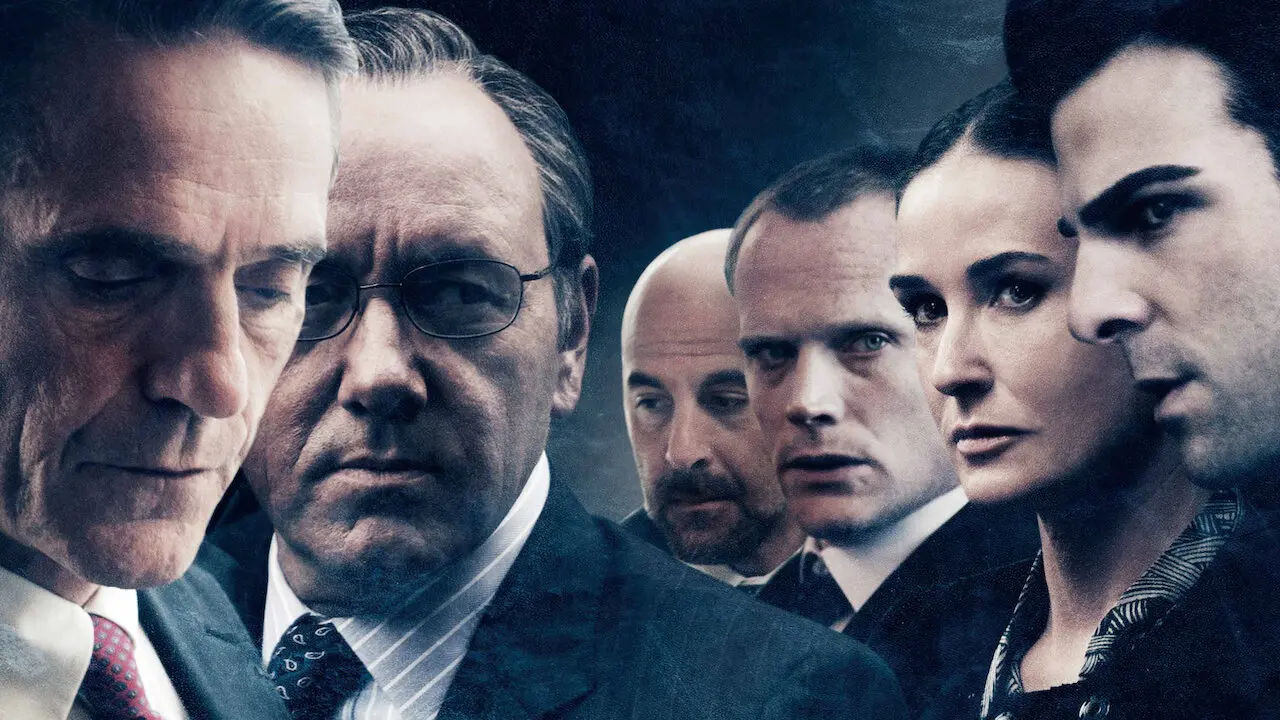

Few films have captured the cold, airless atmosphere of a financial implosion quite like ‘Margin Call.’ Released in 2011 with a lean budget and a stacked ensemble cast, the thriller arrived at a moment when audiences were still processing the wreckage of the global economy and hungry for answers.
The central question most viewers walk away asking is simple and urgent: did any of this actually happen? The answer, like the film itself, is more complicated and more unsettling than a straightforward yes or no.
The 2008 Financial Crisis as the Film’s Beating Heart
‘Margin Call’ does not tell a single verified true story. Rather, it fictionalizes a believable behind-the-scenes scenario without directly pointing fingers. That creative distance, however, should not be mistaken for detachment from reality. The film draws inspiration from real events that unfolded during the 2008 crisis, capturing the essence of Wall Street’s inner workings and the decisions that led to economic turmoil, amalgamating various aspects of the crisis into a fictionalized account that resonates with the actual experiences of many within the financial industry.
The story begins with an analyst’s discovery that the bank is dangerously exposed to mortgage-backed securities, the same toxic sludge that took down Lehman Brothers and crashed the global economy.
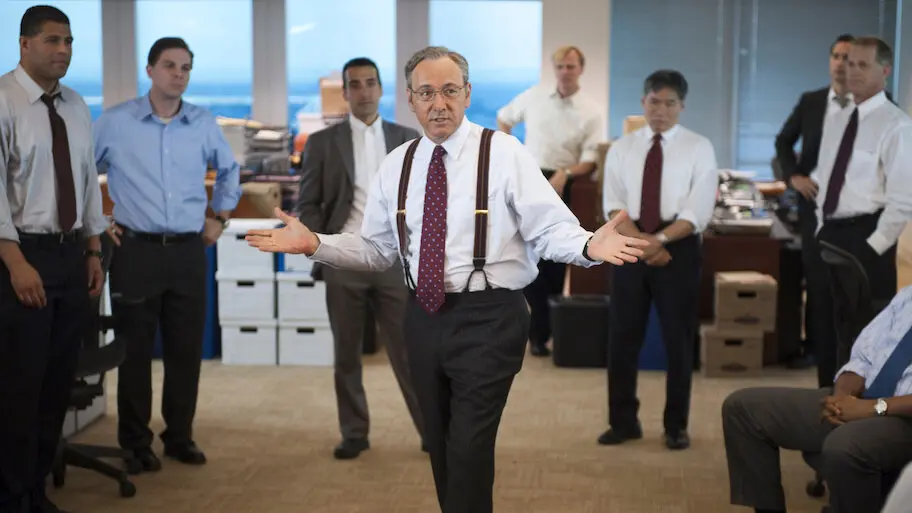
That parallel was not accidental. Chandor wrote the screenplay in the days immediately following Lehman Brothers’ bankruptcy filing on September 15, 2008, which remains the largest bankruptcy in American history at $639 billion in assets.
‘Margin Call’ was made for $3.5 million with a cast worth fifty times that amount, telling the story of one night at one investment bank during the opening hours of the financial crisis, with no heroes, no villains, just a building full of smart people making rational decisions that will collectively destroy eight million American homes.
Lehman Brothers, Goldman Sachs, and the Composite Firm
Chandor has clarified that the firm in the film is deliberately unnamed and deliberately composite, drawing from parts Goldman Sachs, parts Lehman, parts Merrill Lynch, and parts Bear Stearns. By refusing to name the bank, he argued that the behavior was systemic rather than institutional. Any bank could have been this bank.
The events are based on the real-life build up to the 2008 financial crisis and Goldman Sachs narrowly avoiding collapse, which is what happened to Lehman Brothers, who failed to sell off their toxic assets first. The film’s central act of dumping worthless securities before the market opens mirrors this documented reality with uncomfortable precision.
The CEO character John Tuld, who arrives by helicopter and orders the fire sale, blends John Thain of Merrill Lynch with Dick Fuld of Lehman, with the name itself being the giveaway as it combines Thain’s first name with Fuld’s last. Goldman Sachs also hedged early, reducing its position in mortgage-backed securities, just like the bank in ‘Margin Call,’ and that bank did not go bankrupt, unlike Lehman Brothers.
JC Chandor’s Personal Connection to Wall Street
Writer and director J.C. Chandor drew on his father’s nearly 40-year career at investment bank Merrill Lynch for the screenplay. This firsthand cultural access gave the film an authenticity that most financial thrillers struggle to manufacture.
After the film was released, the Financial Times took an investment banker to see it and then interviewed him afterward. The investment banker confirmed that the portrayal of life in a Wall Street investment bank was very accurate, down to what people were wearing and the layout of the headquarters.
He agreed that the firing of Eric Dale, played by Stanley Tucci, was very accurate based on his experience of working at Merrill Lynch.
Chandor wrote the script fast, and it landed on the 2009 Black List, Hollywood’s annual survey of best unproduced screenplays, with the logline summarizing the concept as “the last 24 hours of Lehman Brothers.” That pedigree preceded its Sundance debut and signaled to industry insiders that something genuinely different was coming.
Critical Reception and the Film’s Lasting Relevance
On Rotten Tomatoes, ‘Margin Call’ holds an 87% approval rating based on 166 critic reviews, reflecting broad acclaim for its script and acting. Metacritic assigns it a score of 76 out of 100, categorizing it as generally favorable.
The film earned strong reviews when it opened in theaters in October 2011, riding the coattails of the Occupy Wall Street movement, grossing $5.3 million domestically on a budget of slightly less than $3.4 million. Simultaneously released day-and-date on VOD, it picked up another $5 million in revenue, with its VOD availability and the resulting buzz credited with giving the movie a boost in theaters.
Chandor’s biggest coup, beyond the entertainment value of the film, is his willingness to indict a system rather than simply blame the individuals within it. Ultimately, ‘Margin Call’ is the story of a Wall Street that has evolved from an economic helpmate to an economic predator.
Why the Fiction Tells a Truer Story Than the Facts Alone
‘Margin Call’ takes place over approximately 24 hours, and Chandor has acknowledged that real events unfolded over months, not hours. But the compression isolates the decision-making process and forces the audience to watch intelligent people choose destruction because every alternative is worse for them personally.
The film serves as a cautionary tale about the potential consequences of unchecked greed and risk-taking in the financial sector, and it can be used as an educational tool in business and finance courses, sparking discussions about corporate ethics, regulatory oversight, and the broader impacts of financial decisions on society.
Critics described ‘Margin Call’ as smart, tightly wound, and solidly acted, a film that turns the convoluted financial meltdown into gripping, thought-provoking drama, with one reviewer noting that it is the one film that, more than any other, seems to understand the modern workplace.
That observation points to why the film endures well beyond its initial cultural moment, speaking to anyone who has ever sat in a meeting and quietly wondered whether the people making the decisions fully understand what they are doing. If ‘Margin Call’ changed the way you think about who was really at the wheel during the financial crisis, drop your take in the comments, because after all this time, the debate over which real bank the film was actually pointing at has never quite been settled.