The Real War Inside ‘Disclosure Day’ Goes Far Beyond the Movie Screen


Steven Spielberg has always possessed an uncanny ability to sense where cultural nerve endings are. ‘Disclosure Day‘ passed the $100 million mark at the worldwide box office less than a week after its theatrical opening, a milestone that confirms the director’s instincts remain as sharp as ever.
This time, though, something feels distinctly different about what he has made. The film arrives not simply as summer entertainment but as a disorienting mirror for a real-world moment in which the distance between science fiction, congressional testimony, and declassified government files has collapsed to nearly nothing.
The Whistleblower at the Heart of ‘Disclosure Day’
At its core, ‘Disclosure Day’ is a propulsive chase film organized entirely around an act of radical truth-telling. The story follows a cybersecurity specialist who steals from the Wardex Corporation, a secret arm of the U.S. government, classified extraterrestrial technology and related documents, and makes the dangerous choice to expose them to the world.
Josh O’Connor’s Daniel Kellner flees alongside his girlfriend Jane, played by Eve Hewson, while Emily Blunt’s Kansas City meteorologist Margaret begins experiencing inexplicable phenomena and comes to believe she and Daniel are mysteriously connected. Colin Firth plays the corporate antagonist determined to keep the secret at any cost, and Colman Domingo rounds out an ensemble that Spielberg assembled largely without formal auditions.
Domingo revealed after his casting that he finished reading the script and wept, calling it one of the most beautiful things he had encountered about human possibility. Screenwriter David Koepp reportedly needed more than 40 drafts to arrive at a version that satisfied Spielberg, a level of craft rigor the finished film clearly reflects.
The film holds a Certified Fresh 82 percent score on Rotten Tomatoes, where the critical consensus describes it as a humanistic variation on Spielberg’s most revisited themes, powered by what many reviewers are calling career-highlight work from Blunt.
A World at the Brink and the Foreground Crisis of ‘Disclosure Day’
What separates ‘Disclosure Day’ from a conventional UFO thriller is the specific geopolitical catastrophe framing its events. The narrative unfolds with the world at DEFCON 2, one level away from nuclear launch authorization, as the threat of World War III hangs over every scene.
That foreground catastrophe is not incidental decoration. Analysts of the film’s climax have argued that the alien contact Margaret channels is directly responsive to humanity’s self-destructive direction, with her haunting command to “Listen” functioning as a cosmic instruction to abandon nuclear arsenals and recognize a harmonious, unified community beyond Earth.
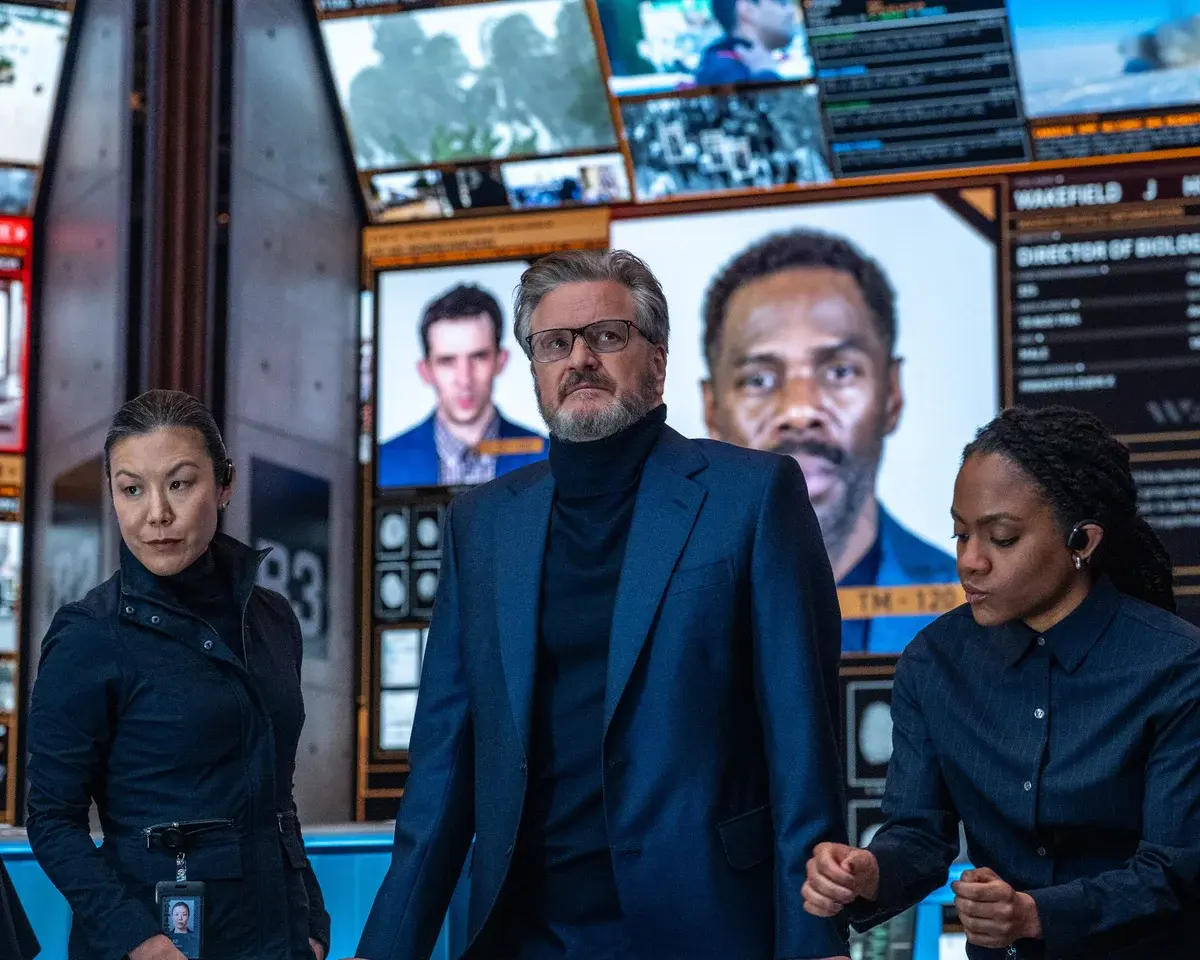
Koepp has described ‘Disclosure Day’ as a spiritual bookend to ‘Close Encounters of the Third Kind’, noting that where the 1977 film was born from Watergate-era anxiety and asked whether the government was lying, his new script operates in a world where the public already knows it is being lied to. The war in the foreground is therefore not simply between nations but between those who guard a secret and the billions of people on Earth owed the truth.
Cinematographer Janusz Kamiński shot the film predominantly on 35mm Panavision with anamorphic lenses, and critics have pointed to his recurring use of reflective surfaces to visually reinforce the film’s central duality between suppression and revelation.
Spielberg’s Own Conversion and the Real Testimony That Shaped ‘Disclosure Day’
Spielberg has been unusually candid about what drove him back to alien territory after years away from the genre. He told Empire magazine that the film has resolved something he has carried for seven decades, saying the question of whether humanity is alone has finally found its answer for him in ‘Disclosure Day’.
At SXSW earlier this year, he told the audience plainly that he has “a very strong sneaking suspicion” that humanity is not alone on Earth right now.
His transformation traces to real congressional proceedings, particularly a House Oversight Committee session in which former intelligence officer David Grusch, Navy pilot David Fravor, and commercial pilot Ryan Graves all testified under oath about UAP encounters and alleged government concealment programs. Spielberg called that exchange fascinating and credited it with reinvigorating his decision to make the film.
John Williams composed the score in what marks his thirtieth collaboration with Spielberg, deliberately choosing to write music beneath the film rather than in front of it, giving it what Spielberg described as a subtle but unmistakable nudge forward.
The Real Disclosure War Playing Out Beyond the Screen
What makes ‘Disclosure Day’ feel genuinely unsettling at this cultural moment is how precisely its fictional premise tracks with real events. At the direction of President Trump, the Department of War has been leading a multiagency effort to locate, review, and publicly release UAP-related government records. Three separate tranches of declassified Pentagon files have already been released, collectively accumulating over a billion views.
Just days before the film’s American opening, whistleblower David Grusch appeared at a Capitol Hill press conference and alleged that billions in taxpayer funding are flowing into secret UAP programs. UFO investigator Joshua Golembeske, speaking to Fox News Digital, said the government cover-up depicted in ‘Disclosure Day’ is playing out in real-time on Capitol Hill.
He described the latest Pentagon files as painting a clear picture of what has been happening for at least 80 years, including documented references to crash retrieval operations and attempts to reverse-engineer exotic propulsion technologies.
Scientist Avi Loeb was subsequently tasked by the U.S. government to lead a UAP Science Advisory Panel charged with making scientific sense of the newly released material. The UAP Disclosure Foundation has scheduled a public forum in Washington for June 25, designed to examine the phenomenon’s implications across national security, technology, and philosophy.
The foundation’s executive director has emphasized that the latest file release confirms UAP activity is a global story, with reason to believe that China and Russia may have retrieved and attempted to reverse-engineer objects of their own.
One film analyst has noted that ‘Disclosure Day’ leans into the weaponization of classified intelligence, the manipulation of global media, the fragility of international geopolitics, and deep-seated societal trauma, which reads less like a Hollywood logline and more like a summary of the past several months of actual news.
Given everything simultaneously unfolding on screen and on Capitol Hill right now, we genuinely want to know whether ‘Disclosure Day’ played for you as science fiction, or whether Margaret’s final command to “Listen” felt like something the real world has already earned the right to hear.