‘The Testaments’ Just Broke Agnes’s Heart Wide Open — And Garth’s Season 1 Ending Is More Complicated Than You Think


Fans tuning in to ‘The Testaments’ quickly found themselves rooting for something that Gilead was never going to allow. The slow-burning, complicated dynamic between Agnes and Garth became one of the most talked-about emotional threads of the season, and the finale delivered an answer that is equal parts heartbreaking and brutally on-brand for this world.
The short answer is no. Agnes does not end up with Garth. But how that outcome unfolds across the season, and what it costs her, is a story that cuts far deeper than a simple romantic rejection.
The Agnes and Garth Romance That Gilead Would Never Allow
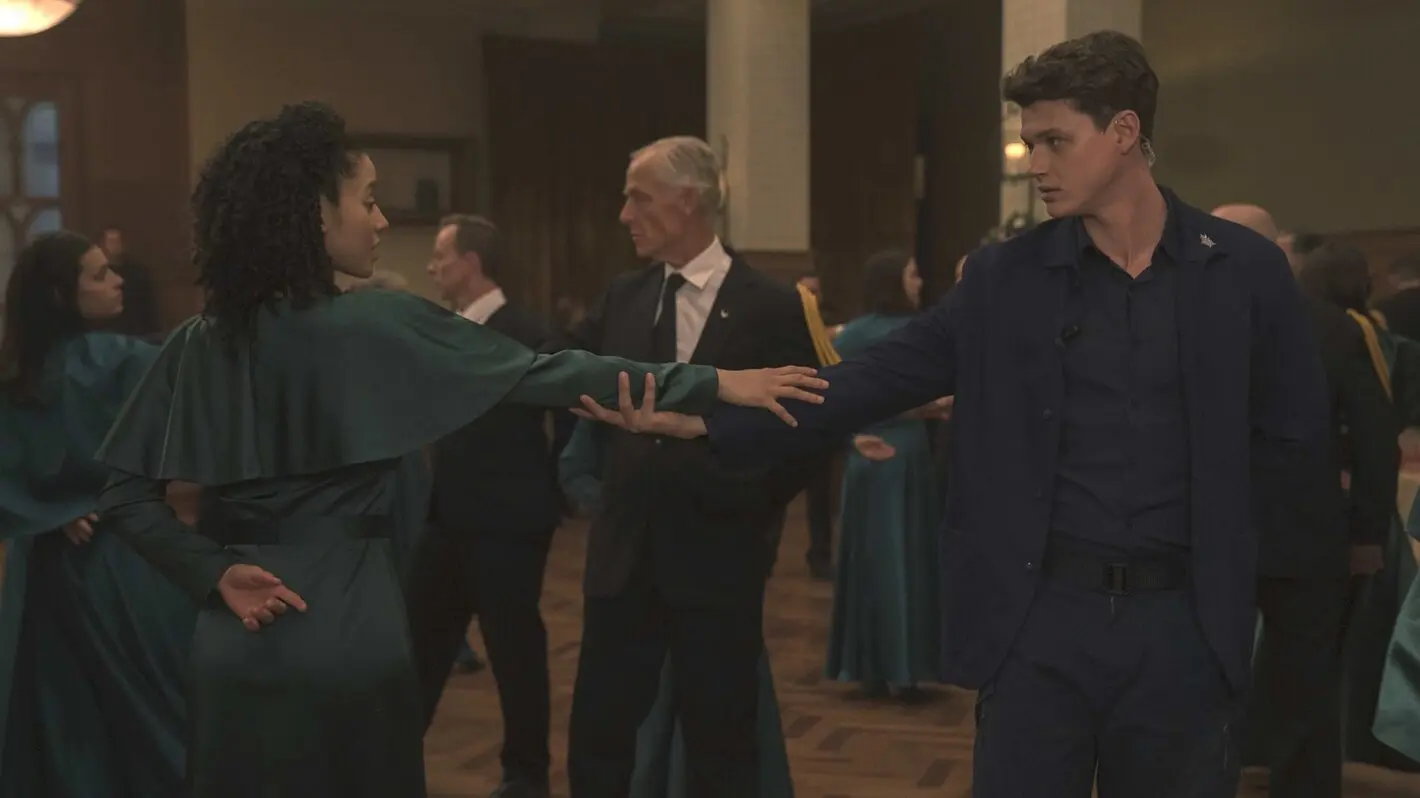
Agnes’s feelings for Garth became unmistakably clear during the ball in episode five, where the Green girls were paraded in front of Commanders as prospective wives. When Commander Westin asked Garth to cut in on his behalf so he could attend to other business, Agnes and Garth took full advantage of the rare moment.
What Garth felt in return, however, was far less legible. Actor Brad Alexander explained that Garth, having grown up inside Gilead and simultaneously serving as a double agent for the Mayday resistance in Canada, simply lacked the emotional language for what he was experiencing. It made him one of the season’s most quietly compelling figures.
Alexander described Garth’s emotional state as “a restrained affection,” noting that his character believed Agnes to be “vivid and alive” with a real personality beyond what Gilead’s conditioning had produced, but that his goals remained firmly fixed on dismantling the regime. That conflict between duty and feeling gave the pairing a tragic, almost doomed quality from the very beginning.
Alexander also drew comparisons between Garth and Nick Blaine from ‘The Handmaid’s Tale’, pointing to both characters’ struggles with loyalty, authority, and the dangers of playing both sides within Gilead’s brutal system.
The Testaments Season Finale and the Sacrifice Agnes Makes
Agnes made her feelings plain enough to take action in episode seven, seeking Aunt Lydia’s favor to fast-track Garth’s eligibility in the marriage pool. It did not work in her favor. When the matches were announced, Garth was not among the three candidates chosen for Agnes.
Reeling from the news, Agnes subtly sabotaged a meeting with Commander Weston, one of her highest-ranking potential matches, by mentioning his dead wife. He left with a soured expression, though he ultimately still wanted to marry Agnes, now with the added intention of disciplining her rebellious streak out of her.
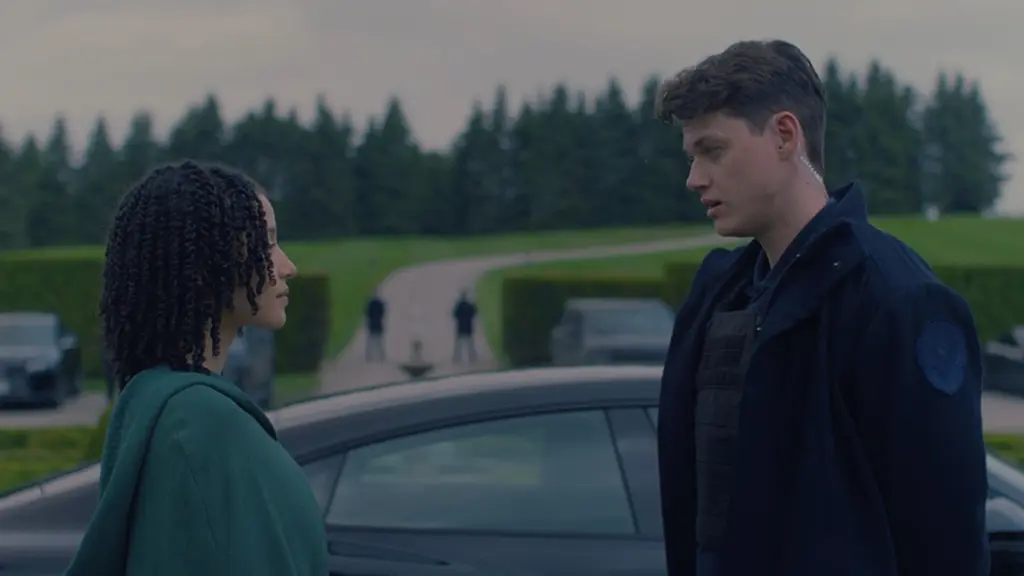
The blow came in full when Agnes learned through Paula that Becka was set to marry Garth. Her fantasy of a future with him shattered in the middle of her own engagement party to Commander Westin, and the show did not flinch from showing how completely it undid her.
In the finale, Agnes made her most devastating sacrifice yet. Her engagement to Weston had already collapsed due to the scandal surrounding Becka, who had killed her abusive father. Rather than simply grieving the loss, Agnes petitioned Garth directly to marry Becka, reasoning that if her friend was married, she would be shielded from the worst of Gilead’s punishment. Agnes had already given up her arranged marriage, so she gave up the love of her life as well.
Agnes’s Marriage in Gilead Ends Before It Even Begins
When Agnes confided in Commander Weston that she had herself been a victim of Dr. Grove, and asked him to intervene on Becka’s behalf, he did help. But he then called off his wedding to Agnes entirely, unwilling to remain associated with the scandal surrounding Becka’s case.
The finale contrasted Becka’s forced marriage to Garth with an execution happening at the same time, reinforcing the brutal duality of life inside Gilead, where one woman’s protection can only come at the cost of another’s destruction.
Garth married Becka, though their wedding night was far from tender. He carried her over the threshold and put her to bed before locking her in the bedroom for her own safety. Becka appeared barely conscious throughout the ceremony, her self-harm wounds visible through her wedding dress. It was not a happy ending for anyone in that room.
After the wedding, Agnes confided in Daisy that she felt like she had ruined her life, despite believing the sacrifice was “worth it.” That single line did more emotional heavy lifting than almost anything else in the season.
Garth and Becka’s Wedding and What It Means for Season 2
Hulu announced a renewal for ‘The Testaments’ for a second season on May 20, 2026, just ahead of the season one finale. That confirmation means the tangled relationships at the heart of the show are far from resolved.
The finale ended with Daisy dropping the bombshell that Agnes is actually June’s daughter, the missing Hannah from ‘The Handmaid’s Tale’. Agnes initially rejected the idea, branding June “a terrorist,” but later that night she found a childhood drawing in her bedroom with the name “Hannah” written in pencil at the bottom.
Aunt Lydia hinted she would continue protecting the girls, and outside Gilead, June received a hidden message confirming that Daisy intended to continue fighting against the state from within its borders. The rebellion that has been quietly building throughout the season is just beginning to find its shape.
Becka actress Mattea Conforti confirmed that her character is not leaving the story despite being moved out of the school and into a marital home with Garth, suggesting the marriage itself will become a new kind of battleground in season two. How Garth navigates his role as both husband and Mayday operative, with Agnes now somewhere in that emotional wreckage, is one of the most compelling questions the show has left dangling.
Agnes sacrificed the one person she wanted to protect the friend she loved most, and now she heads into season two with no husband, a shattered identity, and the knowledge that her mother is June Osborne. With all of that on her plate, it’s worth asking: do you think Agnes and Garth’s connection is truly finished, or does ‘The Testaments’ still have more to say about what they mean to each other?