‘The Vampire Lestat’ Season 1 Episode 4 Review – When the Devil’s Road Runs Through Your Own Heart


There is something almost perversely fitting about the way ‘The Vampire Lestat‘ structures its fourth episode.
A show that has always operated as a kind of funhouse mirror to its predecessor ‘Interview with the Vampire,’ telling the same story from a wildly different, far more unreliable narrator, “The Devil’s Road” is the episode where the mask slips most completely. Airing June 28 on AMC, the episode finds Armand embarking on an apology tour, Lestat lashing out in ways only he can, and Louis desperately seeking comfort in a painfully familiar face. It is the funniest episode of the season so far, and also the most devastating, which is exactly the kind of contradiction this show was built for.
The Lestat and Gabriella storyline has been the emotional engine of the season, and “The Devil’s Road” turns that engine up to a pitch that is almost unbearable to watch. Through a series of flashbacks, the episode traces how Gabriella spent years systematically collapsing the boundaries between mother and son, provoking jealousy she could weaponize and withholding the affection Lestat craved until she wanted something in return.
Jennifer Ehle has been formidable throughout, but here she finds something more interesting than villainy, playing Gabriella as a creature whose capacity for genuine feeling has become so warped that even she may no longer be able to separate love from control.
Sam Reid never plays the resulting intimacy as desire. He plays it as a son chasing, against all reason and self-preservation, the one version of his mother who might finally choose him. The gap between those two readings is where all of Reid’s most extraordinary work lives.
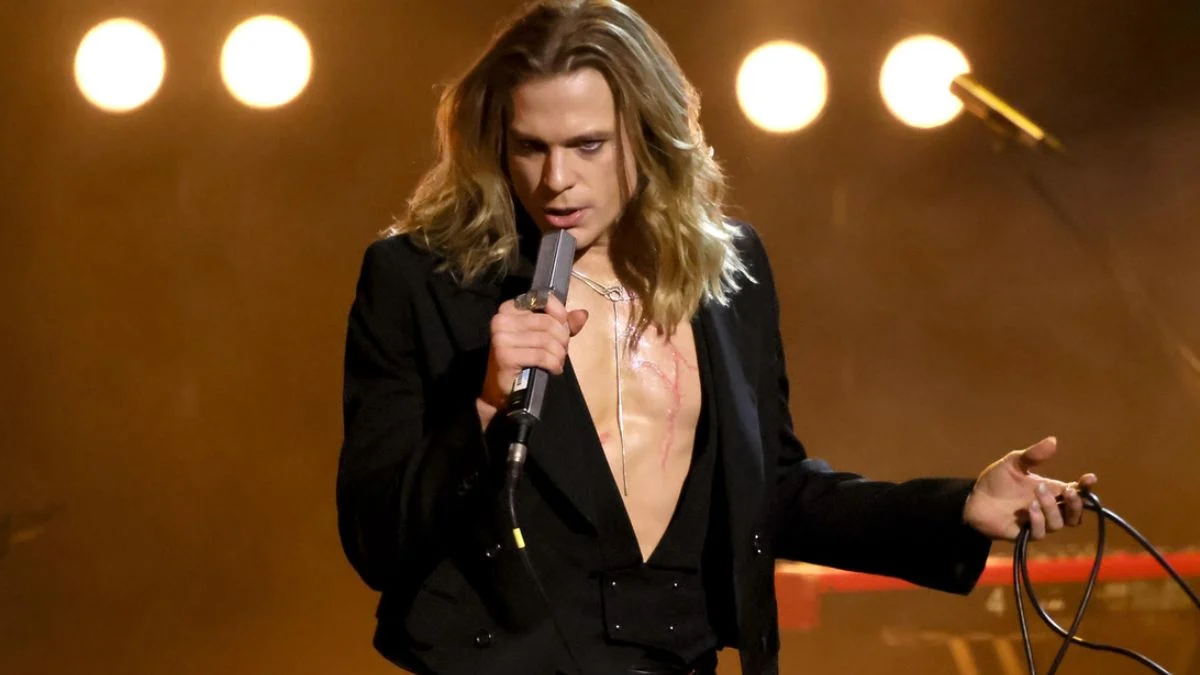
The season has been conceived as a formal reflection of Lestat’s erratic personality, in deliberate contrast to the controlled, orderly structure that mirrored Louis’s narration across the first two seasons, and “The Devil’s Road” is the episode where that structural restlessness is most pronounced. The tonal swings are considerable, lurching from Lestat’s cocaine-and-mind-control encounter with a police officer to a concert sequence in which he essentially performs a public evisceration of Armand, and then pivoting hard into genuine grief on an empty tour bus.
A lesser show would buckle under those transitions. Here, they feel true to the character, and to a life lived at that kind of unchecked emotional volume.
Assad Zaman’s Armand continues to be one of the most interesting supporting presences in the Anne Rice television universe. His apology tour, in which he must face both Daniel and Lestat in quick succession, is written with a clear-eyed understanding that genuine remorse and deeply ingrained manipulation are not mutually exclusive qualities, and Zaman plays that ambiguity without ever tipping the character fully in either direction. The concert sequence in which Lestat performs “Big Boss,” publicly humiliating Armand in front of a crowd, is simultaneously hilarious and quietly chilling, landing on that exact register the show has been trying to find since its premiere.

The Louis subplot, involving his increasingly alarming fixation on Regina, the diner waitress played by Delainey Hayles, operates at a much quieter frequency. What begins as something that could be read as therapeutic gradually becomes something far more unsettling, and Regina’s street smarts and vigilance deliver a moment of clarity that cuts directly to what Louis is actually doing.
Jacob Anderson has always understood how to make longing look like a kind of dignity, and that talent is tested here as Louis begins to slide somewhere neither particularly dignified nor particularly lovable. The final exchange between the two, ending with Regina’s devastating Claudia impression, is one of the most quietly gutting moments the show has produced.
“The Devil’s Road” is not a flawless episode. At seven episodes, the season has no room for wasted minutes, and there are moments where the episode feels like it is moving pieces into position rather than arriving anywhere decisive on its own terms. Gabriella’s ideology around the Great Conversion is gestured at more than truly excavated, and the shooting incident that closes the tour chapter feels slightly rushed in its resolution. But these are the complaints of someone who wants even more from a show that is already giving a great deal.
“The Devil’s Road” is ‘The Vampire Lestat’ at its most confidently itself, messy and operatic and unexpectedly moving, with Sam Reid delivering the kind of work that makes an argument for the character’s entire cultural legacy without ever quite saying so aloud.
8.5 out of 10.
Tell us in the comments whether you think “The Devil’s Road” has been the season’s high point so far, or whether another episode has already claimed that spot for you.