


5 Things About ‘Tenet’ That Made Zero Sense and 5 Things About It That Made Perfect Sense


Christopher Nolan fills ‘Tenet’ with timelines that fold over each other and with rules that flip cause and effect. The film lays out a world where entropy can run in reverse and where plans are executed from two directions at once. That gives the story a unique pulse and also creates moments that challenge even very attentive viewers.
Here are ten focused breakdowns that aim to clarify what the film shows on screen. Each point sticks to what the movie depicts and how its mechanics work, so you can match specific scenes to the rules the story sets up and see where the confusion tends to start.
Zero Sense: The Algorithm Endgame

The film presents the Algorithm as nine assembled modules that can invert the entropy of the world if activated together underground at Stalsk 12. The pieces are hidden across different locations and times, then gathered by Sator with help from future contacts who pass information back through inverted channels. The plan ties activation to a burial event that would keep the device sealed where the blast occurs.
The confusing part comes from how the burial trigger and the activation condition overlap. The story links Sator’s fate to the timing of the detonation and to the placement of the assembled core in a tunnel that collapses. The movie shows the modules moving across inverted and normal time with couriers and caches, yet it never details the engineering that would allow a global effect to hinge on that single underground event, which leaves viewers tracking stakes without a concrete technical pathway.
Perfect Sense: Temporal Pincer Movement
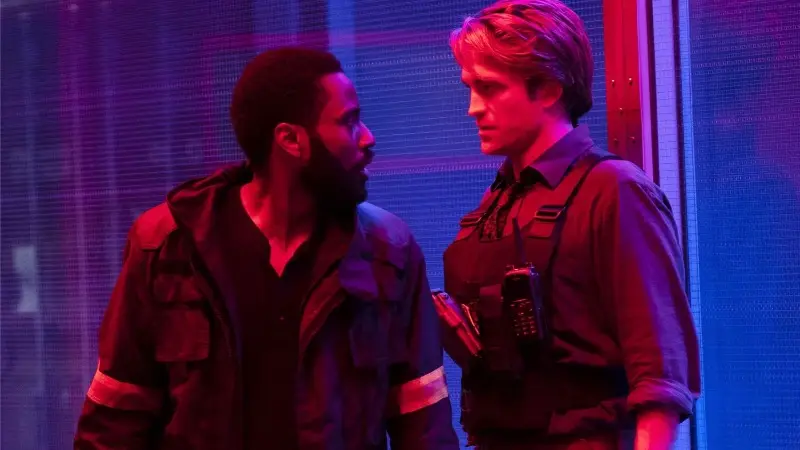
The film explains a temporal pincer as an operation run by one team moving forward while another moves backward after seeing the results. The backward team gathers outcomes first, then passes that knowledge to the forward team so the combined plan anticipates threats before they happen. The Protagonist observes this during the highway sequence and again during the Stalsk 12 assault where red and blue units coordinate across a shared window.
This tactic follows clear rules that the film demonstrates. The inverted unit records events in reverse order, communicates intel at a known midpoint, and allows the forward unit to avoid traps that would otherwise be invisible. When the blue team detonates at a precise time to reveal a structure for the red team, the movie gives a clean example of how information harvested from inverted time can shape actions for soldiers moving normally.
Zero Sense: Oslo Freeport Fight

At the Oslo Freeport, the Protagonist fights an attacker who moves in reverse motion and then later discovers that he was fighting himself through the turnstile. The scene shows bullet holes already present, glass that reacts to reverse momentum, and oxygen use that separates normal and inverted movement. The layout includes two rooms marked by color and a rotating mechanism that flips entropy for the person who passes through.
The confusion builds from overlapping perspectives that arrive at the same fight from opposite directions. The movie shows the jet crash as a timed distraction, the vault as a sealed environment, and the turnstile as the hinge between two passes of the same encounter. Without a linear anchor on first viewing, the order of hits and falls does not align with everyday cause and effect, even though the footage follows the rules shown elsewhere.
Perfect Sense: Inversion Physics And Oxygen

The movie sets a simple rule for living beings in inverted time. You cannot breathe regular air because the chemical process runs the wrong way for your lungs. Inverted characters rely on dedicated masks and cylinders, which explains why masked figures appear in every mixed timeline scene. The film also shows that heat exchange runs opposite, so fire behaves like intense cold for an inverted person.
Objects follow similar logic. A dropped inverted bullet returns to the hand when the hand remembers letting it go, and friction and impact play out against expectation. The movie illustrates that pattern with broken glass that heals when reversed, with cars that uncrash into motion, and with wounds that respond to temperature in the inverse way. These are consistent applications of the same entropy rule.
Zero Sense: Tallinn Highway Logistics

The highway sequence shows three cars of interest moving in both directions relative to different characters. The Protagonist tries to secure a case while Sator threatens him with an inverted firearm from a vehicle that moves in reverse time on a forward flowing road. The turnstile used to set up the chase stands at a warehouse that brackets the operation within a strict window.
The spatial map becomes hard to track because the same stretch of road carries normal motion for some vehicles and reverse motion for others. The film keeps continuity through a fixed handoff and a locked case mechanism, yet the order of contact between cars shifts based on who is inverted at that moment. That creates a layout where positions and velocity appear to break road logic even though the timeline inside the window remains intact.
Perfect Sense: Kat’s Inverted Wound And Recovery
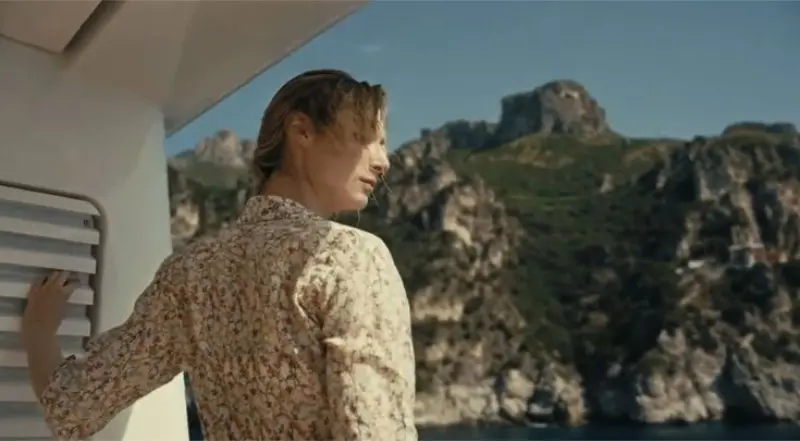
The film treats an inverted bullet wound as a special case because entropy runs opposite for the damage and the tissue around it. The team inverts Kat so her body experiences time backward until they reach a point before the injury. During that period she requires controlled temperature and oxygen management because heat and air react differently for an inverted patient.
When they sail, the catamaran sequences place her in a stable environment that allows careful monitoring while time for her moves toward the moment before she was shot. The movie keeps the logic clear. Invert the patient, travel to an earlier date, then re invert once the timeline passes the point of injury so normal healing can continue. The process follows the same rule set that governs inverted fire and air.
Zero Sense: Sator’s Dead Man Condition
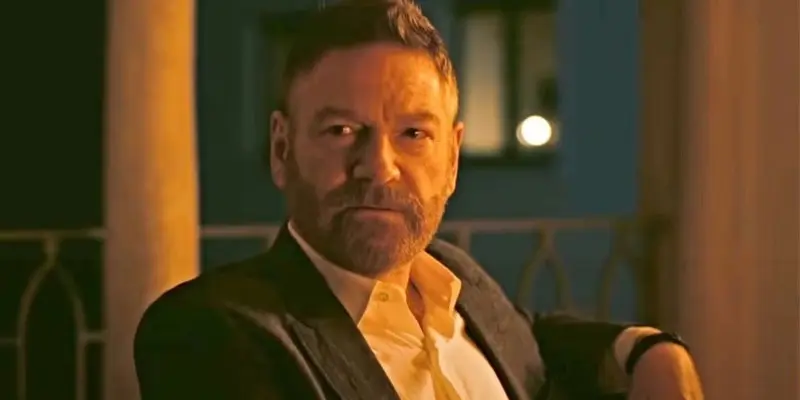
Sator ties the Algorithm drop to the condition of his own heartbeat, which creates a dead man trigger linked to a chosen time. The film shows a device that monitors his pulse and a timeline that places his death at a location where the signal would align with the buried core. His team at Stalsk 12 acts on that condition to complete the burial if the condition is met.
What the movie does not spell out is the reliability layer between a personal biometric and a secured detonation inside a contested war zone. The chain of custody for the signal crosses normal and inverted teams and depends on exact timing inside a moving firefight. The pieces are present on screen but the transmission path remains abstract, which makes the mechanism feel opaque compared with other processes the film demonstrates in detail.
Perfect Sense: Turnstiles And Color Coding
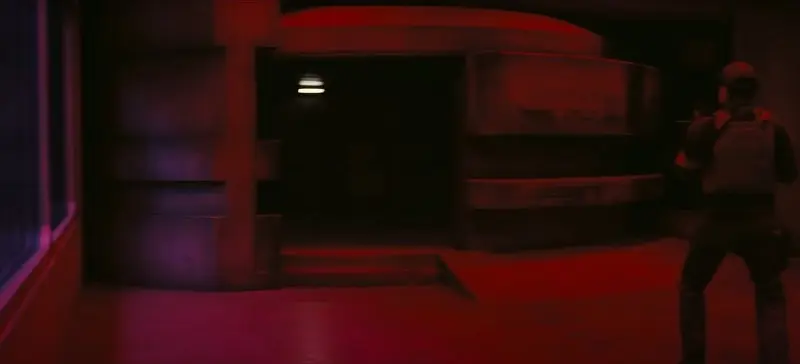
The film uses color to separate directions in time. Red marks normal forward movement and blue marks inverted movement. Turnstiles sit between matched rooms, and the same person can pass through to emerge on the other side with flipped entropy. The camera often shows mirrored spaces that share a glass wall so viewers can see both versions of the room at once.
This system keeps operations readable once you learn the map. A character who enters the red side and exits the blue side will then perceive cause and effect in reverse and will need a mask. When the person returns through the turnstile, they regain forward motion and lose the need for the cylinder. The repeated visual language helps track who is moving which way in a given scene.
Zero Sense: Kiev Opera Setup
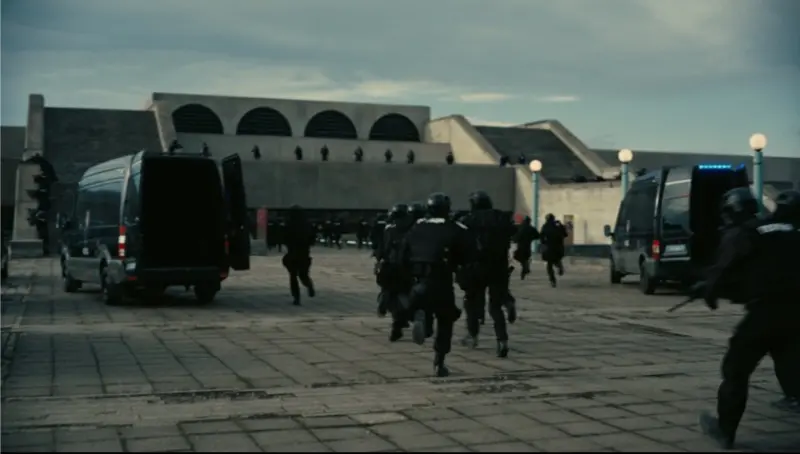
The opening shows a coordinated assault at the Kiev opera house with sleeping gas, planted charges, and a concealed extraction of an object linked later to the Algorithm. The Protagonist identifies a friendly contact by a distinctive token and survives an attempted execution by using a suicide pill that turns out to be a test. The sequence introduces the Tenet gesture and signals that a larger organization is in play.
What remains unclear until later is how the artifact moved into the venue, which factions knew about it, and how the friendly contact links back to the later team. The film backfills these details during briefings and reveals, yet the first scene asks viewers to track military units, civilians, and a hidden objective with minimal context. That structure sets tone but leaves the operational web only partially drawn on screen.
Perfect Sense: Bootstrap Loops And Recruitment
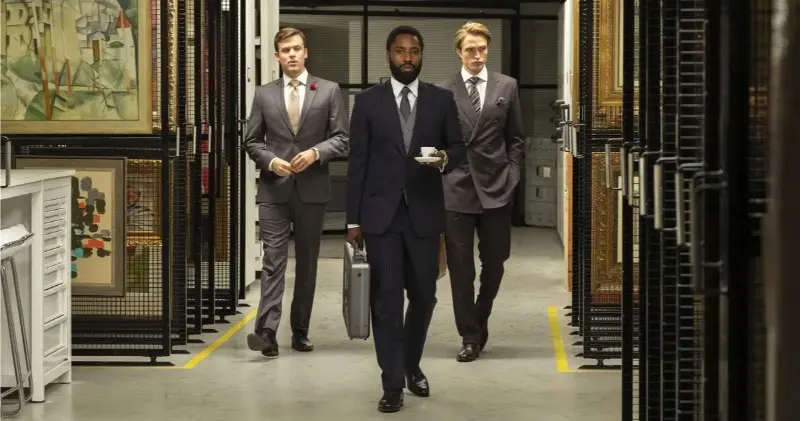
The story closes the loop by revealing that the Protagonist will found the Tenet organization and recruit key allies from his future point of view. Neil confirms that their friendship begins later for the Protagonist and earlier for him, which explains how Neil recognizes him at the opera and why he knows the moves needed to keep the mission on track at each checkpoint.
This bootstrap fits the film’s rules without breaking continuity. Information travels along closed loops that remain consistent once established, and characters act on knowledge they gain from the other side of a turnstile or from a later life stage. The final clean up shows the Protagonist taking control of events that he already set in motion, which aligns with the deterministic structure presented throughout the film.
Share your own moments from ‘Tenet’ that clicked or confused you in the comments so others can compare notes.

