‘Toxic’ Ending Explained: What Raya’s Final Smile Really Means for Yash’s Gangster Epic

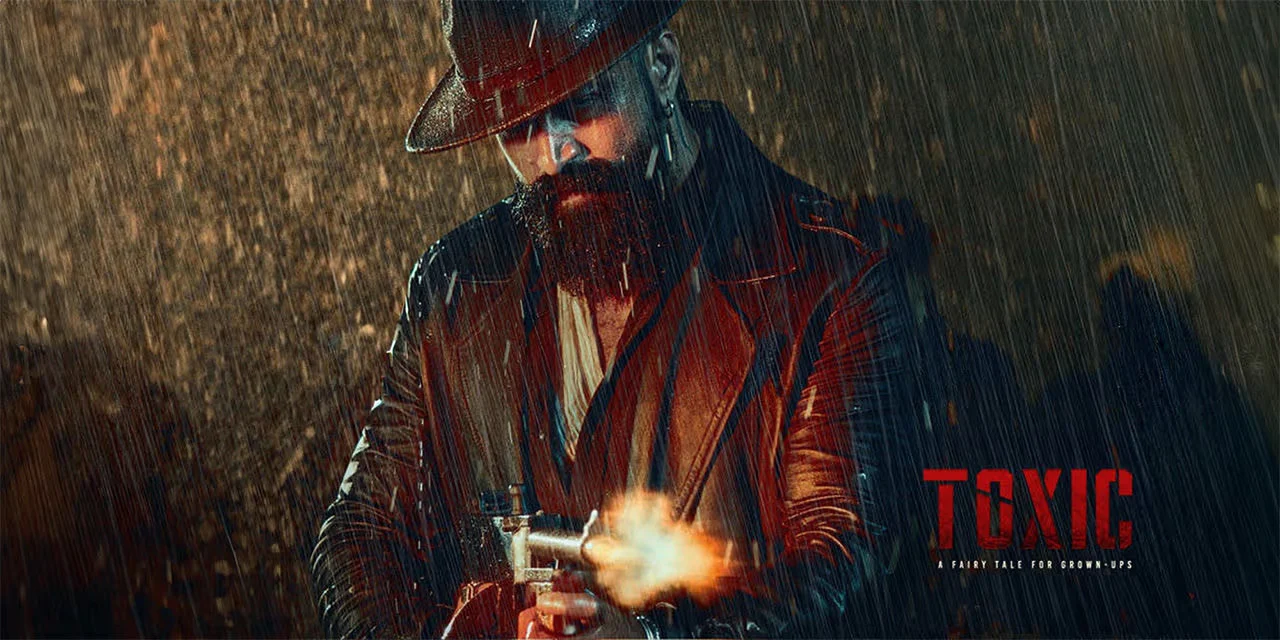

Yash’s long-awaited return to the big screen has finally arrived, and audiences walking out of ‘Toxic: A Fairy Tale for Grown-Ups’ are not talking about the action alone. They are talking about that final frame, the one that cuts to black before anyone can confirm whether the film’s central figure lives or dies.
The gangster drama, directed by Geetu Mohandas, hit theatres worldwide on August 26, 2026, marking Yash’s first theatrical release in nearly four years after ‘KGF: Chapter 2’. With that kind of buildup behind it, it makes sense that the ending has become the single most discussed part of the entire release.
‘Toxic’ Ending Explained, Piece by Piece
The final act centers on a snowy arena showdown between Raya, played by Yash, and his estranged son, Ticket. Raya is gravely wounded during this climax, but the film deliberately withholds any confirmation of his death, cutting away at the exact moment audiences expect closure.
That refusal to spell things out is not a mistake. The ambiguity is described as the entire point of the sequence, since the story is not really about whether Raya survives the fight but about what the fight costs the person who wins it.
By the time the credits roll, Ticket has successfully dismantled his father’s criminal empire across Goa and Macau. That should read as a victory, and on paper it is, yet the film frames it as something closer to a trade.
In order to defeat Raya, Ticket has to become just as brutal as the man he was trying to stop. The final smile that passes across Raya’s face is not a villain’s last laugh, it is recognition. He sees his own cruelty reflected back at him in his son’s eyes.
What Raya’s Smile Reveals About the Film’s Bigger Theme
The smile works because it collapses the distance between father and son right when the audience expects a clean moral separation between them. Raya is not smiling because he has won anything physical, he is smiling because his legacy has survived in the worst possible way.
Geetu Mohandas closes the loop on Raya’s arc by suggesting that physical death is almost beside the point once a psychological victory has already been secured. If Ticket walks out of that arena, he walks out as the new apex predator of the underworld, whether he wanted that role or not.
There is no redemption arc waiting for a character who has absorbed this much violence to win. ‘Toxic’ does not tack on a post-credits scene or a sequel tease, because narratively the story has nowhere left to go once that transformation is complete.
The film’s own marketing leaned into this framing early, with the trailer built specifically around a dual role father-son conflict sitting at the center of the gangster epic. That structure pays off in the ending, since the entire back half is really about whether Ticket can defeat his father without inheriting him.
‘Toxic’ Movie Box Office and Reaction Since Release
The ending has landed in the middle of an already massive commercial moment for Yash. ‘Toxic’ pulled in roughly ₹140.75 crore worldwide on its opening day, a number reported to have surpassed both ‘Jawan’ and ‘Adipurush’ in single day earnings. Advance bookings alone had already crossed ₹45 crore before the film even opened in theatres.
Early public reactions from premiere and IMAX screenings praised Yash’s performance in the dual sense of the role as career defining, with several viewers specifically singling out the transformation required for the film’s back half. Ravi Basrur’s background score has also drawn consistent praise across social media reaction threads.

Not every reaction has been glowing. Critic aggregation on Rotten Tomatoes shows a genuinely split response, with some reviewers calling the film an ambitious misfire while others describe it as a fascinating, if uneven, achievement that explores the price one pays for the choices one makes. Some viewers have also flagged the film’s slower first half pacing and dense narrative structure as barriers for more mass leaning audiences.
That divide between spectacle and substance seems to extend directly into how people are reading the ending itself. Fans expecting a triumphant final showdown got something colder and more morally uncomfortable instead, and the internet reaction has reflected that tension in real time.
The Father-Son Conflict at the Heart of ‘Toxic’
None of this ambiguity works without the setup Mohandas builds across the film’s runway, where Raya and his sister Ganga are shown as siblings failed by their own parents before they ever set foot in Goa’s underworld. That inherited cycle of abandonment is what makes Ticket’s arc feel less like a twist and more like an inevitability.
The film essentially argues that the underworld does not create monsters from nothing, it simply passes the same wound down another generation with a slightly sharper edge each time. Ticket does not become his father by accident, he becomes his father because that was always the only inheritance on offer.
That is also why the ending avoids a clean sequel setup despite the film’s scale and budget. The fairy tale framing in the title becomes almost sarcastic by the final scene, since the story ends exactly how real world power struggles tend to end, with a new boss standing over the old one and no idea that the same fate is already waiting for him.
Whether that reading lands as poetic or frustratingly vague seems to depend entirely on what individual viewers wanted from the finale. What is Raya really smiling at in that final frame, and do you think Ticket walks away from ‘Toxic’ as a hero, a villain, or something the film refuses to let us name?