‘VisionQuest’ Showrunner Reveals How Ultron’s Return Came Together with a Single Split-Second Decision


Marvel Television has spent the last few years quietly rebuilding Vision’s story piece by piece, first through ‘WandaVision’ and then through ‘Agatha All Along,’ each installment adding another layer to a character whose identity has been in flux since he first appeared in the MCU. That slow-burn approach finally reaches its conclusion with the franchise’s newest series, and one creative decision behind it is proving especially revealing.
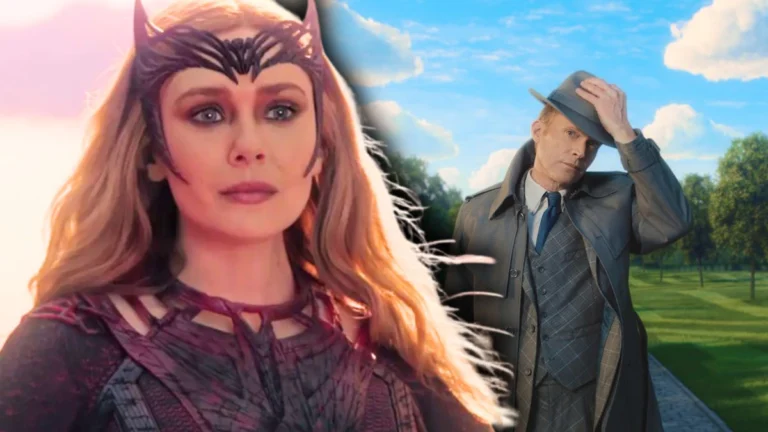
‘VisionQuest‘ picks up the story of White Vision, the version of Paul Bettany’s character who emerged from ‘WandaVision’ with all of the original Vision’s memories but none of the emotional connection that once defined him. Showrunner Terry Matalas has described the series as the final chapter of a trilogy that began with ‘WandaVision,’ one built around Vision’s search for identity now that Wanda is no longer part of his life.
That absence created a genuine creative problem for Matalas early in the show’s development, since Vision has historically needed a strong counterpart to bounce off of dramatically. Matalas revealed exactly how he solved that problem, explaining the thought process that led him straight back to one of the character’s most iconic adversaries.
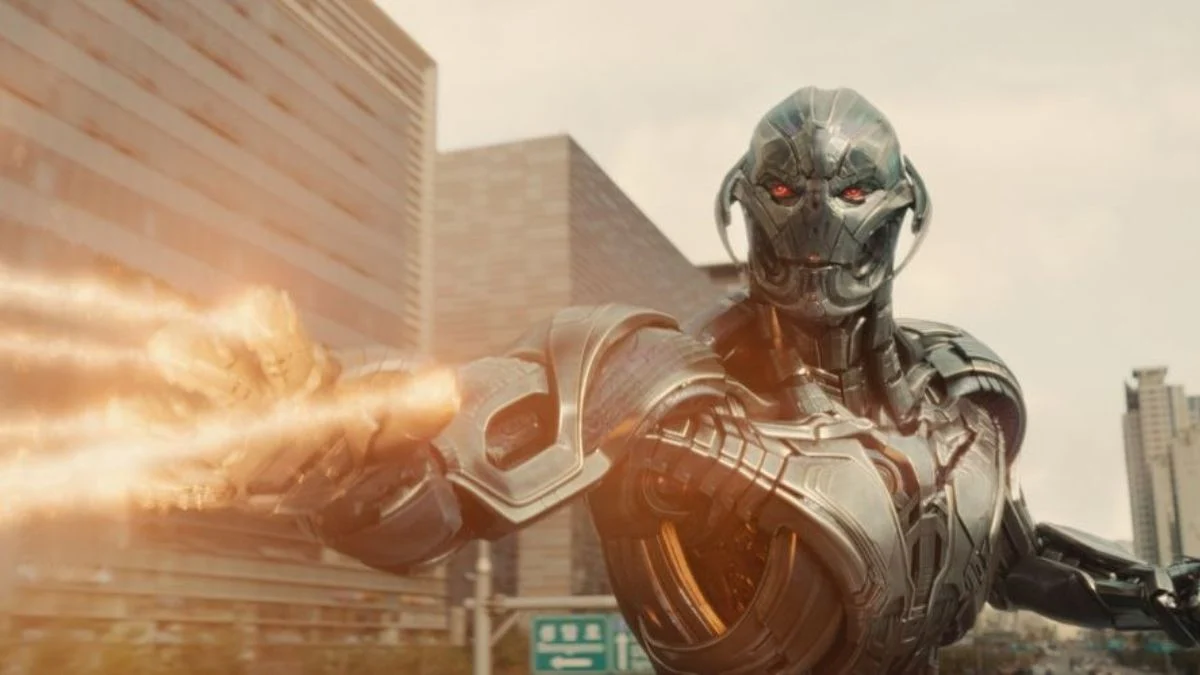
“Well, we don’t have Wanda, and we need someone really strong for Vision to play off of,” Matalas told Empire, continuing, “Within a millisecond, I was like, ‘It’s [James] Spader.’ Then everything else started to fall into place.”
That decision brought Ultron, the villainous artificial intelligence voiced by Spader in 2015’s ‘Avengers: Age of Ultron,’ back into the fold as a central figure in Vision’s new journey. The choice carries obvious dramatic weight given the characters’ history, since Ultron originally created Vision’s synthetic body before the Avengers intervened and repurposed it using Tony Stark’s J.A.R.V.I.S. program instead.
Vision ultimately defeated Ultron at the end of the character’s debut film, though the AI’s death happened off screen, leaving the door open for exactly this kind of return. Matalas has also revealed that this version of Vision is fully aware of what happened to Wanda following the events of ‘Doctor Strange in the Multiverse of Madness,’ joking that the character has simply “watched all the movies,” a detail reinforced by a scene in the show’s trailer depicting Vision watching ‘Avengers: Age of Ultron’ in a home theater.
Beyond Ultron, ‘VisionQuest’ pulls in several other AI personas tied to Tony Stark’s legacy, giving human form to characters like J.A.R.V.I.S., F.R.I.D.A.Y., and E.D.I.T.H. as Vision processes his fractured identity within an internal virtual reality. Bettany has previously praised reuniting with Spader for the project, calling his co-star “delicious” to work with and crediting Matalas with understanding exactly who Vision is meant to represent for audiences who’ve always related to him as an outsider.
Matalas has framed the series as an opportunity for Marvel to take genuine creative risks, echoing sentiments Bettany has shared about the franchise being rewarded when it commits fully to bold storytelling choices. Bringing back one of the MCU’s most memorable villains to serve as Vision’s primary foil certainly fits that description.
With Ultron now confirmed as a central figure in Vision’s path toward understanding who he really is, ‘VisionQuest’ looks poised to deliver one of the more introspective and thematically rich entries in Marvel Television’s growing slate.
What do you think about Ultron returning as a major part of VisionQuest?
Have something to add? Let us know in the comments!