


5 Ways ‘Daredevil’ Aged Poorly (& 5 Ways It Aged Masterfully)

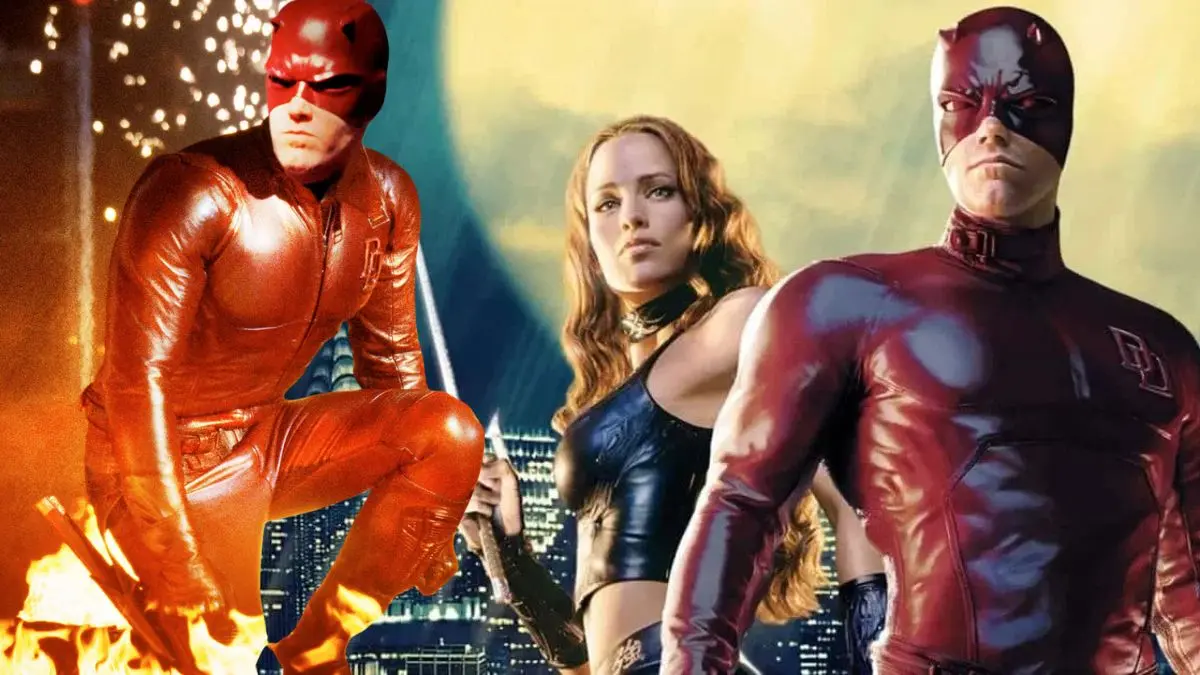


Superhero movies have changed a lot since the early 2000s, and that makes rewatching ‘Daredevil’ a fascinating time capsule. It arrived between the big early waves of ‘X-Men’ and ‘Spider-Man’ and tried to blend pulp grit with mainstream spectacle. The result shows choices that now feel very much of their moment alongside touches that still stand out.
Looking back helps separate passing trends from durable ideas. You can see where studio priorities shaped the final cut and where the filmmakers carved out an identity that would influence later versions of the character. Here are ten aspects that reveal what has and has not held up.
Aged Poorly: Early 2000s CGI and wirework
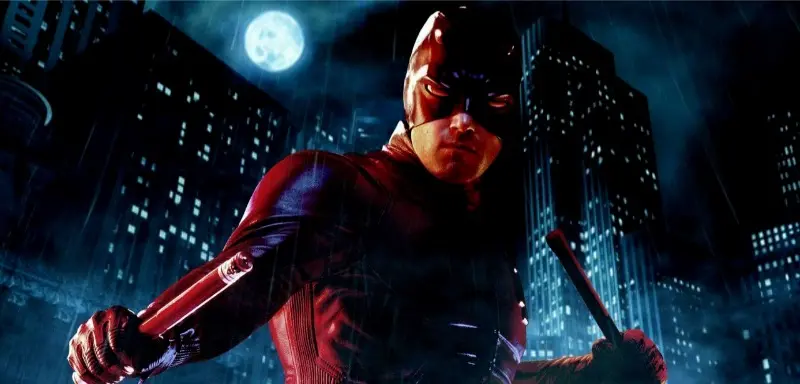
The action relies on digital doubles and stylized wire-assisted moves that were common at the time. Rooftop leaps and midair spins often switch to computer generated shots for full body maneuvers, with quick edits disguising transitions between stunt work and effects.
Close quarters fights favor rapid cuts and exaggerated arcs to sell impact while staying within a PG 13 framework. The approach keeps the camera moving and uses speed ramping to accent moments, a style that reflects trends of the period more than present day fight choreography norms.
Aged Masterfully: Radar sense brought to life with rain and acoustics
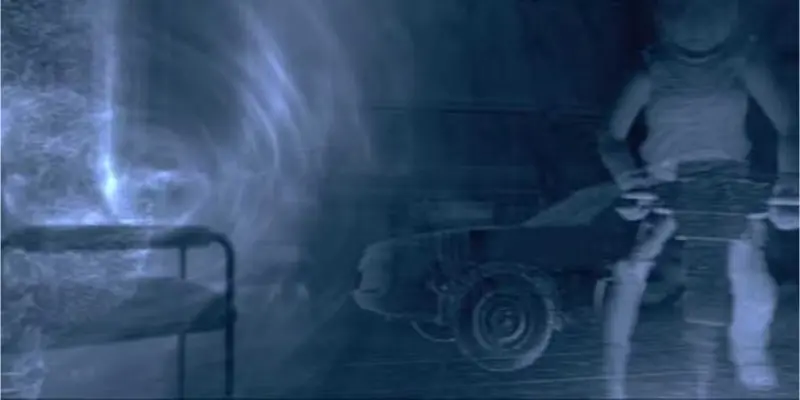
The movie visualizes Matt’s radar sense with a clear internal logic tied to sound. Environmental noise outlines shapes in three dimensional space, and rainfall turns every surface into a visible contour, allowing him to navigate and read motion without sight.
This effect supports storytelling rather than serving as a one off flourish. The same rules apply across scenes, from quiet interiors to chaotic streets, so viewers can track how Matt gathers information and why certain settings give him an advantage or create risk.
Aged Poorly: Theatrical cut trimmed core character material
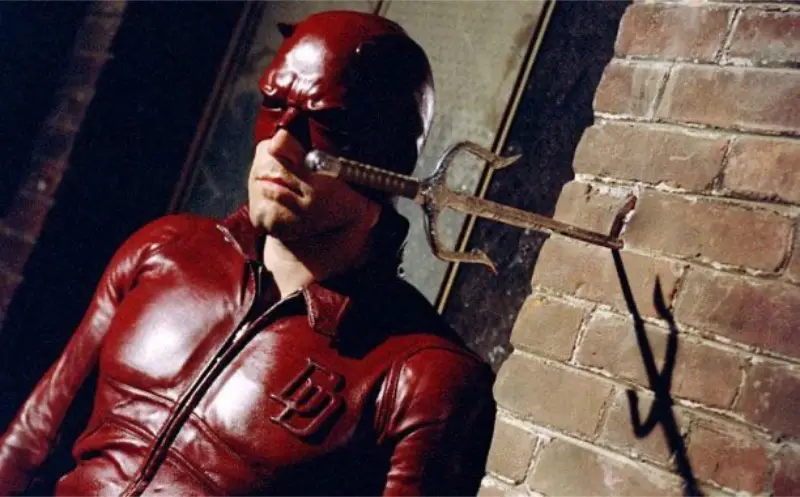
The original release removed a full legal case that shows Matt and Foggy at work. Cutting that thread reduces time spent on investigations, witness interviews, and courtroom strategy, which otherwise explain how the pair balances day jobs with night patrols.
The shorter version also compresses connective scenes that explain how clues travel from the office to the streets. Key cause and effect steps are left implied, which makes the vigilante plot feel more isolated from the daytime world that motivates it.
Aged Masterfully: Director’s Cut restores structure and intent
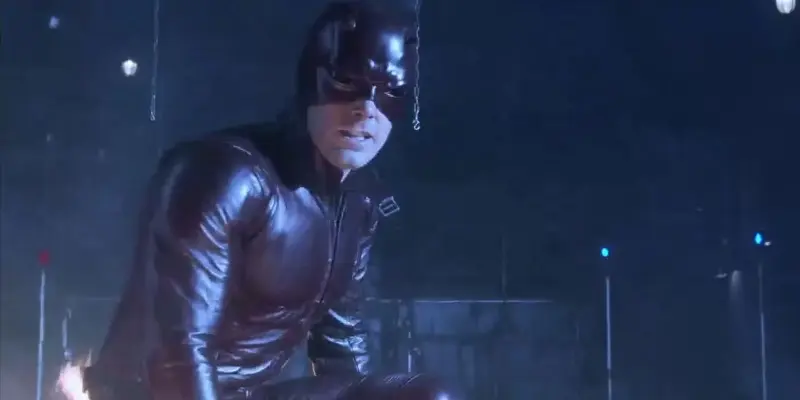
The home video Director’s Cut adds roughly half an hour and shifts the rating to R, restoring the legal case and adjacent material. The extended runtime gives the story a procedural spine that links evidence gathering, lawyering, and vigilantism in a clear chain.
Dialogue scenes breathe, supporting arcs for both clients and secondary players. With that scaffolding back in place, the action beats arrive as payoffs to established conflicts rather than isolated set pieces, and the character dynamic between Matt and Foggy reads with more texture.
Aged Poorly: Playground sparring sets a mismatched tone
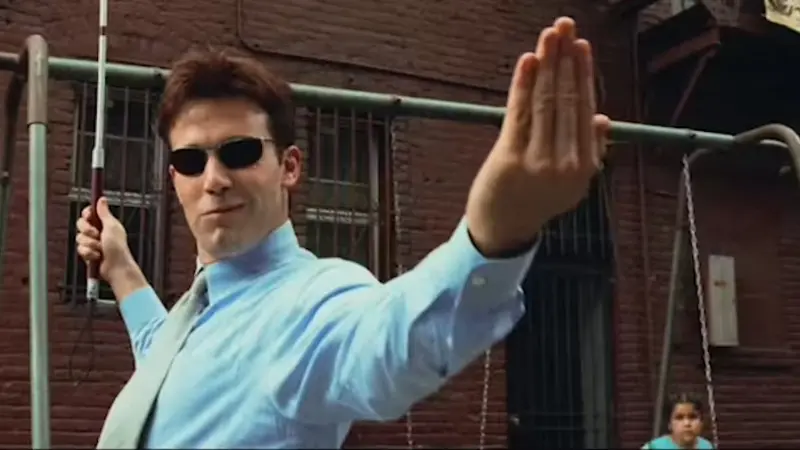
The early courtship sparring between Matt and Elektra plays out in a public playground with athletic moves and acrobatics. The staging sets a light register that does not align with the heavier crime story that follows, which makes the shift into darker material feel abrupt.
Beyond tone, the scene places two secretive fighters in a crowded daytime setting where their skills draw attention. That choice undercuts the care both characters show elsewhere about hiding identities, creating a continuity gap in how they manage exposure.
Aged Masterfully: Deep comic book lineage and creator nods
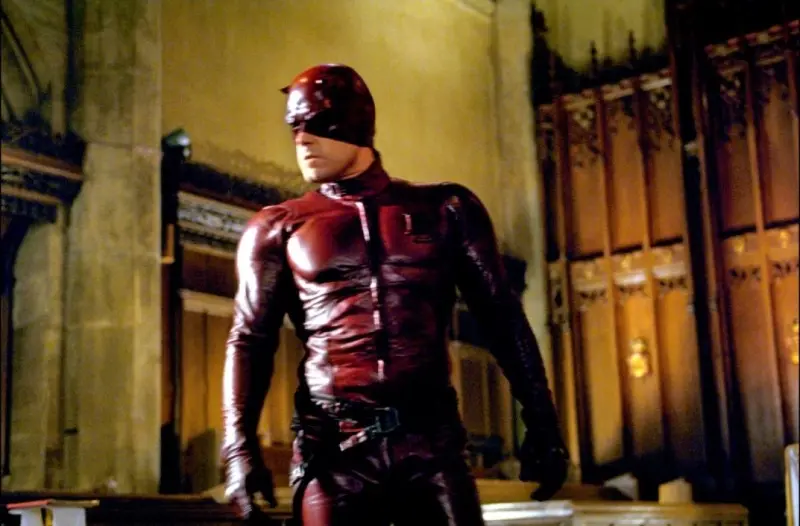
The film threads in names, locations, and plot turns drawn from classic runs, including the church setting, the Kingpin and Bullseye triangle, and the tragic Elektra beat. These elements map to key issues that defined the character’s modern identity and guide the movie’s moral stakes.
Cameos further acknowledge the source. A young Matt saves a man on the street who is played by a familiar Marvel mainstay, and the morgue and crime scene include appearances by notable writers and artists connected to the character. Those touches anchor the adaptation in its print history.
Aged Poorly: Suit construction trades mobility for silhouette
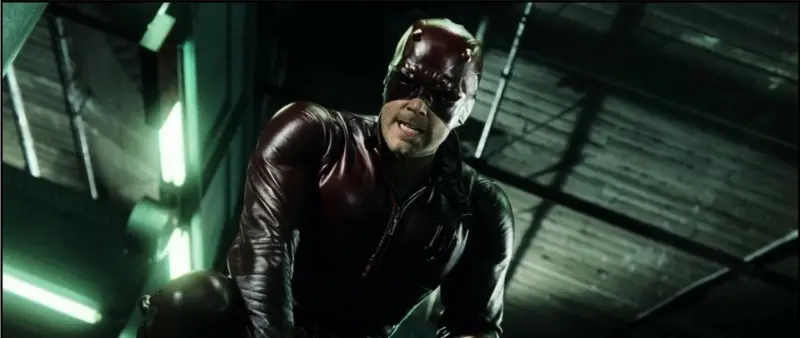
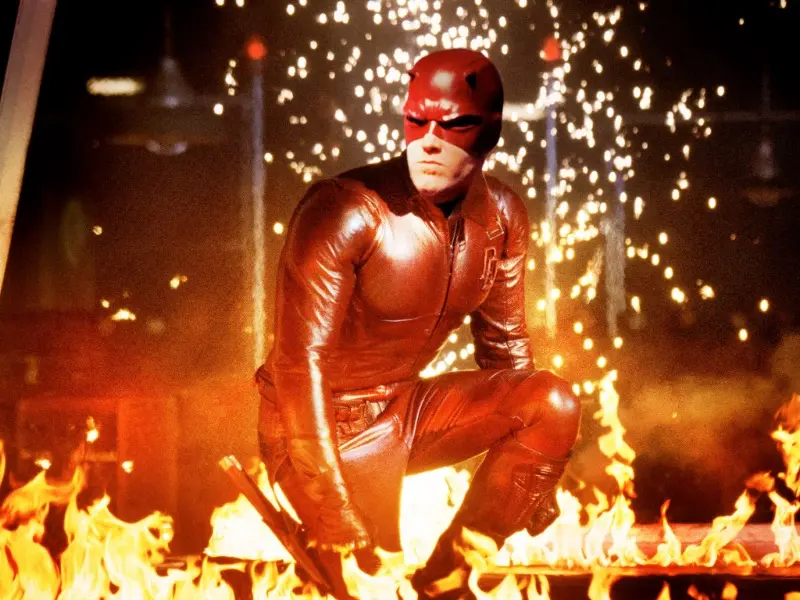
Matt’s red suit uses thick leather panels with visible seams and an embossed chest emblem. The materials and layered build emphasize a bold shape under city lights, but they also restrict range of motion in shoulders and neck compared with contemporary flexible designs.
The billy club system is thoughtfully engineered with holsters, a cable, and a staff conversion, yet the bulk of the torso and cowl makes ground grappling and tight clinches harder to stage. That leads the action to favor climbs, swings, and distance strikes over longer grapples.
Aged Masterfully: Catholic imagery and moral framework
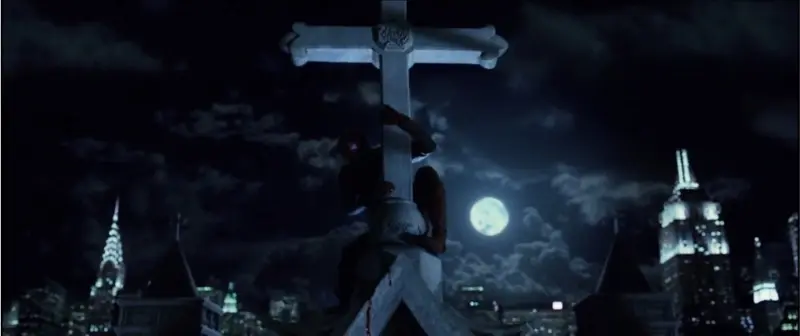
Confessionals, church interiors, and iconography frame Matt’s choices as matters of conscience as much as tactics. Scenes place him under statues, candles, and stained glass to make guilt, penance, and mercy central to his decisions about violence and restraint.
The church showdown with Bullseye and the conversations with clergy connect vigilante action to questions of law and sin. That framing gives the story a moral architecture that aligns with defining comic arcs and keeps character motivation clear across the plot.
Aged Poorly: Franchise setup strains the stand alone story
Seeds for future installments appear in closing beats and tag moments, including a hospital gag and open threads around supporting characters. Those teases prioritize future possibilities over full resolution for some ongoing disputes inside the main plot.
The setup also pivots attention toward a spinoff built around Elektra. That follow up shifts focus away from relationships and cases established here, which leaves certain dynamics unresolved within the confines of this movie’s narrative.
Aged Masterfully: Early marker in the pre MCU feature era
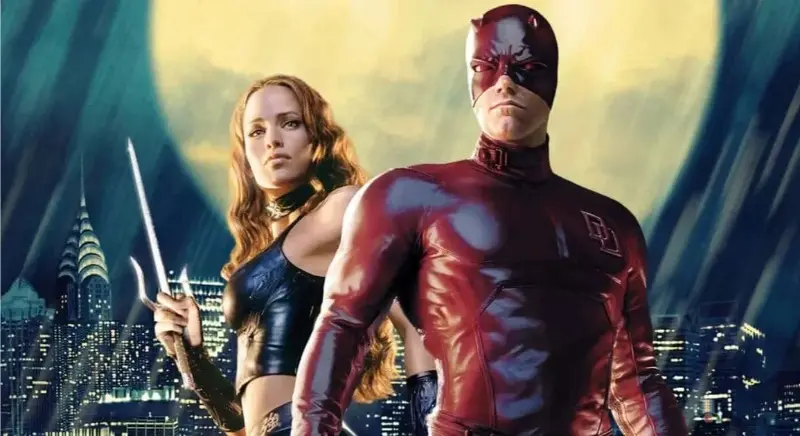
Releasing in 2003, the film sits at a key point when studios were testing heroes outside the very top tier. Its performance showed that audiences would turn out for a darker street level character, which helped pave the way for later screen versions across formats.
Home media kept interest alive through an alternate cut that circulated widely with fans of the character. When the hero returned in television form years later, viewers had a baseline for the world, the rogues, and the moral palette, thanks to groundwork this movie laid.
Share your take on which parts of ‘Daredevil’ hold up best in the comments.

