


5 Ways ‘Dexter’ Aged Poorly (& 5 Ways It Aged Masterfully)


The TV series ‘Dexter’ blended crime procedural detail with a secret life premise that followed a Miami blood spatter analyst guided by a set of rules he calls the Code. It paired meticulous crime scene work with an internal monologue that explained method and motive in plain language for viewers.
Time and technology have changed since the show first aired, and the franchise expanded with the continuation ‘Dexter: New Blood’. Looking back now, some elements show their age while others still operate with clear precision. Here are ten focused ways the series reflects both sides of that timeline.
Aged Poorly: Early phones and digital forensics lock cases to an older tech era

Many episodes revolve around flip phones, early smartphones, and basic call logs that are collected by either swapping SIM cards or pulling limited records. Social media appears as simple profile pages, navigation relies on printed directions or basic GPS, and surveillance footage often comes from low resolution analog systems that cover only a few angles.
Computer work mostly happens on lab desktops with single user access and simple password prompts. Today investigators handle multi factor authentication, cloud backups, precise location histories, and device specific extractions, while the show’s tools reflect a period before those became routine.
Aged Masterfully: Season long antagonist structure is clear and disciplined

Each season concentrates on a primary adversary that is introduced early, escalates through a series of incidents, and intersects with ongoing cases in the homicide unit. The pattern builds a steady rhythm with investigative breakthroughs around the midpoint and confrontation in the closing episodes, which gives guest stars room to shape the arc.
The format produced memorable runs such as the Bay Harbor Butcher investigation that threaded through every department scene and the Trinity narrative that tied family life to the case file. John Lithgow earned a Primetime Emmy as a special guest star, which underlines how the show’s seasonal structure supported major performances.
Aged Poorly: Clinical language and therapy depictions reflect older public framing
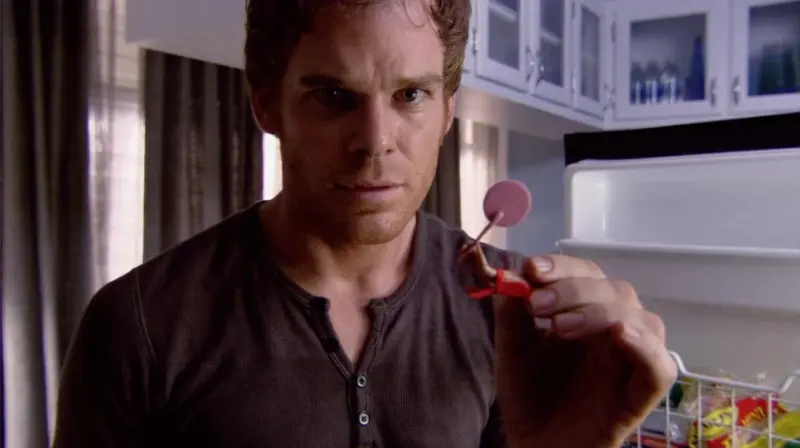
The series leans on terms like psychopath and uses phrases such as dark passenger to describe impulses rather than referencing clinical criteria. Therapy appears in brief sessions that function more as cover or compliance than as a course of treatment with measurable goals and follow up planning.
Current practice in many settings uses standardized assessments, documented care plans, and evidence based approaches that track progress over time. On screen, the Code shaped by Harry functions as a personal rule set rather than a program designed by clinicians, which places psychological discussions outside the structures viewers now expect to see.
Aged Masterfully: Michael C. Hall’s performance and role continuity anchor the franchise

Michael C. Hall received major recognition for his work including a Golden Globe for Best Actor in a Television Series Drama and Screen Actors Guild honors. He also served as an executive producer on later seasons, which aligned creative and performance choices across long arcs.
His return to the role in ‘Dexter: New Blood’ preserved the character’s cadence, voiceover rhythm, and investigative habits. The continuity helped the series move settings and supporting casts while keeping the core perspective consistent for audiences who followed both runs.
Aged Poorly: Miami look often comes from California locations rather than the coast it portrays

Primary filming took place in Los Angeles and Long Beach with Miami material used for establishing shots such as aerial views, marinas, and signature skyline inserts. Production teams replicated stucco facades, pastel palettes, and street layouts to match the setting.
The approach leaves small tells for viewers who know South Florida, including plant species that grow along the Pacific, distinct street furniture, and license plates in background traffic that do not match the jurisdiction. Those visual details sometimes contrast with dialogue and case files that place scenes squarely in Miami Dade.
Aged Masterfully: Crime scene methodology is portrayed with consistent procedural steps

Episodes repeatedly show documentation routines that mirror real workflows, including wide and close photography, evidence flag placement, and bagging with labeled seals. Bloodstain pattern analysis appears with stringing to map trajectories, luminol to visualize traces, and careful note taking that records positions and volumes.
The show’s vocabulary familiarized viewers with terms used by practitioners, such as cast off, voids, and arterial spray. While not a training course, that steady use of method and terminology made the mechanics of scene processing clear enough for audiences to follow case logic from discovery to lab work.
Aged Poorly: Workplace access and conflicts of interest are looser than modern lab standards

Scenes often depict solo after hours access to evidence rooms, database queries without dual control, and movement of samples by a single analyst from field to bench. The same character collects at scenes, transports items, and performs analysis, which merges roles that many agencies now separate.
Accredited labs typically require documented chain of custody with multiple signoffs, audit trails for every touchpoint, and separation between collection teams and analytical units. Many departments also use electronic access logs and cameras inside storage areas, which reduce opportunities for the kind of unsupervised handling shown on screen.
Aged Masterfully: Season length and cliffhanger cadence suit modern binge viewing

The series keeps a steady episode count per season, which gives writers a clear timeline for planting clues, introducing setbacks, and closing subplots. Episodes often end with a concrete shift in the case status or a discovery that points the next step, which encourages back to back viewing.
Home and digital releases package seasons with uniform runtimes and high definition transfers. Viewers can watch in order without gaps, and recap features allow quick refresh on prior events, which makes long arcs easier to follow over a few sittings.
Aged Poorly: Public accountability processes are simplified compared to current expectations

Media briefings in the show are short scenes with a spokesperson and a few questions, and many legal steps happen off screen through quick references to warrants or subpoenas. Case boards, verbal updates, and hallway meetings carry most of the information that moves investigations forward.
Today, many viewers are familiar with body camera policies, records requests, and court filings that appear in public databases. The series focuses more on detective room collaboration than on the paperwork and disclosure procedures that accompany major cases in many jurisdictions.
Aged Masterfully: The continuation ‘Dexter: New Blood’ expands the canvas without losing focus

‘Dexter: New Blood’ relocates the story to a cold climate setting with small town law enforcement resources, wildlife tracks in snow, and different response times for backup and labs. The limited series introduces new characters including an older Harrison and a police chief partner, which reorients family and workplace dynamics.
Clyde Phillips returned as showrunner for the continuation, reconnecting the seasonal arc design with earlier creative leadership. Production used locations in Western Massachusetts to achieve the winter look that matches the fictional town, while keeping the core investigative habits and voiceover framework in place.
Share your take below on which elements of ‘Dexter’ feel locked to their moment and which ones still cut with precision today.

