


5 Ways ‘Firefly’ Aged Poorly (& 5 Ways It Aged Masterfully)

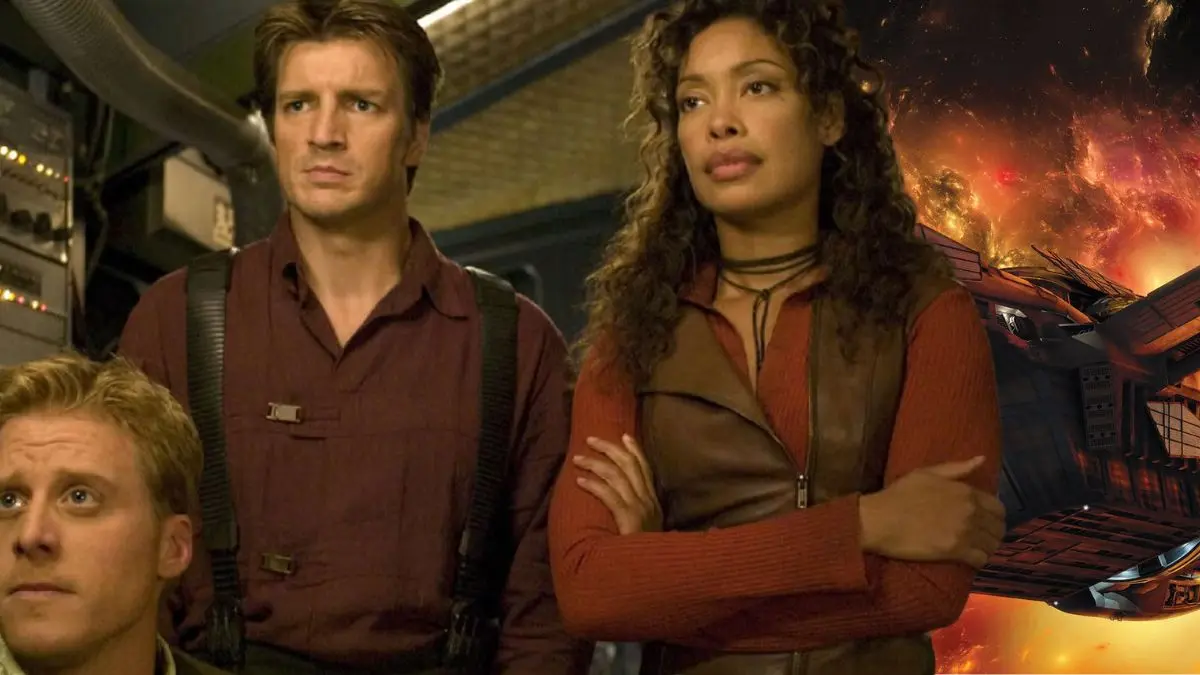


‘Firefly’ packed a lot into a short run, building a frontier space setting where a small cargo ship crew tries to keep flying under the radar of a powerful central government. The show mixed English with Mandarin, blended high tech tools with dusty towns, and built a backstory shaped by a recent civil war that still influences every job the crew takes. A follow up film, ‘Serenity’, extended the story and kept interest alive long after the final episode aired.
The series keeps finding new viewers through reruns, discs, and streaming. Some parts still feel sharp and inventive, while other pieces show their age or reveal the limits of a single season. Here are five ways it aged poorly and five ways it aged masterfully, taking a close look at choices in worldbuilding, storytelling, and production that continue to shape how people experience ‘Firefly’ today.
Aged Poorly: Surface level use of Chinese culture

‘Firefly’ presents a future shaped by a Sino American partnership and fills its sets with Mandarin signage and quick Mandarin lines, often during moments of stress. The main cast does not include Chinese actors and most guest roles rarely center Chinese communities, which leaves the premise visible in props and background details more than in character focus or story leadership.
The scripts frequently use Mandarin as a way to skirt broadcast standards through untranslated phrases, and pronunciation varies from scene to scene. Production design adds calligraphy, parasols, and silk accents, yet the stories seldom examine institutions, customs, or legal frameworks that would logically reflect deep Chinese influence beyond the surface.
Aged Masterfully: Lived in sets and practical details
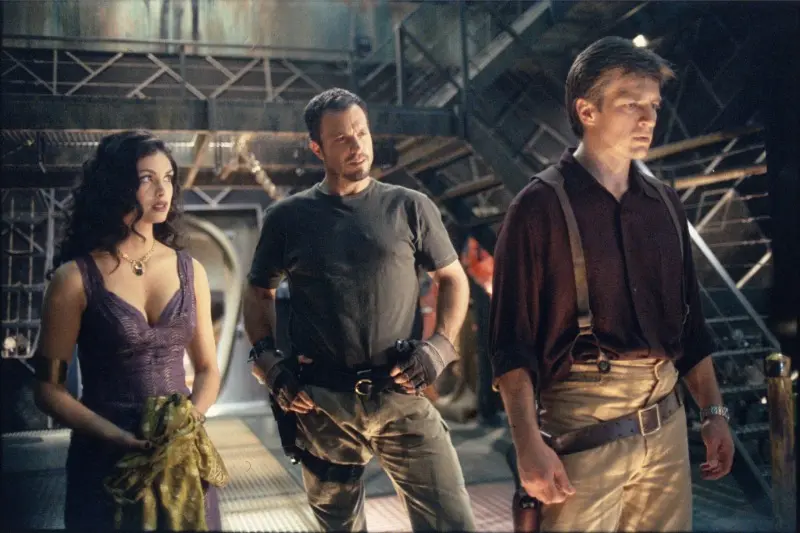
The ‘Serenity’ ship set was built as a continuous space with working doors, scuffed floors, and labeled storage, so the camera can follow characters from the bridge to the cargo bay without breaking the illusion. Lighting exposes wiring, patched panels, and open grates that make the ship feel like a machine that needs constant care rather than a glossy backdrop.
Outdoor locations reinforce the same approach with muddy streets, improvised fences, and market stalls that trade in tools, livestock, and salvage. Barter, shortages, and jury rigged equipment help explain why jobs like smuggling, courier runs, and emergency medical transport exist and why a small crew can make a living on the margins.
Aged Poorly: Broadcast order and incomplete first impressions

The network premiere used ‘The Train Job’ instead of the intended pilot ‘Serenity’, which removed the on screen introduction of the crew, the ship’s rules, and the fundamentals of the job they do. Viewers met the world in the middle of a caper rather than seeing the core relationships form, which made later choices seem abrupt for anyone starting there.
Only 11 episodes aired during the original run while three held episodes reached audiences later, so ongoing threads like River’s condition and Book’s history landed without the setup the writers planned. That early shuffle shaped how many first time viewers understood character motives and the stakes of the season’s central conflicts.
Aged Masterfully: Clear visual language for space

Exterior shots drop sound during vacuum sequences and rely on thruster flashes, light shifts, and camera framing to convey motion, which lines up with real conditions in space and keeps action readable without constant explanation. Quick snap zooms and handheld style moves create the sense that a human operator is tracking ships from another nearby craft.
Longer takes often hold on the ‘Serenity’ as it transitions from burn to drift, with small focus pulls and reframing that mimic observational footage. The effect sells scale and speed even when shots stay wide, and the approach became a recognizable template for later television space battles and docking scenes.
Aged Poorly: Companion worldbuilding used mostly as plot stress

The series establishes that Companions are licensed professionals with formal training, client screening, and guild oversight, which places the role inside respectable society. Many individual stories still put the Companion character in situations where her choices are dismissed by antagonists or undercut by shipmates, so the professional framework often disappears when conflict appears.
One episode centers on defending a brothel against a violent patron and a local power, showing how legal status offers little protection on the rim. The plot offers chances to explore contract law, guild protections, and jurisdictional limits, yet the focus turns quickly to jealousy and moral friction rather than systems that the setting introduced.
Aged Masterfully: Inventive episode structures that reveal character

‘Out of Gas’ intercuts three timelines to show how the crew met and how the captain keeps the ship alive, using color and framing shifts to separate past and present without heavy narration. The structure lets viewers see the ship’s layout, the crew’s early bargains, and the cost of staying independent while a single crisis pushes everything to the edge.
Heist and bottle stories such as ‘Ariel’ and ‘Objects in Space’ set clear objectives and obstacles, so skills, values, and secrets emerge through planning and movement rather than speeches. Medical prep, infiltration steps, and a quiet pursuit through the ship all turn character work into procedure that stays tense and easy to follow.
Aged Poorly: Planetary logistics and travel consistency

The setting depends on large scale terraforming that leaves many moons with breathable air and Earthlike gravity, yet frontier towns often run on horses and scarce medicine while core worlds show advanced hospitals and dense cities. The gap is part of the premise, but details like customs checks, border control, and how long a jump takes shift widely from episode to episode.
Currency terms such as credits and platinum appear side by side, and shipping jobs range from cattle to cryogenic cargo without stable freight rates or visible fuel costs. That makes the economics of smuggling and legal transport hard to track across the season and blurs how risk, reward, and scarcity shape the crew’s choices.
Aged Masterfully: Distinct voices across the ensemble
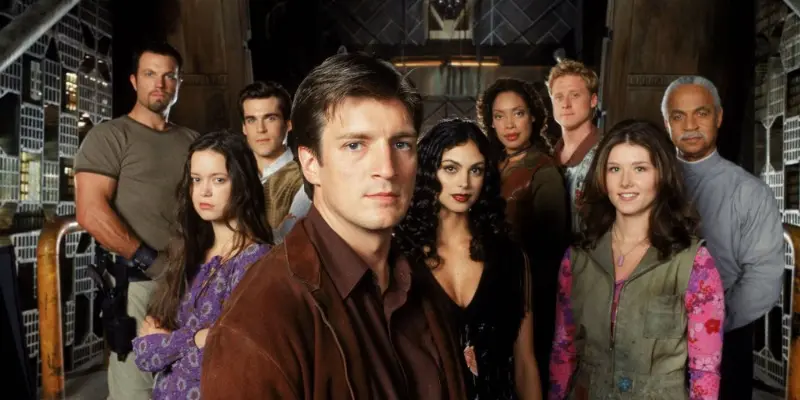
The scripts give each crew member a consistent speech pattern that makes crowded scenes easy to parse. Mal uses clipped commands and short metaphors, Kaylee leans on practical terms and quick technical notes, and River drifts into associative phrasing that still ties back to the moment at hand when listened to closely.
Code switching signals status and origin across the map. Alliance officers speak in formal registers while rim residents use frontier idioms and unpolished grammar, and the crew slips into Mandarin during stress or private asides. Those choices mark class lines and shared culture without lengthy exposition and stay steady from episode to episode.
Aged Poorly: Unfinished arcs left by cancellation

The season seeds Blue Sun logos, government experiments on River, and hints about Shepherd Book’s past, then runs out of time before delivering full explanations. Viewers can trace patterns and clues across scenes, but the series stops short of the payoffs that the setup implies.
The follow up film ‘Serenity’ resolves the origin of the Reavers and advances River’s story, and licensed comics later supply added details. The television run still ends with those threads open, which changes how the season plays as a complete narrative for anyone watching only the episodes.
Aged Masterfully: Enduring afterlife through fans and follow ups

Strong disc sales, convention turnout, and online discussion kept attention on the property and helped pave the way for ‘Serenity’ to continue the story. The film brought back the cast, advanced key mysteries, and reintroduced the world to new viewers who then circled back to the show.
Fan groups known as Browncoats organized charity screenings and campaigns that maintained visibility long after the original broadcast window. Cast reunions, panels, and rereleases keep the single season in circulation, so the show remains easy to discover despite its short run.
Share your own picks for what holds up and what does not in ‘Firefly’ in the comments.

