


5 Ways ‘Top Gun’ Aged Poorly (& 5 Ways It Aged Masterfully)

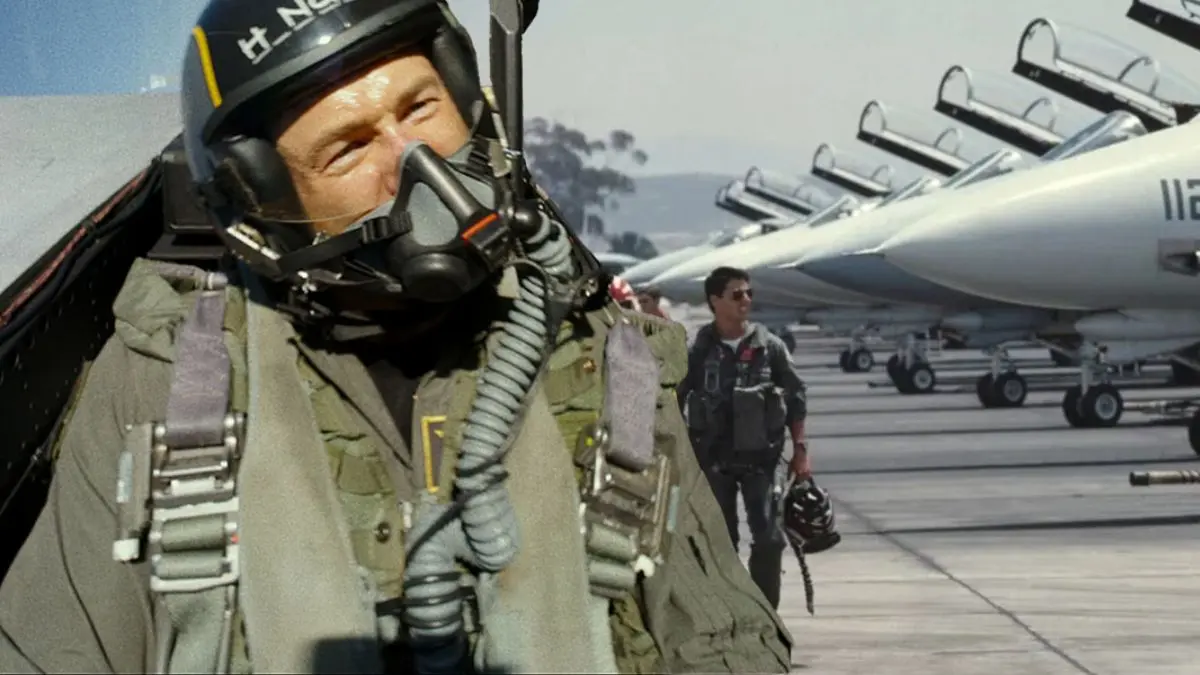


The original ‘Top Gun’ put carrier aviation on the big screen with unprecedented access to aircraft, flight decks, and Navy training environments. The production partnered with the United States Navy, filmed at real bases, and captured sorties from actual squadrons as part of a coordinated schedule that balanced filmmaking with operational demands. That cooperation created a vivid snapshot of Navy fighter culture and procedures that audiences rarely saw in such detail.
Time has moved the world of aviation and military policy forward, which means some parts of the film now reflect practices and technology from a different era. Other parts still mirror how naval aviation works, from radio calls and landing patterns to the way flight deck crews operate as a single unit. Here are five elements that no longer match current realities and five that continue to line up with how things are done.
Aged Poorly: Front line hardware now retired
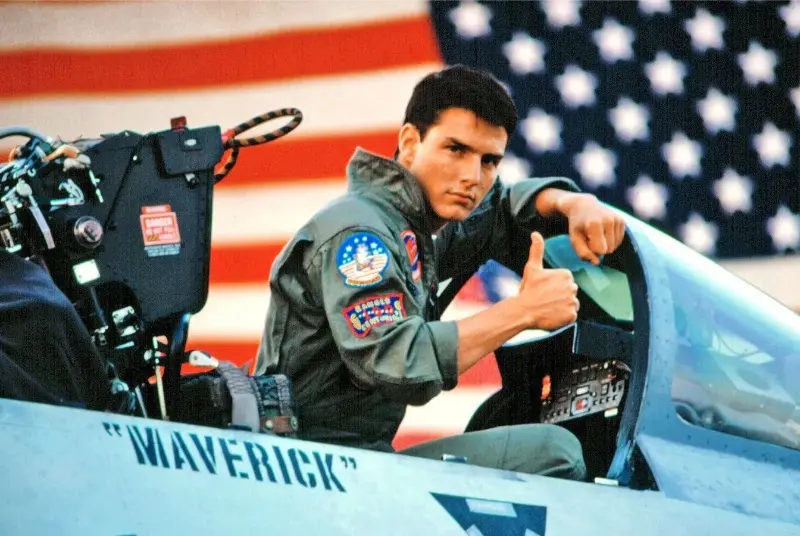
The film centers on the Grumman F-14 Tomcat and shows its analog cockpit with steam gauges, the AWG 9 radar, and the AIM 54 long range missile system. The F-14 left US Navy service in 2006, and the carrier featured in the movie later left service as well. The aircraft seen on screen came from fleet squadrons that no longer fly, and the training base featured in the movie no longer hosts the school.
Modern carrier air wings rely on the F A 18E F Super Hornet and the F 35C with glass cockpits, digital flight control systems, and helmet mounted cueing. Current aircraft use advanced data links and infrared search and track sensors that change how aircrews manage intercepts, which differs from the radar centric intercept flow depicted in the movie.
Aged Masterfully: Real aircraft and real locations on camera
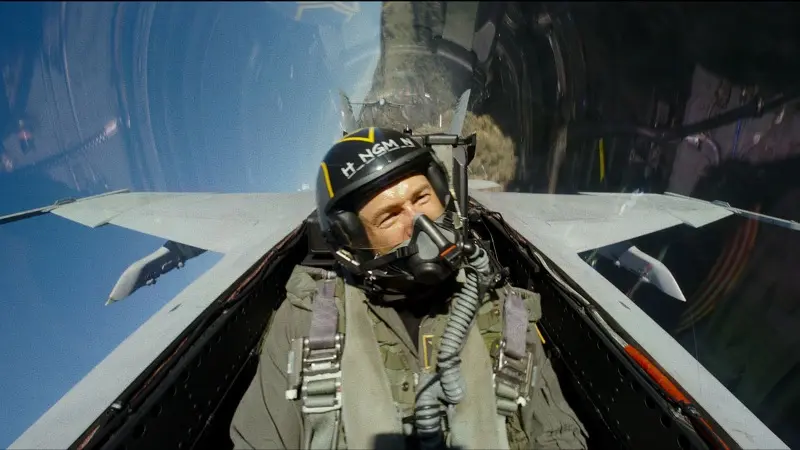
Flying sequences used actual Navy aircraft with fleet crews executing dissimilar air combat and carrier operations for the camera. The production filmed at Naval Air Station Miramar and aboard a nuclear powered carrier, capturing catapult launches, arrested landings, and cyclic operations during genuine flight periods. The result is a record of procedures that were filmed as they happened, rather than recreated on a set.
This approach gave viewers clear views of approach lighting systems, Fresnel lens operations, and the movement of aircraft handlers, troubleshooters, and ordnance teams. Because the footage came from real evolutions, radio calls, taxi choreography, and deck crew signaling remain useful references for understanding how a carrier functions during a busy day at sea.
Aged Poorly: Fictional adversary and simplified air combat
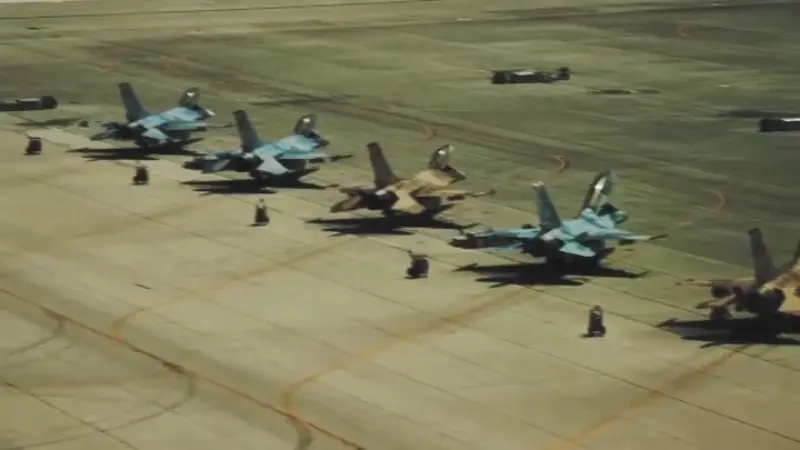
The enemy MiG 28 is not a real aircraft. Those jets are Northrop F 5s painted black, which mirrors how the Navy’s adversary program used F 5s and A 4s to teach dissimilar air combat tactics. The film avoids specific nation identifiers, which made sense for production but leaves viewers with a fictional baseline for threat capabilities.
Current adversary training uses different platforms and a wider mix of providers. Navy and Marine units employ F 16s and F A 18s for red air, and the services also contract with companies that fly fleets of A 4s, Mirage F1s, and other types to replicate modern threat envelopes. Tactics, ranges, and threat presentations have evolved to match contemporary sensors and weapons, which are not reflected in the movie’s set piece dogfights.
Aged Masterfully: The TOPGUN mission is represented clearly
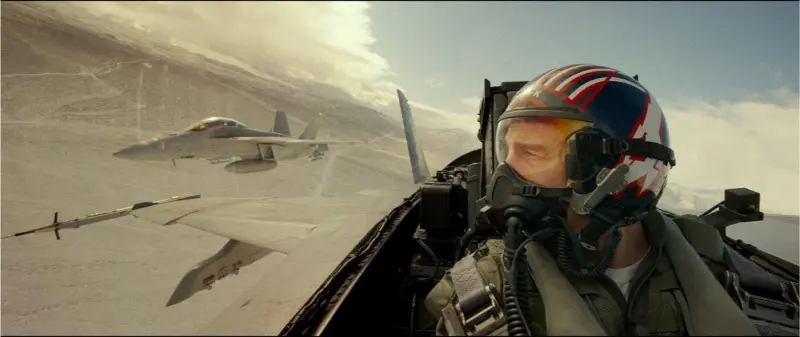
The Navy Fighter Weapons School exists to make instructors who return to squadrons and improve tactics, techniques, and procedures across the fleet. The film shows an instructor cadre, a student class built from fleet crews, and a syllabus focused on air to air problem solving and debrief driven learning. That structure reflects how the real program emphasizes standardization and repeatable performance.
The school began at Naval Air Station Miramar and later moved to Naval Air Station Fallon, where it became part of the Naval Aviation Warfighting Development Center. There it integrates air wing level training with large force events and works across communities that include strike fighter, electronic attack, airborne early warning, rotary wing, and maritime patrol aviation.
Aged Poorly: Limited representation of women in the cockpit

The cast does not include women as student pilots, which reflects policy at the time the film portrays. Women were barred from flying in combat units until the combat exclusion policy changed in 1993, which meant no women could be assigned as fighter or attack pilots on carriers during the era shown on screen.
Today the Navy and Marine Corps employ women as strike fighter pilots, electronic attack pilots, and airborne early warning pilots. Women serve as training and fleet squadron instructors, hold department head and command positions, and deploy with carrier air wings, which marks a significant change from the personnel picture presented in the film.
Aged Masterfully: Carrier procedures and jargon remain accurate
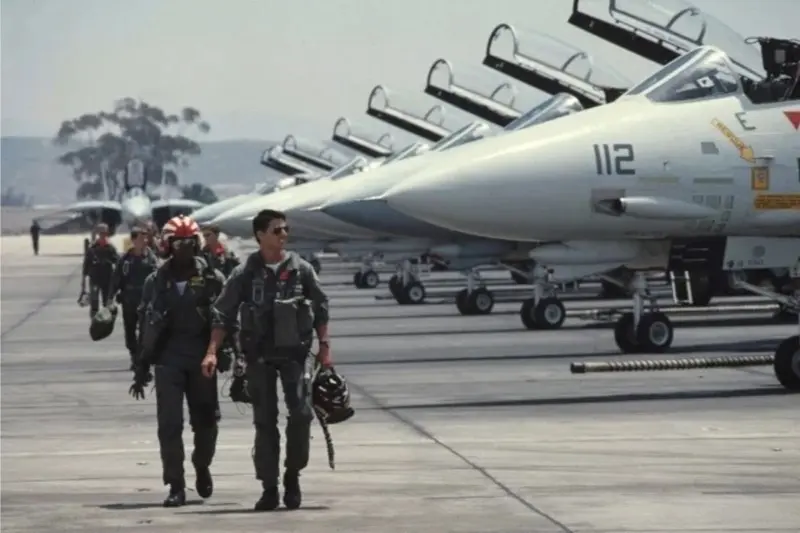
The script uses terms that match naval aviation practice, including RIO for Radar Intercept Officer, bolter for a missed arrested landing, waveoff for an aborted approach, and bingo fuel to indicate a prebriefed fuel state to depart for a divert. These definitions remain in use, which makes the radio dialogue a helpful primer for new audiences.
Flight deck visuals also track with reality. Colored jerseys identify roles such as yellow shirts for aircraft directors, green for catapult and arresting gear, purple for fuel, red for ordnance, and blue for chocks and chains. The choreography of tow bars, tie downs, and final checks before the salute to the catapult officer reflects procedures that viewers can still observe on today’s decks.
Aged Poorly: Instructor and student relationship setup
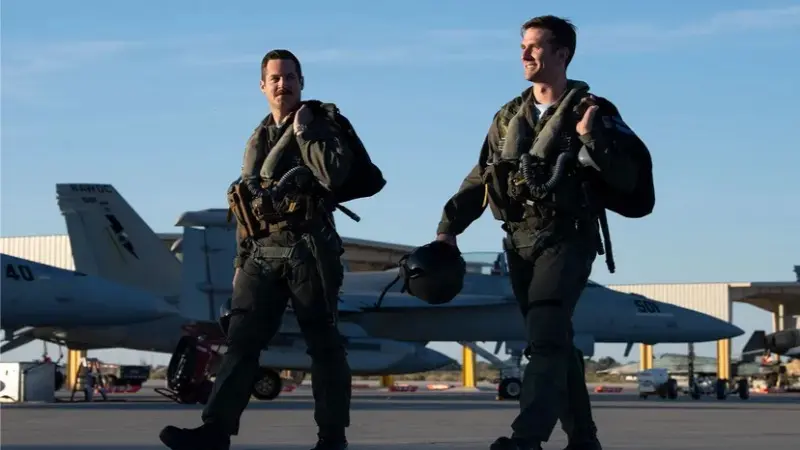
The movie pairs a student with a civilian instructor in a romantic subplot. The character is presented as a contractor who teaches within the program, which places the relationship inside an instructional environment rather than outside the chain of training. That setup does not align with current expectations for instructor student boundaries in professional education settings.
Department of Defense and Navy policies outline standards for professional relationships and address fraternization, training integrity, and power dynamics. Commands use mandatory training and reporting procedures to prevent relationships that can affect good order and discipline, which clarifies expectations across military and civilian roles in classrooms and simulators.
Aged Masterfully: Public education about naval aviation expanded
The film drew attention to the Navy’s aviation community and created curiosity about how carriers work, which museums and outreach programs continue to meet. Aviation museums display carrier landing gear, arresting hooks, and aircraft with foldable wings, which helps explain why naval aircraft have specific structural features.
The real school now operates within a larger warfighting development center that hosts large force exercises and integrates tactics across platforms. Public programs such as fleet weeks and airshows showcase carrier capable aircraft and give visitors access to pilots, maintainers, and recruiters who can answer questions about training pipelines, aircraft systems, and life at sea.
Aged Poorly: Cold War framing without clear geopolitical context
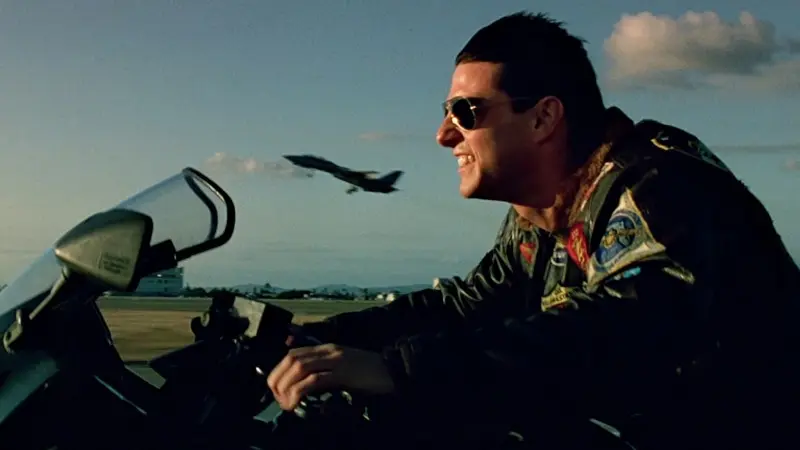
The film avoids naming a specific nation while presenting a series of encounters that resemble Cold War intercept patterns. That choice keeps the focus on flying rather than policy, but it leaves audiences without details on rules of engagement that governed real world interactions between forces during that period.
Modern productions often employ fictional states or composite threats to allow access to equipment and locations while avoiding diplomatic issues. That approach can simplify clearance from cooperating militaries and helps productions use current hardware, but it also removes the chance to explain how treaties, air defense identification zones, and maritime boundaries shape daily operations.
Aged Masterfully: Call sign and squadron identity traditions
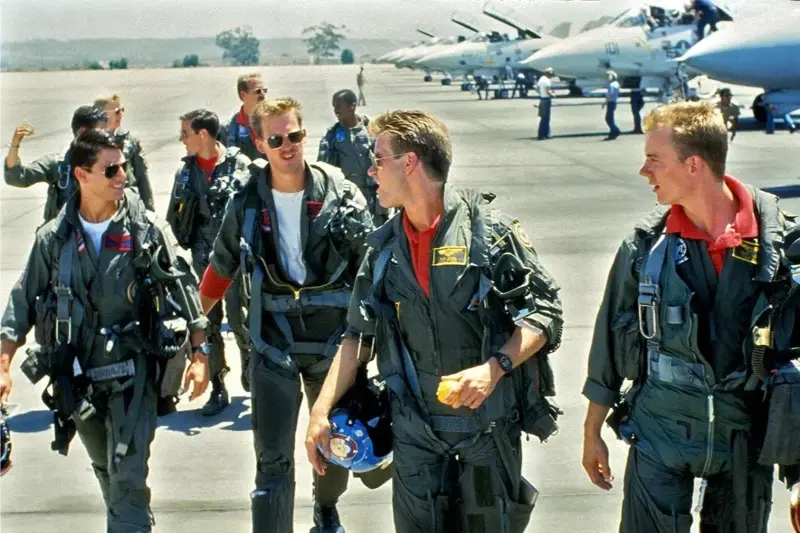
Naval aviators use call signs as working identifiers that appear on helmets, aircraft nameplates, and paperwork. Call signs are usually bestowed by peers and become the standard way to address a pilot or flight officer on the radio and in daily operations, which is why they appear prominently on flight gear and ready room boards in the film.
Call signs help with clear communication under stress and reduce confusion when multiple crew members share similar names. They also support crew resource management by giving every person a single unambiguous handle on the net, which aids deconfliction and safety during complex training events and combat missions.
Share your take in the comments on which parts of ‘Top Gun’ you think changed with the times and which parts still match the real world of naval aviation.

