What Is ‘How to Rob a Bank’ Based On? The Story Behind the Heist Film


The heist subgenre has long served as a captivating canvas for Hollywood directors to blend precision choreography with anti-establishment flair. As audiences gravitate toward stories that challenge sprawling financial systems, filmmakers continue searching for innovative ways to reinvent the tension of vaults, getaways, and cunning criminal conspiracies.
When director David Leitch set his sights on helming ‘How to Rob a Bank‘, moviegoers immediately began wondering what source material sparked the project. Given the entertainment landscape’s current reliance on best-selling novels, viral podcasts, and true-crime retrospectives, speculation mounted about whether the action thriller had ripped its narrative straight from historical headlines. However, tracing the roots of the production requires sifting through cinematic misconceptions and dissecting how modern internet culture alters traditional crime cinema.
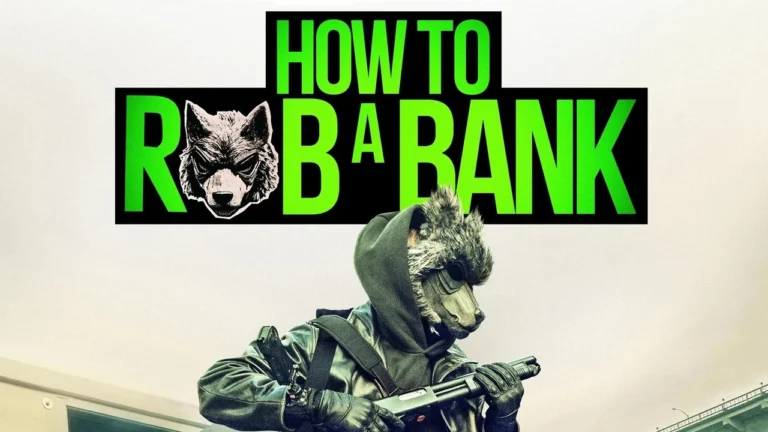
Contrary to persistent rumors circulating online, ‘How to Rob a Bank’ is not based on a true crime case, a non-fiction book, or a graphic novel. Instead, the high-octane 2026 film originates from an entirely original spec script written by screenwriter Mark Bianculli. Rather than recreating a real heist from the history books, Bianculli designed a modern narrative about institutional distrust, turning the camera outward onto today’s viral media environment.
Untangling the Netflix Documentary Confusion
Much of the confusion surrounding the origin of the 2026 picture stems from the shared title with a prominent documentary. In 2024, Netflix distributed a true-crime documentary titled ‘How to Rob a Bank’, which chronicled the notorious saga of Scott Scurlock, known during the 1990s in Seattle as “The Hollywood Bandit”. Because the real-life robber famously executed dozens of brazen stickups before facing law enforcement, many cinephiles incorrectly presumed Leitch’s project was a direct narrative dramatization of Scurlock’s exploits.
While both projects explore the mechanics of illicit wealth redistribution, Leitch’s feature bears no official narrative connection to Scurlock’s life or the documentary. The 2026 release completely departs from the Pacific Northwest crime spree of the 1990s, steering clear of biographical re-enactments in favor of contemporary fiction.
The Real-Life Inspiration Behind the Screenplay
Although ‘How to Rob a Bank’ is fictional, Bianculli discovered the creative spark for his screenplay in two peculiar real-world phenomena. The first inspiration arrived after the screenwriter watched a shocking viral internet clip depicting thieves ripping an automated teller machine out of a building wall in under one minute using a truck and a towing cable. The sheer speed and simplicity of the crime stunned Bianculli, contrasting sharply with the intricate schemes normally seen on the silver screen.
The second catalyst came from law enforcement statistics compiled by the Federal Bureau of Investigation showing that a majority of first-time bank robbers actually manage to walk away with the money during their initial heist. Bianculli became fascinated by the psychological threshold of that data, asking what would push ordinary citizens to cross the line when the statistical barrier to entry appears far lower than people imagine. That provocative paradox became the thematic engine that drove the entire script.
Blending Social Media Culture with High-Stakes Action
In crafting the narrative, Bianculli incorporated the modern internet as an active participant rather than a passive background device. The story follows a renegade crew known as the Wolfpack who treat their daring stickups as livestreamed tutorials, broadcasting each heist on YouTube to wage ideological warfare against corporate entities. By transforming bank robberies into viral performance art, the characters seek public followers to challenge systemic corruption.

Director David Leitch and his producing partner Kelly McCormick quickly fell in love with the script’s sharp sociopolitical subtext. Leitch explained that McCormick was the first to recognize the potential, noting in an interview with The Upcoming that “there was a social commentary inside of a heist film that seemed really fresh and original”. For Leitch, the project offered an opportunity to subvert classic crime conventions with immersive first-person cameras and rapid-fire stunt work.
Assembling the Cast and Committing to Original Cinema
Bringing this cat-and-mouse dynamic to the screen required an eclectic ensemble capable of balancing sharp humor with genuine moral urgency. Nicholas Hoult stars as Ryan, the charismatic ringleader, opposite John C. Reilly as a weary federal agent and Pete Davidson as a tactical military veteran. As the high-profile cast took shape, Deadline reported that Zoë Kravitz had joined the production to portray a brilliant hacker assisting authorities in tracking the gang’s digital footprint.
Choosing an original screenplay also represented a deliberate artistic pivot for Leitch, who previously navigated sprawling existing intellectual properties like ‘Deadpool 2’ and ‘Fast & Furious Presents: Hobbs & Shaw’. Rather than returning to established franchises, the filmmaker embraced the rare chance to construct a brand-new cinematic universe from the ground up under Amazon MGM Studios. The finished film stands as a testament to building bold, timely cinematic spectacles without relying on pre-existing franchise blueprints.
What do you think about ‘How to Rob a Bank’ using viral livestreams as a modern twist on the heist genre, and do you prefer original scripts over true-crime adaptations?