What Is ‘Victorian Psycho’ Based On? The Dark True Crime and Literary Roots Explained

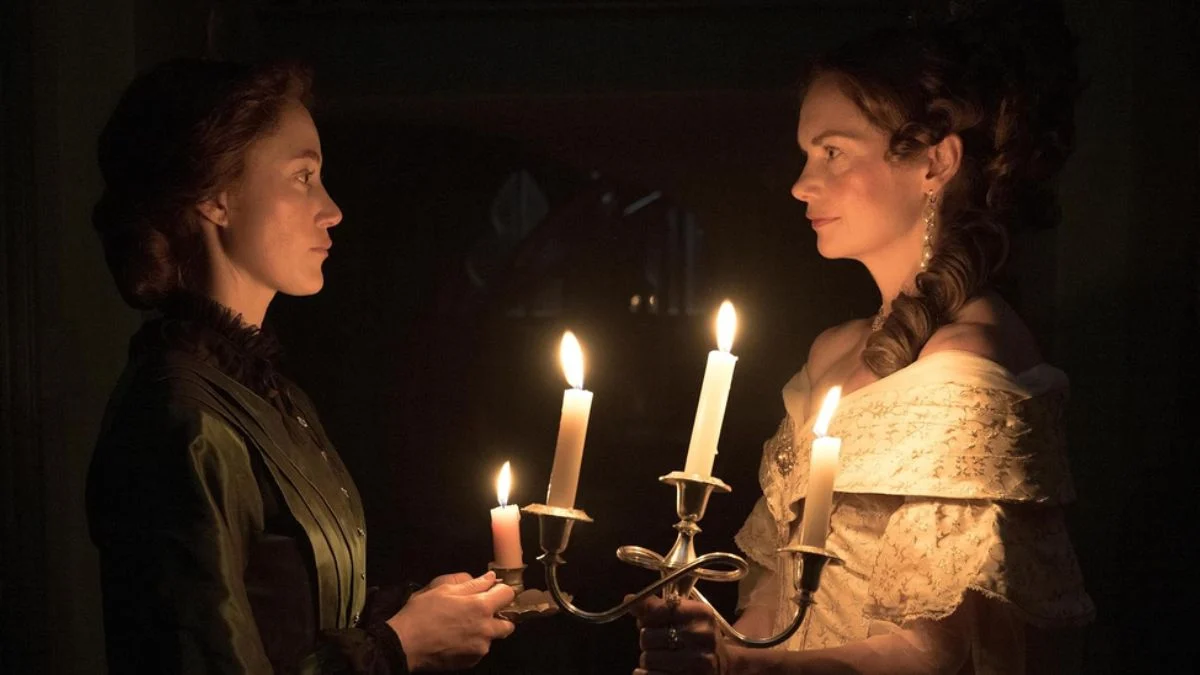
Gothic horror has experienced a striking revitalization across modern cinema, transforming familiar period tropes into sharp explorations of societal hypocrisy. Lavish costume dramas that once adhered strictly to corseted propriety are increasingly dismantled by visceral, boundary-pushing tales of psychological decay. This atmospheric intersection of vintage elegance and unhinged violence has captivated audiences hungry for subversive genre storytelling.
Amid this appetite for decadent thrills, filmmakers have continually mined the Victorian era for its stark contrasts between public respectability and private rot. The archetype of the dutiful governess arriving at an imposing country manor remains one of British literature’s most enduring frameworks. When that archetypal foundation is violently upended, it sparks intense curiosity regarding the creative origins behind such macabre narratives.
At the heart of this bloody intrigue is ‘Victorian Psycho‘, an audacious horror story that directly adapts the acclaimed 2025 novel of the same name by Spanish author Virginia Feito. Rather than emerging from an old folk legend or classic myth, the project originated on the contemporary literary page before swiftly transitioning into a feature film. Feito penned both the original book and the adapted screenplay, guaranteeing that the narrative retained its biting tonal irreverence.
The Literary Roots and Real True Crime Behind the Story
Before capturing cinema headlines, Feito established herself with her 2021 debut novel ‘Mrs. March’, a celebrated character study that dissected Upper East Side neurosis. With ‘Victorian Psycho’, the author pivoted toward 19th-century historical terror, deliberately inverting the traditional domestic thriller into a wickedly funny murder ballad. The story follows Winifred Notty, an ostensibly prim educator who arrives in Yorkshire with homicidal impulses bubbling just beneath her polite veneer.

Feito drew overt thematic inspiration from towering literary classics, deliberately constructing the narrative as an abrasive collision between Charlotte Brontë’s ‘Jane Eyre’ and Bret Easton Ellis’s ‘American Psycho’. The governess motif also channels the nursery anxieties popularized in Henry James’s ‘The Turn of the Screw’ and Frances Hodgson Burnett’s ‘The Secret Garden’. By filtering 19th-century polite society through a modern slasher lens, Feito created an unapologetic celebration of female monstrosity.
Beyond literary homages, the author anchored her fictional violence in disturbing historical reality from 19th-century England. Feito drew inspiration from real-life figures like Constance Kent, a teenager who brutally murdered her infant half-brother in 1860, and Amelia Dyer, the notorious serial killer who smothered hundreds of infants placed into her care. These horrifying historical events provided a sinister undercurrent to the atrocities unfolding within the fictional Ensor House.
From Page to Screen Under Zachary Wigon’s Direction
The journey from manuscript to cinema moved at a remarkably rapid pace after Anton acquired the rights ahead of the book’s official publication. Filmmaker Zachary Wigon, fresh off his acclaimed psychological feature ‘Sanctuary’, signed on to direct the adaptation. While Margaret Qualley was originally attached to play the maniacal governess, casting adjustments eventually placed acclaimed genre star Maika Monroe into the central lead role.
Monroe’s casting cemented the project’s reputation as a top-tier genre offering following her standout performances in modern horror essentials like ‘It Follows’ and ‘Longlegs’. Wigon was effusive regarding the casting pivot, as reported by Fangoria, praising Monroe’s rare intensity: “Maika’s intense screen presence has resonated with me over and over again throughout her history of complex performances. I’m absolutely thrilled for her to bring her unique style of psychological portraiture to the fascinatingly bizarre Winifred Notty.”
The cinematic adaptation meticulously preserves the book’s claustrophobic scenario, tracking Winifred as she attempts to tutor two spoiled children while resisting the violent urges dictated by an inner alter-ego named Fred. Alongside Monroe, the cast features Thomasin McKenzie as the timid nursemaid Ms. Lamb, Jason Isaacs as the stern patriarch Mr. John Pounds, and Ruth Wilson as the volatile Mrs. Emily Pounds. As the estate’s staff members begin mysteriously disappearing, the polite household rapidly descends into unvarnished carnage.
Satirizing Repression and Domestic Tyranny
Central to the narrative appeal is the scathing deconstruction of strict gender roles that defined upper-class society during the mid-19th century. Victorian domestic spaces were rigidly policed, and women in servant or governess roles were expected to display absolute subservience while suppressing any semblance of individuality. By positioning an uncontrollable psychopath in charge of the nursery, the story ruthlessly exposes the hypocrisy of aristocratic morality.
Cast members readily embraced this ideological friction while shooting inside an eccentric, labyrinthine manor that felt like an ominous character in its own right. Highlighting the era’s suffocating social climate, Wilson noted that the period was deeply oppressive for women, in an interview with Deadline Hollywood, observing that “when Winifred comes in, she breaks the whole house apart.” That explosive rebellion transforms a standard period drama into a gleeful slaughterhouse satire.
Following its world premiere at the 2026 Cannes Film Festival in the Un Certain Regard section, distributor Bleecker Street positioned the film for a wide theatrical rollout. Running a tight 102 minutes, the production stands as a singular cross-pollination of literary parody and genuine blood-soaked horror. By grounding eccentric slaughter in genuine Victorian history and literary tradition, the tale delivers an unforgettable reimagining of the period thriller.
Are you excited to see Maika Monroe’s sinister governess unleash mayhem in ‘Victorian Psycho’, or will you be reading Virginia Feito’s novel first—let us know your thoughts in the comments below!