What the HBO Film ‘Miss You, Love You’ Is Really About — Grief, Secrets, and an Unlikely Bond Explained

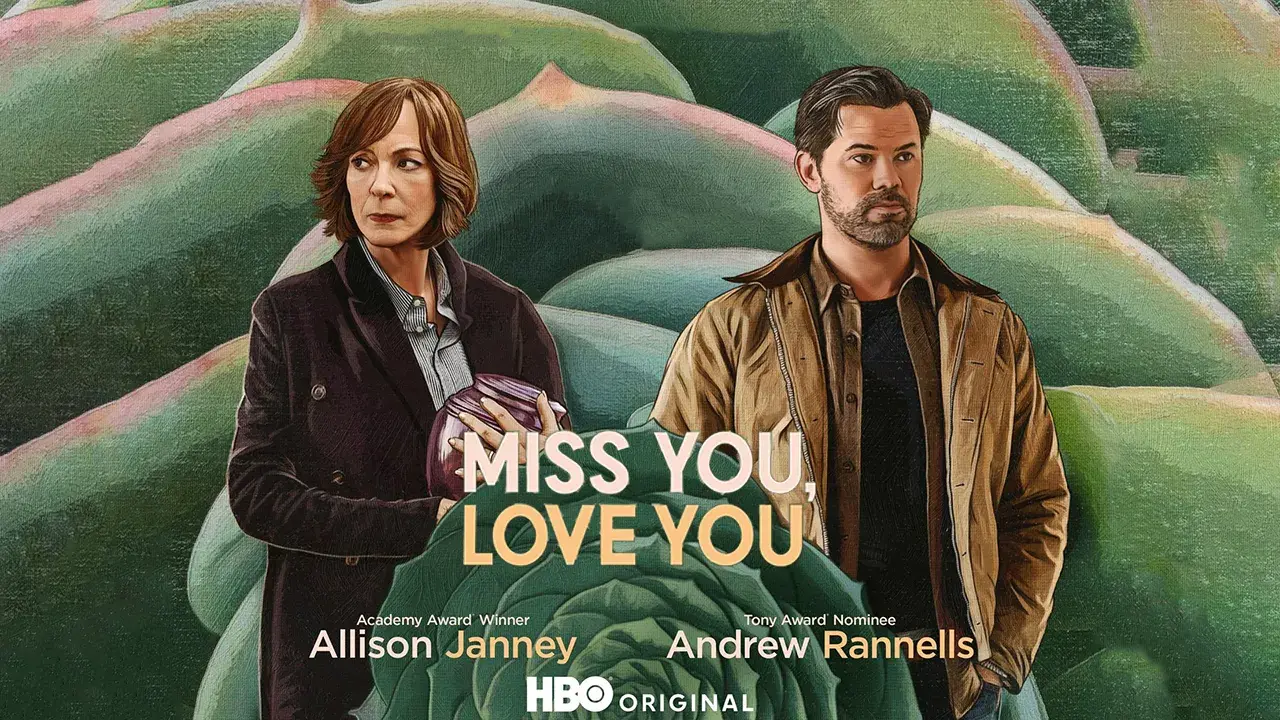

HBO’s latest original film arrives at just the right moment for audiences hungry for intimate, character-driven storytelling. ‘Miss You, Love You’ is an HBO Original film starring Academy Award and Emmy winner Allison Janney and two-time Tony nominee Andrew Rannells, written and directed by Academy Award winning writer Jim Rash. It is the kind of film that sneaks up on you, arriving quietly and then refusing to let go long after the credits roll.
The film follows a blunt, grieving widow, Diane Patterson, played by Janney, who is forced to plan her husband’s funeral with a total stranger: her estranged son’s assistant, Jamie Simms, played by Rannells. As they fumble through grief and their strange, darkly funny circumstances, buried secrets and long-held resentments surface, but their partnership becomes an unlikely conduit for connection, laughter, and healing.
The Setup Behind Diane and Jamie’s Strange Partnership
The script by Jim Rash reveals the actual explanation for Jamie’s presence at Diane’s in pieces. Eventually, it becomes apparent that Diane has very recently lost her husband of 24 years, Henry. Jamie is the assistant to her son, Tyler, here to help with funeral arrangements while Tyler is stuck abroad for work.
Diane’s husband was not Tyler’s biological father. He was diagnosed with Parkinson’s disease, a neurological disorder that progressively affects one’s movement. This detail quietly reframes the grief that Diane carries, layering it with a complexity that the film lets breathe rather than overexplain.
Tyler’s absence is a more intrusive sort of presence, announcing itself with the sharp pings of text messages that Diane cannot help but notice only ever seem to find their way to Jamie’s phone and not hers. More so than Henry, Tyler is the gaping hole around which Diane and Jamie’s connection grows, each of them sensing the other’s complicated feelings about him before they’re even able to admit them to themselves.
On paper, Jamie would seem to be the dream aide for a devastated widow. He’s competent, empathetic, almost pathologically insistent on being of use. But Jamie is no replacement for Diane’s semi-estranged son and they both know it.
The Buried Secrets That Come Surfacing
Much of the story connects to a single succulent. Diane cannot keep the plant alive after Henry dies, despite feeling obliged to try. Plants were his thing, not hers, but caring for them becomes an extension of her grief and one final responsibility she cannot bear to fail beyond planning the funeral itself. It is a small, grounded symbol, and the film is wise enough to let it do its work without overselling the metaphor.
One of the film’s most delicate achievements is its handling of Jamie’s sexuality and Tyler’s coming-out story, which is told with heartfelt compassion through Diane’s perspective.

Rannells noted that the movie is not a coming-out story, nor is it a movie about Jamie’s sexuality or how Tyler’s sexuality changes their relationship. Even so, the script depicts how Tyler struggled to come out to Diane, and how readily Diane accepted him when he did.
The film’s most painful insight is that love and resentment often coexist. One argument between Diane and Jamie highlights this perfectly, with each recognizing their own heartbreak reflected in the other. It is the scene where Rannells steps up opposite Janney, and together they gut you.
Allison Janney and the Performance at the Heart of It All
Allison Janney is simply spectacular in ‘Miss You, Love You’. Janney toys with grief in a performance that is sometimes caustic, often funny, and, when you least expect it, heartbreaking. This is a small character study featuring two incredibly different characters who verbally spar with barbs that sting and leave plenty of marks. As the words fly, their motivations and the reasons behind their behavior are slowly but surely revealed in subtly surprising ways.
Director Rash credited a long-take approach with creating space for organic discovery. “Because we shot large chunks all at once, you’ve afforded yourself the opportunity to see where they naturally found them or the characters needed that moment,” he said.
“There was a wealth of Allison and Andrew tackling large chunks, monologues even, and that really is to follow them at that point, to see what they are feeling in that moment.”
What is most revealing about Janney’s turn, and the film itself, is that no matter how much of the past is dug up, ‘Miss You, Love You’ is always mindful, present, and in the moment. That quality of emotional presence is rare in films about grief, which so often default to sentimentality over specificity.
What the Ending of ‘Miss You, Love You’ Really Means
The film derives its title from Tyler’s signature message to both Diane and Jamie, and the genuineness of it becomes a point of debate between them. They force one another to confront uncomfortable truths neither wants to admit. By the time those three words are properly understood by both characters, their weight has accumulated through every exchange, every argument, and every silence in the film.
Tyler and his absence becomes a common link between the strangers, allowing them to open up to each other. Eventually, Tyler’s absence as a common link allows Diane and Jamie to navigate both her state of mind following Henry’s death and both of their complicated relationships with the son and employer they share.
By the time ‘Miss You, Love You’ reaches its closing moments, the film has earned both its tenderness and its use of the song “You’re the First, the Last, My Everything.” The ending does not offer a tidy resolution to every wound the film has opened. Instead, it offers something more honest: two people who arrived as strangers leaving with a connection neither expected, shaped entirely by the person who was never in the room.
‘Miss You, Love You’ is the latest effort from Jim Rash, who most recently co-directed and co-wrote the ‘Force Majeure’ remake ‘Downhill’ with his longtime creative partner Nat Faxon. The play evolved into a movie script during the pandemic, with Rash drawing on his father’s experience with Parkinson’s disease in writing about Diane’s departed husband, and describing the story as “a soup of stuff” from personal experience.
If you have seen ‘Miss You, Love You’, we want to know whether the ending hit you the way the film seems to intend: did Diane’s final understanding of what Tyler’s words really meant land as earned catharsis, or did it leave you wanting more from a son the film deliberately keeps just out of reach?