Most Controversial Indie Horror Film Ever Released Turns 51 Today

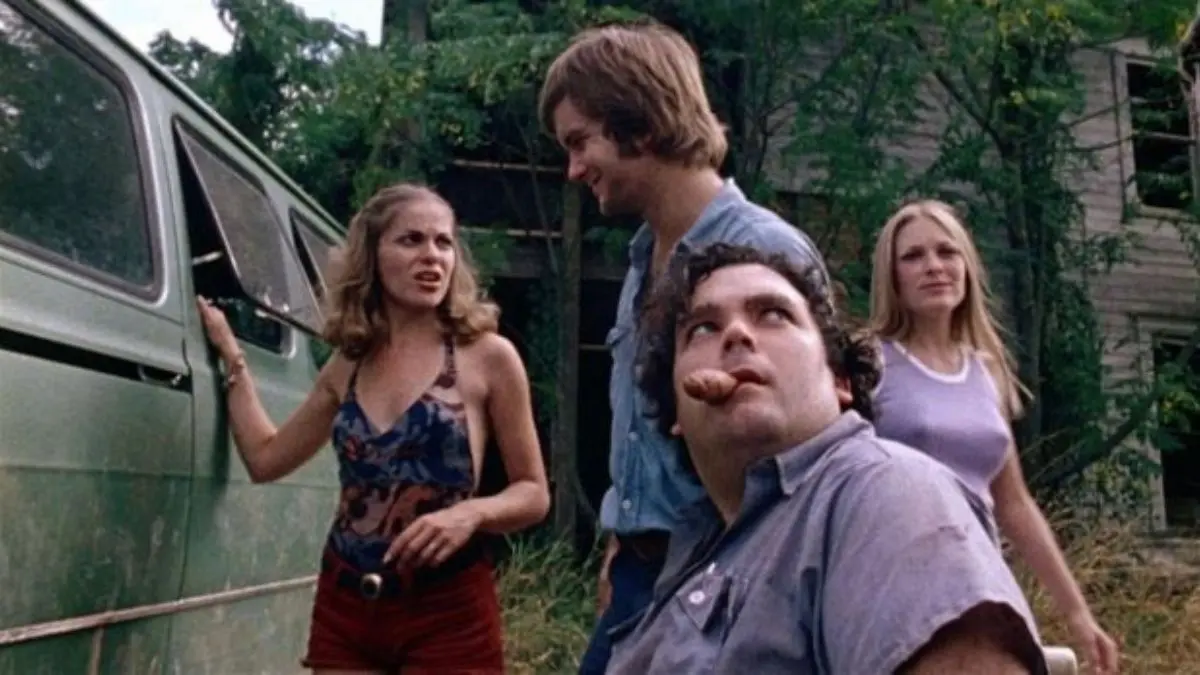

Today marks 51 years since The Texas Chain Saw Massacre first premiered, cementing its place as one of the most shocking and influential horror films ever made.
Directed by Tobe Hooper, the film opened in Austin, Texas, on October 1, 1974, nearly a year after filming had wrapped. It later screened across the United States, often as a Saturday afternoon matinée, with its marketing claiming it was based on a “true story,” which helped attract a wide audience.
Despite its tiny budget, the movie grossed over $30 million in the U.S. and Canada, making it the 12th-highest-grossing film released in 1974. Among independent films, it would later be surpassed by John Carpenter’s Halloween in 1978.
Hooper had hoped the Motion Picture Association of America (MPAA) would give the film a “PG” rating because of the minimal visible gore. Instead, it was initially rated X. After trimming some scenes, the movie was re-submitted and received an R rating, though some theaters screened the full version.
Audiences’ reactions were strong: viewers in San Francisco reportedly walked out in disgust, and in Ottawa, police warned theaters to withdraw the film to avoid morality charges.
The story follows a group of friends who stumble upon a family of cannibals while visiting an old homestead. Although the film was promoted as being inspired by real events, most of the story is fictional.
The character of Leatherface, along with some plot elements, drew inspiration from the crimes of Ed Gein, but Hooper built a largely original and horrifying narrative around these ideas.
The Texas Chain Saw Massacre is widely regarded as a milestone in horror cinema. Critics and scholars have praised it for setting a new standard for slasher films and for influencing generations of filmmakers.
Richard Zoglin of Time said in 1999 that it “set a new standard for slasher films,” while The Times listed it among the 50 most controversial films of all time. Tony Magistrale has credited the film with opening the door for horror to explore social commentary, while Mark Olsen of the Los Angeles Times called it “cheap, grubby and out of control,” yet said it “both defines and entirely supersedes the very notion of the exploitation picture.”
Leatherface has become an iconic character, often mentioned alongside other legendary horror villains like Freddy Krueger and Jason Voorhees. Christopher Null of Filmcritic.com noted, “In our collective consciousness, Leatherface and his chainsaw have become as iconic as Freddy and his razors or Jason and his hockey mask.”
The film’s influence extends to numerous other movies: Wes Craven’s The Hills Have Eyes was inspired by Hooper’s work, and Ridley Scott cited the film as an influence on Alien. French director Alexandre Aja and horror filmmaker Rob Zombie have also credited The Texas Chain Saw Massacre with shaping their creative approaches.
Beyond its place in the horror genre, the film has sparked extensive academic discussion. Scholars have explored its treatment of gender and violence, particularly the way female characters are targeted.
The movie is a clear example of the “final girl” trope, where one female character survives the horror while others are killed or tortured. Sally Hardesty, the lone survivor, endures both physical and psychological torment but ultimately escapes with help from a male truck driver.
Critics argue that, while male characters die in the film, the images of violence against women are the ones that leave the strongest impression. Mary Mackey, writing in 1977, described one scene—where a woman is hung on a meat hook—as possibly “the most brutal onscreen female death in any commercially distributed film.”
Studies have even looked at the psychological impact of watching the film. One experiment found that male viewers initially experienced anxiety and depression when seeing the violent scenes, but over repeated viewings, they became less disturbed and more engaged with the horror.
Another study highlighted gender-specific perceptions of the film, noting how the intense screams and torture sequences, especially those involving Sally, created a powerful emotional response. Jesse Stommel of Bright Lights Film Journal suggested that the lack of graphic onscreen violence forces viewers to imagine the horror themselves, making it a more personal and disturbing experience.
Interestingly, The Texas Chain Saw Massacre has also been discussed for its themes beyond human violence. The film has been called “the ultimate pro-vegetarian film” because of its subtle commentary on the ethics of meat consumption.
Critics have pointed out the irony of humans being slaughtered, putting them in the place of farm animals. Hooper himself confirmed that “it’s a film about meat,” emphasizing the chain of life and the killing of sentient beings. Guillermo del Toro has said the movie even inspired him to become a vegetarian for a time.
Despite its controversy and shocking content, The Texas Chain Saw Massacre has earned lasting acclaim. Its low budget, groundbreaking style, and cultural impact have solidified its status as a classic.
The film remains a touchstone in horror history, influencing countless filmmakers, defining the slasher genre, and challenging audiences to confront both fear and morality on screen.
The Texas Chain Saw Massacre is more than just a horror film—it’s a cultural landmark. Its ability to shock and disturb while also inspiring debate about violence, gender, and ethics shows its lasting power. Even after 51 years, it continues to influence and provoke. What do you think about the film’s impact on horror and culture? Share your thoughts in the comments.