Homelander’s Hunt for V1 in ‘The Boys’ Season 5 Is About Way More Than Immortality

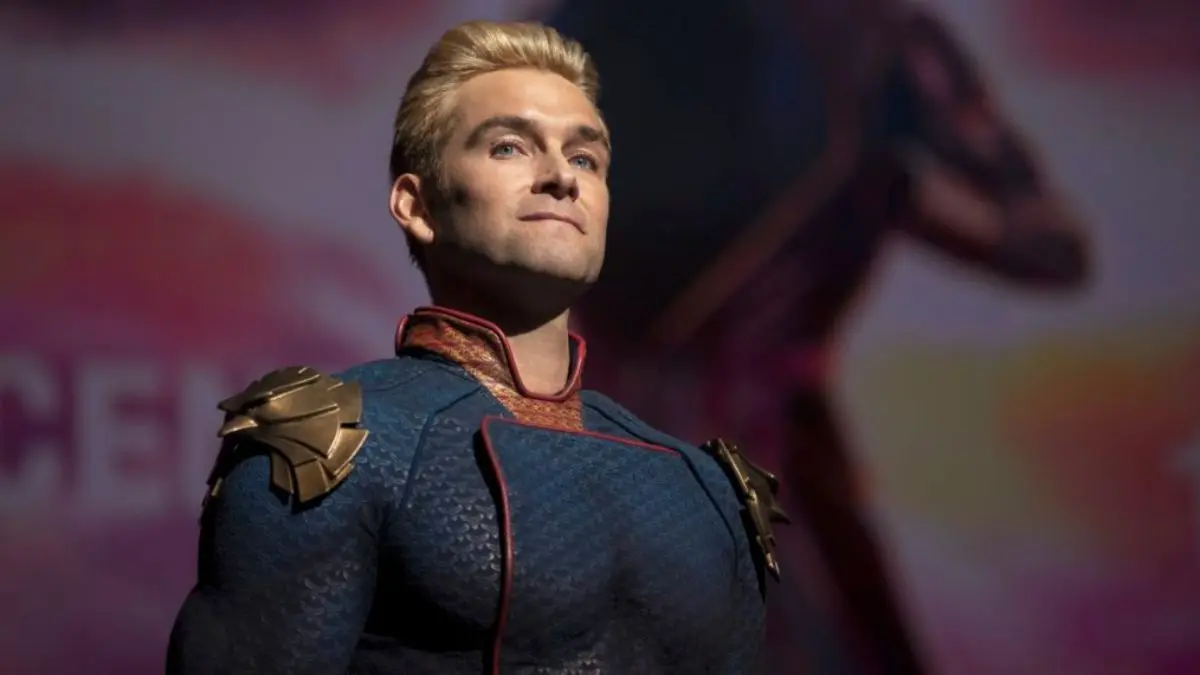

There is a moment in ‘The Boys’ Season 5 where Homelander stands in front of a mirror, quietly plucking gray hairs from his scalp, and the entire power fantasy of the character suddenly looks a lot more fragile. It is a small but devastating detail, and it is the seed from which the season’s biggest storyline grows. The world’s most dangerous man is mortal, and he is absolutely not okay with that.
That fear is what makes V1, or V-One, the engine of the final season. The substance serves as the principal MacGuffin for ‘The Boys’ Season 5, as noted by series creator Eric Kripke in an interview with TVInsider, and it is a compound that has been mentioned before in the universe, particularly in the spinoff ‘Gen V’. But the question fans keep circling back to is a fair one: did any of this exist in the source material, and how does what the show is doing compare to the comics?
What V1 Actually Is, and Why It Changes Everything
The short answer to whether Homelander gets V1 in the comics is no. The concept does not exist in Garth Ennis and Darick Robertson’s original run in the same form. The Amazon version of the character, played by Antony Starr, is described as almost completely identical to his comic counterpart, save for a more Herculean physique and a slightly altered costume. However, the show has taken the mythology of Compound V in a direction the comics never explored, building out the serum’s history to introduce something with far larger stakes.
V-One was created by scientist Frederick Vought sometime in the 1940s and is the first version of Compound V that was able to turn humans into superheroes. Throughout its inception, the formula was tested on various civilians, prisoners, and soldiers during the Second World War, and it killed many test subjects in the process. The massive death rate of thousands to achieve five successes led to Vought-American discontinuing V-One and destroying all records of the original formula. Those five survivors, Stormfront, Soldier Boy, Bombsight, Torpedo, and Private Angel, would become the template for everything that followed.
Homelander Aging in Season 5 and the Virus Problem
The gray hairs are not just a visual gag. The effects of aging have put a chink in Homelander’s armor as he is seen apprehensively plucking gray hairs from his body throughout the fourth season, and taking V-One would also bring him closer to his biological father, Soldier Boy, broadly satisfying his search for a familial bond. For a man who has built an entire identity around being untouchable, that kind of physical deterioration reads as an existential threat.
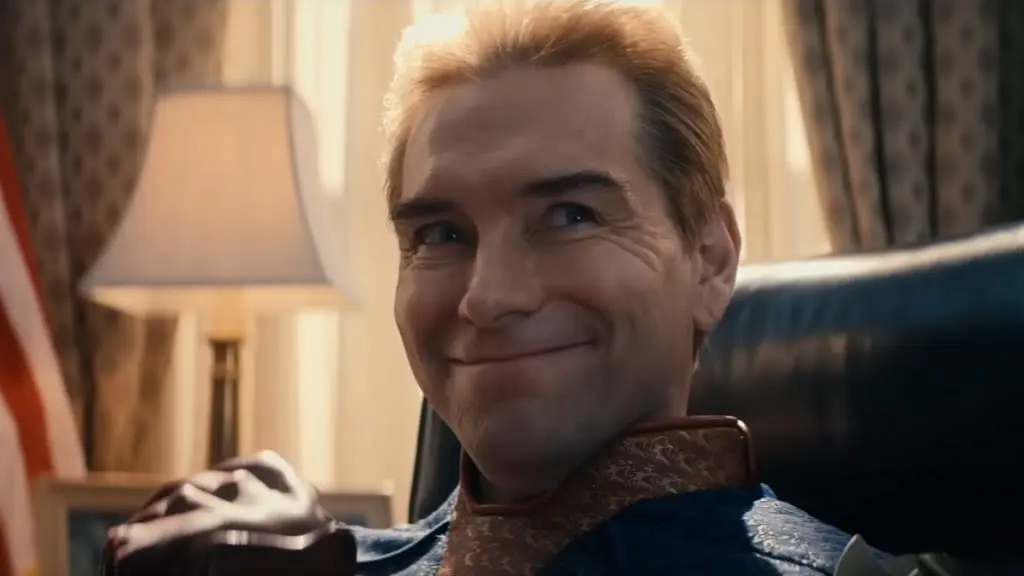
Unlike the other variants of the superpower-granting substance, V-One is the first successful version of the serum and makes the user effectively ageless. As explained by Mother’s Milk, V-One is more or less the fabled elixir of immortality and taking it seems to give the user passive regenerative abilities. That is precisely why Soldier Boy, who carries V-One in his bloodstream, survived Butcher’s engineered virus and sat upright in a body bag at the end of the second episode, while two other Supes hit with the same dose did not make it.
The virus was engineered to target Compound V’s molecules, meaning it cannot bind to V-One’s molecules fully to kill the subject, though they still suffer the initial hemorrhage effects. Homelander, engineered with a later variant of the serum, has no such protection. If Butcher’s crew deploys the virus at scale, he is theoretically as vulnerable as any other Supe.
‘The Boys’ Comics vs the Show on Homelander’s Weaknesses
In the comics, Homelander’s arc is not structured around a serum race or biological vulnerability. Although Homelander is one of the main antagonists of the comic series, he is not killed by his archenemy Billy, but is instead killed by Black Noir, a resolution that leans into betrayal and conspiracy rather than a pharmaceutical arms race. The show has consistently diverged from that framework, giving Homelander a more psychologically nuanced decline and building toward a different kind of endgame.
That divergence is most visible in Season 5’s use of V1 as a symbol rather than just a plot device. Homelander views the original formula as the missing component to achieve true invulnerability, transcending his current limitations to become the god-like figure he believes the world demands. His motivation stems from deep-seated insecurity masked by authoritarian bluster. In the comics, that insecurity manifests differently. In the show, it has a cure, and Homelander knows the address.
The Race for V1 and What It Means for the Endgame
V1 removes the ceiling entirely. The mission is no longer just “kill him before he kills us,” but “stop him from becoming something that cannot be stopped at all.” That reframing is what gives Season 5 its sense of dread. Previous seasons always had a theoretical off switch. This season is asking what happens when that switch gets welded shut.
Butcher and his Boys want to find the original formula so that they can either use it to kill Homelander or destroy it before he gets hold of it. But what will happen if Homelander does take it is genuinely unknown, as there is no evidence of what can happen to an already super-powered person if they take V-One, and it could either grant him even stronger powers and stop him from aging, or it could kill him given how unstable the formula is. Marie Moreau, the Gen V blood-controlling teen whose powers have been compared to Homelander’s in strength, could also have the ability to render V-One inert, though she has not been seen attempting that yet.
‘The Boys’ has always been at its best when the plot mechanics and the character psychology are pulling in the same direction, and the V1 storyline is the most elegant version of that the show has ever attempted. It is a race for a needle that could save or doom everyone, filtered through the lens of a man who has always been terrified of being ordinary. Whether you have read every issue of the comic run or came to the story through the show, you probably have a strong opinion on how this version of Homelander deserves to go out, so share it, because the internet argument over his fate is just getting started.