Richard Gadd’s ‘Half Man’ Is Not a Gay Love Story — And That’s Entirely the Point

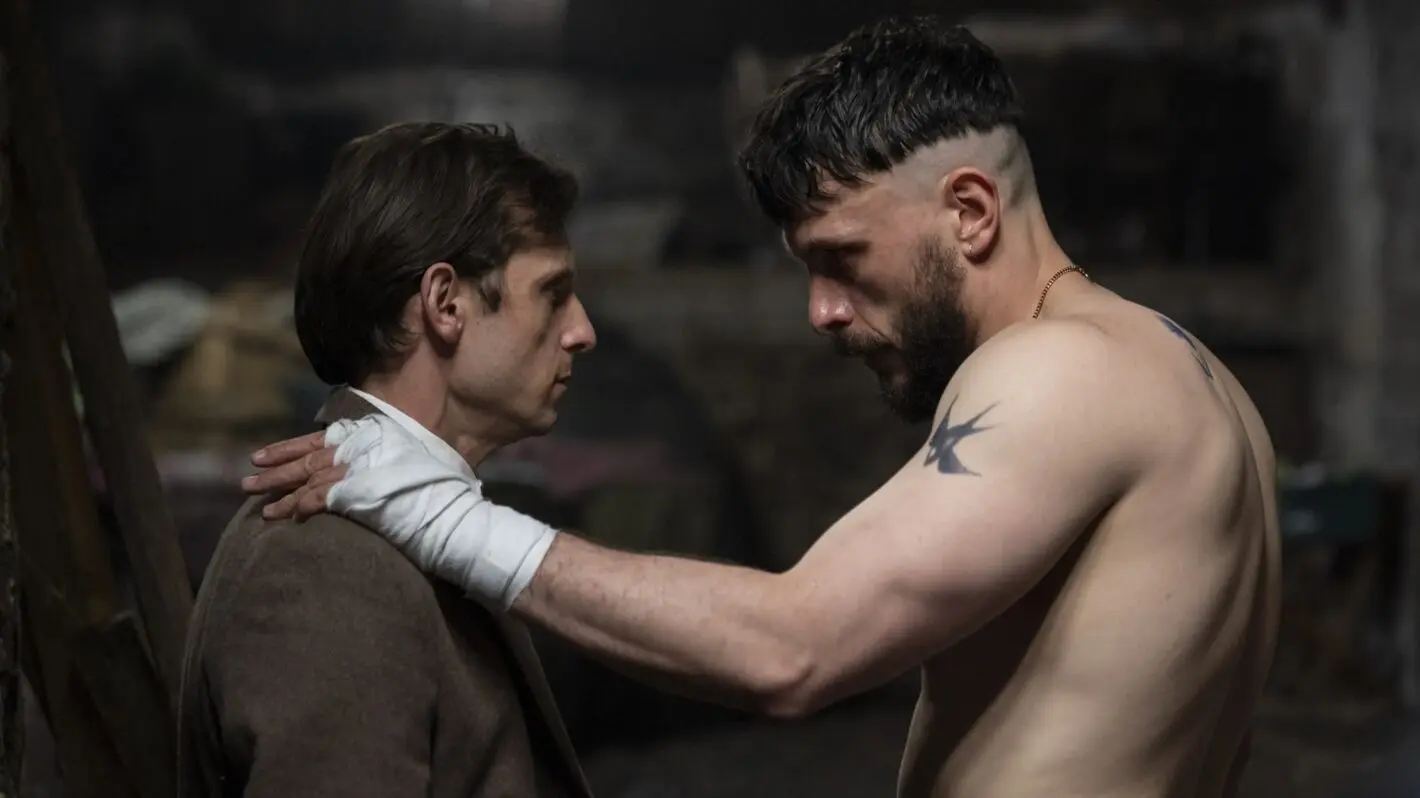

‘Half Man’ arrived on HBO and BBC One in April 2026 with the kind of anticipation that only comes attached to a name like Richard Gadd’s. The six-part British television drama, co-produced by Thistledown Pictures and Mam Tor Productions, marked Gadd’s first major project since ‘Baby Reindeer’ turned him into a global sensation. What viewers found waiting for them was something rawer, stranger, and far more ambiguous than any promotional material had dared to suggest.
The series centers on Niall and Ruben, two men who grew up as brothers despite sharing no blood relation, and who reunite at Niall’s wedding thirty years later, where a sudden act of violence ignites a sprawling journey back through their shared past. From its very first episode, ‘Half Man’ makes clear that it has no interest in being comfortable, clean, or easy to categorize.
What ‘Half Man’ Is Actually About
At its core, ‘Half Man’ is a six-episode series centered on the morbid and violent relationship between two brothers born from different parents, whose lives became intertwined and led to extreme consequences. The premise sounds almost deceptively simple, but Gadd layers it with the kind of psychological texture that made ‘Baby Reindeer’ feel so relentlessly real.
The show explores loyalty, sexuality, and how men perceive themselves through the eyes of those they both admire and despise. Niall, played as an adult by Jamie Bell, is a man consumed by self-loathing. Ruben, brought to life by Gadd himself, is a tornado of rage that the series refuses to reduce to simple villainy.
The series asks what happens when a terrified child’s entire identity is shaped by and dependent on a bully’s approval, and whether anyone whose humanity is governed by anger can ever truly turn back. These are not questions ‘Half Man’ pretends to answer, which is precisely what gives them their power.
The inability to communicate is what drives the writing of the series and, conversely, immobilizes the protagonists. There is an ancestral rage that runs between the characters, relating to their relationship but also part of a broader framework in which men must comply with social pressures, worries silenced to the point of causing unhealable wounds.
Niall’s Sexuality and the Internalized Homophobia at the Show’s Heart
The question most viewers arrive at quickly is whether ‘Half Man’ is, in some meaningful way, a queer story. The answer, according to critics and Gadd himself, is layered.
In HBO’s ‘Half Man’, the first indication of fifteen-year-old Niall Kennedy’s sexuality is delivered by a classmate who spits a slur at him in school. It takes some time before the show makes clear that Niall, who faces merciless bullying because of his timid demeanor, is in fact gay. His queerness is not a plot twist but a slow, suffocating pressure that builds across decades.
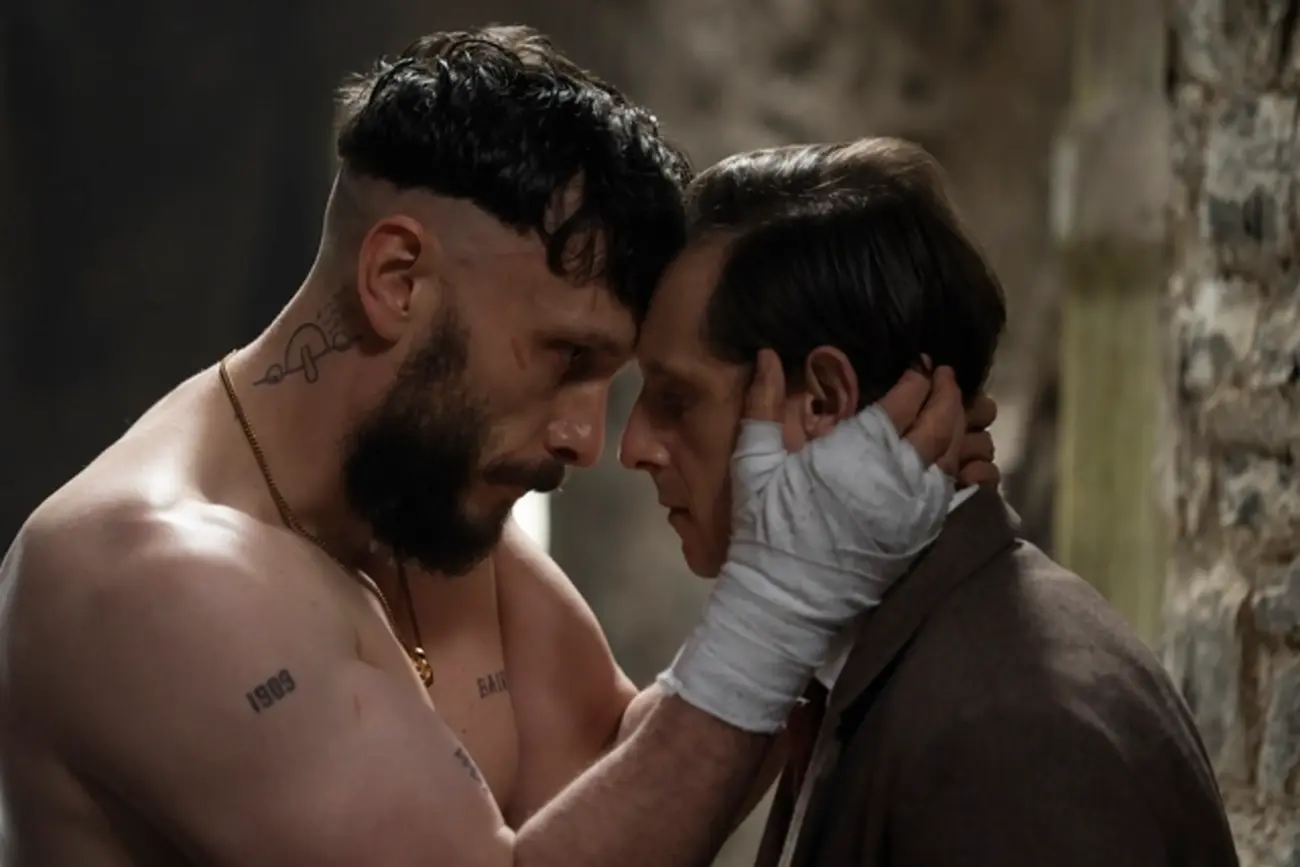
The honest framing is that ‘Half Man’ is a series with significant gay content rather than a traditional gay show. The drama is fundamentally about sibling rivalry, masculinity, and the fragile perception of sexuality, with Niall Kennedy’s queerness sitting as one of several pressure points across six emotionally punishing episodes.
Adult Niall, whose sexual repression partly stems from his fear of how Ruben will react, becomes addicted to crack as a struggling writer. He is also a frequent cottager, British slang for gay men who have sex in public restrooms, and winds up blackmailed when a library manager reveals he has caught Niall’s activities on tape. These choices are deliberately ugly, and deliberately honest.
Richard Gadd on Why He Wrote This Kind of Queer Story
Gadd has shared publicly that he identifies as bisexual, and the series is not autobiographical but was inspired by his own emotional crisis. His comments on the show’s approach to queerness reveal exactly why ‘Half Man’ feels so distinct from the landscape of prestige queer television that surrounds it.
Speaking with Attitude magazine, Gadd said that there are people, more than the industry cares to admit in this age of moral and ethical enlightenment, who feel left behind in their own sexuality crisis as the world progresses around them. For Gadd, showing that exact struggle is, in his words, a duty in his art for those people.
Half Man’s stance on queerness seems antithetical to recent packaging of male homosexuality in shows like ‘Heartstopper’ and ‘Heated Rivalry’. Where those series offer warmth, representation, and resolution, Gadd offers repression, self-destruction, and a kind of suffocating silence that many viewers will recognize even if they have never seen it depicted on screen.
The stepbrother relationship becomes the ambiguous boundary that constantly oscillates between fraternal and homoerotic. A subterranean chemistry runs through the characters, fueling a desire that is never openly expressed but constantly perceived, unspoken in both men.
How Critics and Audiences Are Responding
On Rotten Tomatoes, the series holds an approval rating of 76% based on 54 critic reviews, with the consensus crediting Gadd for a broodingly bleak sophomore effort that dares to plumb the depths of toxic masculinity and repression. That split speaks to the show’s refusal to make itself palatable.
Reviewing for The Guardian, Lucy Mangan gave ‘Half Man’ five stars, calling it brave and blazing, and arguing that if ‘Adolescence’ is to be shown in schools, ‘Half Man’ needs to be shown in any place men gather. That is a staggering claim, and one the show earns slowly, episode by episode.
The series is also a feat of intimacy coordination. Every consensual scene is shot to make clear that the parties have agreed and are enjoying themselves. Scenes of assault are shot in stark opposition, gut-wrenching and horrifying, and there can be no debate. That deliberate visual grammar matters enormously given how much of the show’s tension lives in the grey space between coercion and desire.
This is not a series about being gay, straight, or bisexual, but more about being okay with who you are and not being okay about the things that have hurt you in your life. That distinction is what separates ‘Half Man’ from most of what television dares to put forward under the banner of queer storytelling.
If Niall’s decades-long silence about who he is feels uncomfortably recognizable to you, share what the show stirred up in the comments below, because ‘Half Man’ clearly has a lot more to say to people than the industry expected.