‘The Boys’ Finale Title Was Always Homelander’s Prophecy, and “Blood and Bone” Made Sure It Came True

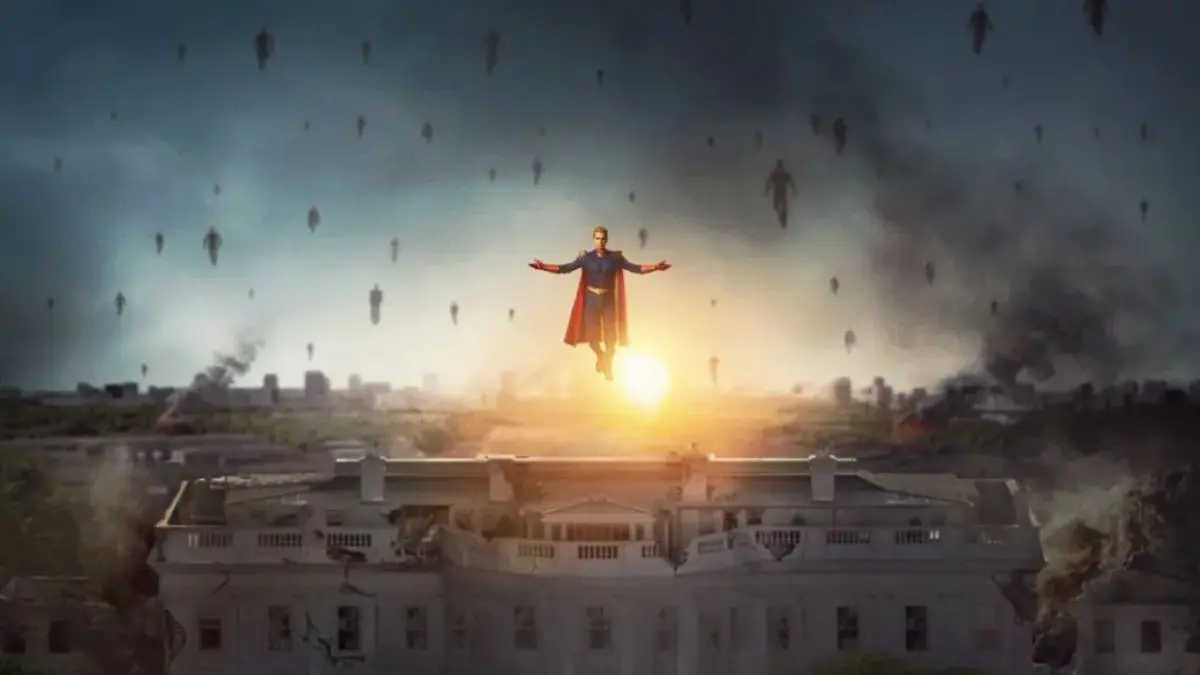

When a show names its series finale after a villain’s own words, the writing is quite literally on the wall. ‘The Boys‘ wrapped its five-season run on May 20, 2026, with an episode called “Blood and Bone,” and the title is not an accident.
It comes directly from a speech Homelander delivered earlier in the season, describing the fate he and Butcher share as something scorched earth, shock and awe, blood and bone. That the writers chose to name their ending after their villain’s own prophecy tells you everything about how this show views victory.
The final episode closes the curtain on Prime Video’s wildly successful anti-superhero saga with a finale that is equal parts devastating and strangely poetic. The series has always thrived on making its audience uncomfortable, and the last chapter of ‘The Boys’ is no exception. Before a single frame of the episode airs, the title alone is doing heavy thematic lifting.
Where Homelander’s “Blood and Bone” Speech Actually Came From
The episode title is a reference to a speech given by Homelander in “Payback,” where he suggests that he and Butcher share a fate that is “Something a little more scorched earth. Shock and awe. Blood and bone.” The phrase was never meant to be a hopeful rallying cry. It was a taunt, a declaration that whatever was coming for both men would be total and irreversible.
The title is a reference to Butcher (Karl Urban) and Homelander’s (Antony Starr) conversation in Season 3, where they promised to have one last standoff against each other, and it is very appropriate for the series finale. This was not a last-minute branding choice. The showrunners built the entire arc of the final season around that promise, letting it ferment across episodes until the finale could finally cash it in.
The writers named their series finale after the villain’s own prophecy, and that choice is not hopeful for anyone involved. There is something deliberately unsettling about a show that refuses to frame its climax as a triumph. By lifting Homelander’s language and stamping it on the closing chapter, Eric Kripke made clear that even winning would come at a cost nobody would want to pay.
The Final Showdown the Title Promised
After five seasons, seven years, and more blood than any show has any right to contain, ‘The Boys’ signed off with a finale that delivered on almost every promise the series ever made. The episode opens not with action but with grief. Kimiko, Butcher, Mother’s Milk, Annie, Hughie, and Sister Sage stand over Frenchie’s grave while Hughie reads the late Supe’s will, veering from crude humor to a quietly sincere goodbye as Frenchie calls the gang his family.
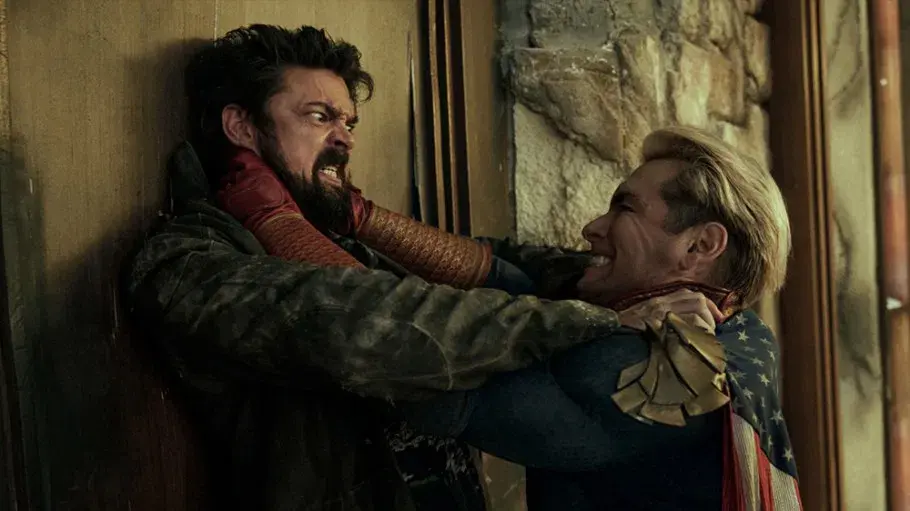
From there, the push toward the White House begins in earnest. Butcher and Homelander’s son Ryan (Cameron Crovetti) team up to fight Homelander in the Oval Office, eventually holding him down long enough for Kimiko to use her ability, draining all three of their superpowers. It is the kind of convergence that takes five seasons to earn, and ‘The Boys’ earns every second of it.
Mortal once more and stripped of his Superman-like abilities, Homelander pleads for his life. In perhaps the most cathartic moment of the series, Butcher beats Homelander to a bloody pulp, who cries and begs for his life until a crowbar is driven through his skull. Homelander prophesied blood and bone. He simply did not account for whose it would be.
Butcher’s Arc and What the Title Reveals About His Fate
Butcher survives the battle with Homelander, but not for long. After becoming consumed by the belief that Vought itself needs to be destroyed, he attempts to unleash the virus through the company headquarters’ sprinkler system. Killing Homelander was only ever half the mission in Butcher’s mind. The other half was always about the system that created him.
Hughie makes the devastating choice to kill Butcher rather than let the virus be deployed. It is the ending that mirrors the show’s darkest thesis: the corruption of good intentions is just as dangerous as the evil they were meant to fight. This is where “Blood and Bone” stops being a title and becomes a verdict. Butcher spent five seasons becoming what he hated, and the finale refuses to forgive him for it.
Showrunner Eric Kripke revealed that he knew the penultimate episode was when the team would suffer its biggest loss, and that narrative momentum requires heroes to pay a steep price because that is how it works in the real world. That philosophy carries all the way through to Butcher’s own conclusion. Kripke stated that the ending reflects his creative vision and that he is really happy to go out on top, suggesting the finale represents a deliberate creative choice rather than a network-driven conclusion.
What ‘Blood and Bone’ Means for the Future of the Franchise
The finale is best understood as the end of the central story, not the end of the entire fictional universe. Its main purpose is to deliver the long-promised final clash between Butcher and Homelander while bringing closure to the characters who have driven the show for five seasons. The broader world of ‘The Boys’ is not going anywhere, even as its flagship chapter closes.
The epilogue gives most surviving characters a version of peace. Hughie turns down a senior role at the Department of Supe Affairs and returns to running his A/V store alongside a heavily pregnant Annie, who still finds moments to use her powers for good. Before she takes flight, Hughie speaks to her bump and refers to their unborn child as Robin, the name of his late girlfriend whose death set the entire story in motion. It is a quiet, full-circle grace note that the show absolutely earns.
The franchise is expected to continue beyond the end of the flagship show, with projects like Vought Rising and additional seasons of spinoffs keeping the universe alive. So while “Blood and Bone” is the last word on Butcher and Homelander, it is far from the last word on the world they tore apart. ‘The Boys’ built something rare in prestige television, a satire that kept sharpening its teeth right up until the final frame, and the title of its finale was always the most honest thing it ever said about itself.
If you have just finished watching the series finale, we want to know where you land: did Butcher deserve his ending, or did ‘The Boys’ ultimately punish its most compelling character for the sins of the world that created him?