Homelander Killed the President in ‘The Boys’ Comics — Here’s How the Show Changed Everything


When ‘The Boys’ wrapped its final season on Prime Video, fans who had only watched the show got a brutal, cathartic ending. But readers of Garth Ennis and Darick Robertson’s original comic series knew that the road to the Oval Office looked very different on the page.
The question of whether Homelander actually kills the president is one of the sharpest dividing lines between the two versions of this story, and the answer reveals just how boldly the showrunners were willing to rewrite the source material.
The Amazon series and the comics share the same basic DNA, a group of morally compromised operatives trying to take down a corporation’s superhero machine, but the finale chapters diverge in ways that matter. Understanding those differences requires going back to what Ennis originally wrote, and then looking at what showrunner Eric Kripke chose to do with it instead.
Homelander Kills the President in the Comics
In the source material, Homelander’s descent into open villainy reaches its most extreme point when he launches a full coup against the United States government. In issue 65 of the comics, titled ‘The Bloody Doors Off,’ Homelander decapitates President Victor Neuman, a moment that functions as the point of no return for the character. It is an act so irreversible and so public that it forces every other piece of the story into motion.
Homelander had rarely committed acts severe enough to justify his elimination before this moment, which is part of why Black Noir had been secretly framing him for crimes he did not actually commit.
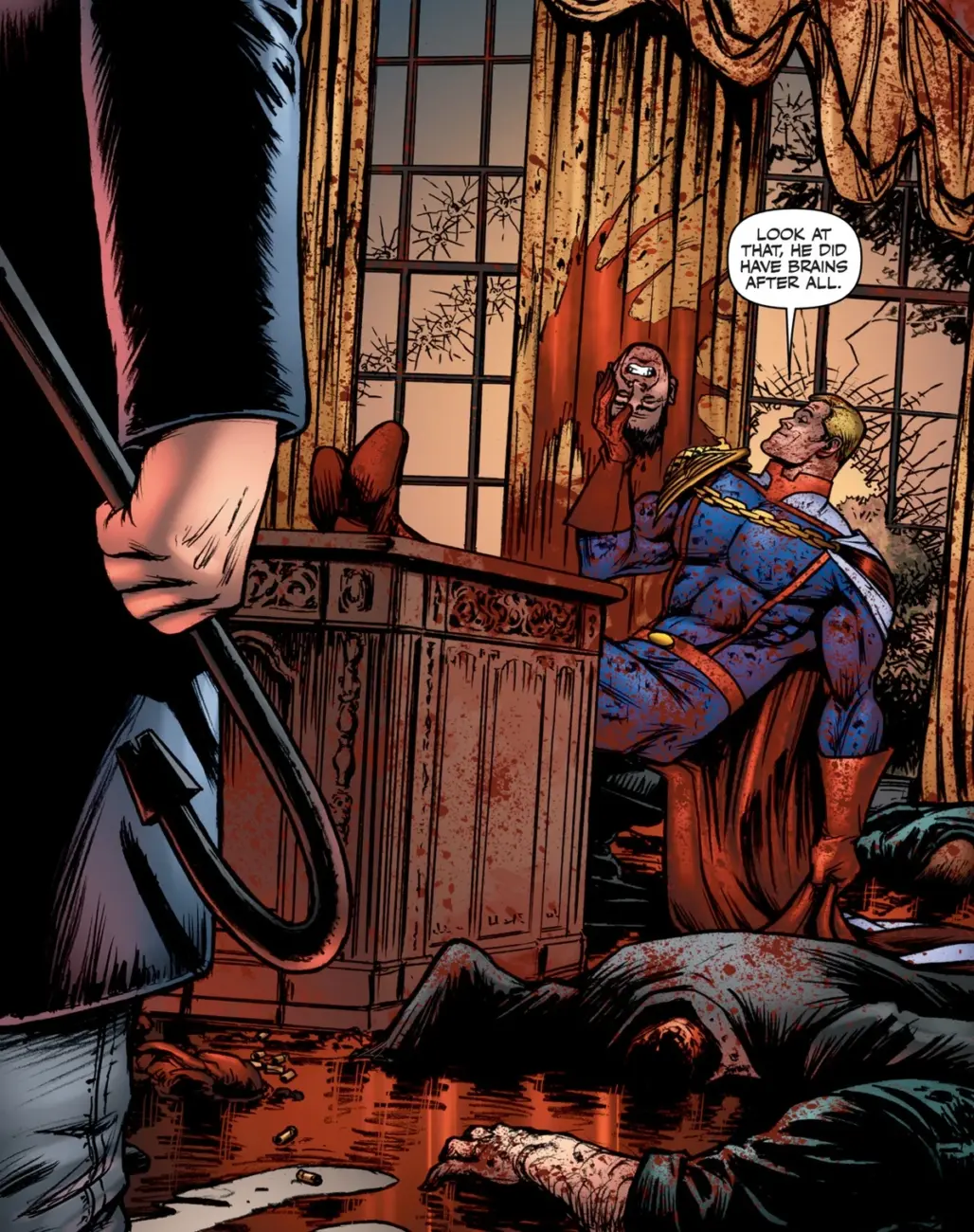
The coup and the presidential assassination became the line that finally triggered the endgame. With this insurrection underway, the military eventually manages to bring Black Noir to his knees after the confrontation at the White House, and Butcher proceeds to finish him off with his crowbar.
During a meeting at the White House, Homelander kills the president and is then confronted by Billy Butcher and Black Noir, at which point Black Noir reveals that he was a spy for Vought, created specifically to keep a check on Homelander. The reveal that Noir had been framing Homelander all along is one of the most discussed twists in the comic’s run, and the presidential killing is what finally set it off.
The Black Noir Clone Twist and What It Means
The identity of Black Noir in the comics completely rewrites the moral logic of everything that came before it. In the comics, Black Noir is revealed to be a clone of Homelander, one who had been instructed to kill the original if he ever truly stepped out of line, and who had been committing atrocities while impersonating Homelander to manufacture a justification for doing so.
It turns out the monster the world feared was, in many ways, a construct built by the very corporation that created him.
Driven mad by not being allowed to kill the real Homelander, which was the sole purpose he was created for, Black Noir committed almost all the atrocities the villain had been accused of, including the assault on Butcher’s wife Becca. The two versions of the same man then fight in the ruins of the White House, and Noir wins. Black Noir tears Homelander apart, and Butcher uses his crowbar to remove Noir’s brain.
This chain of events, in which Homelander kills the president, Noir kills Homelander, and Butcher kills Noir, is the comics’ version of justice. It is messy, it is morally compromised, and nobody comes out clean. That complexity is very much in keeping with Ennis’s vision of the entire series.
How ‘The Boys’ Show Completely Rewrote This Chain of Events
The Prime Video series dismantled the Black Noir clone twist years before the finale even arrived. Homelander kills the real Black Noir in the season 3 finale of the show, and he is then replaced by another person in the following season, who is subsequently murdered by the Deep in season 5. With that mythology gone, the writers had to engineer an entirely different path to the same Oval Office showdown.
The series finale, titled ‘Blood and Bone,’ premiered on May 20 on Amazon Prime Video, marking the end of one of television’s most brutal and culturally charged superhero dramas.
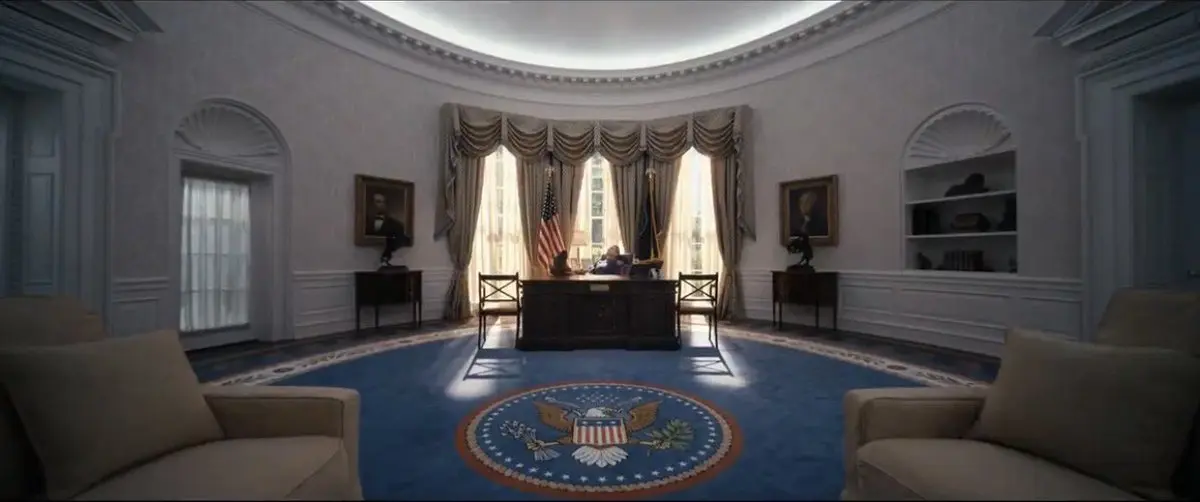
In this version, Homelander does not kill the president. Ryan flies into the Oval Office and helps Butcher subdue Homelander, while Kimiko uses her radiation blast to strip Homelander of his powers entirely. There is no presidential assassination and no clone reveal. The show replaces all of that with something arguably more personal.
A powerless Homelander begs for his life on live television, telling Butcher he would do anything not to die, before Butcher kills his longtime archenemy with a crowbar, broadcast across the country for all to see. After Kimiko gained Soldier Boy’s nuclear blast through the radiation process, she used it against Homelander in the final fight, rendering him completely powerless for the first time, which then allowed Butcher to deliver the killing blow.
The Show’s Ending and What Changed for Butcher
The big picture of the series finale is actually quite accurate to how the original comics by Ennis and Robertson ended, with a final clash at the White House where Butcher avenges Becca’s rape and death by killing Homelander. But the show streamlines and emotionally deepens what in the comics is a more sprawling and chaotic sequence of dominoes.
The TV series finale kept some elements from the comic’s final arc but abandoned and remixed several plot points to make everything fit with the different kind of story being told in the television version.
Perhaps the most telling change is that in the show, Homelander never gets to commit that final act of public terrorism against the office of the presidency. In perhaps the most cathartic moment of the series, Butcher beats Homelander to a bloody pulp as he cries and begs for his life, until a crowbar is driven through his skull.
The show made Homelander’s death a moment of witnessed humiliation rather than a consequence of unchecked political destruction, which says something interesting about how each version of this story ultimately judges its villain.
Both versions end with the same weapon, and the same man holding it, but the crime that brings Homelander to that moment changes everything about what kind of story you think you just watched. Whether you think the show’s version or the comics’ version of that final reckoning hits harder is probably worth arguing about in the comments.