How ‘The Boys’ Finally Stripped Homelander of His Powers, and Why the Comics Did It Completely Differently

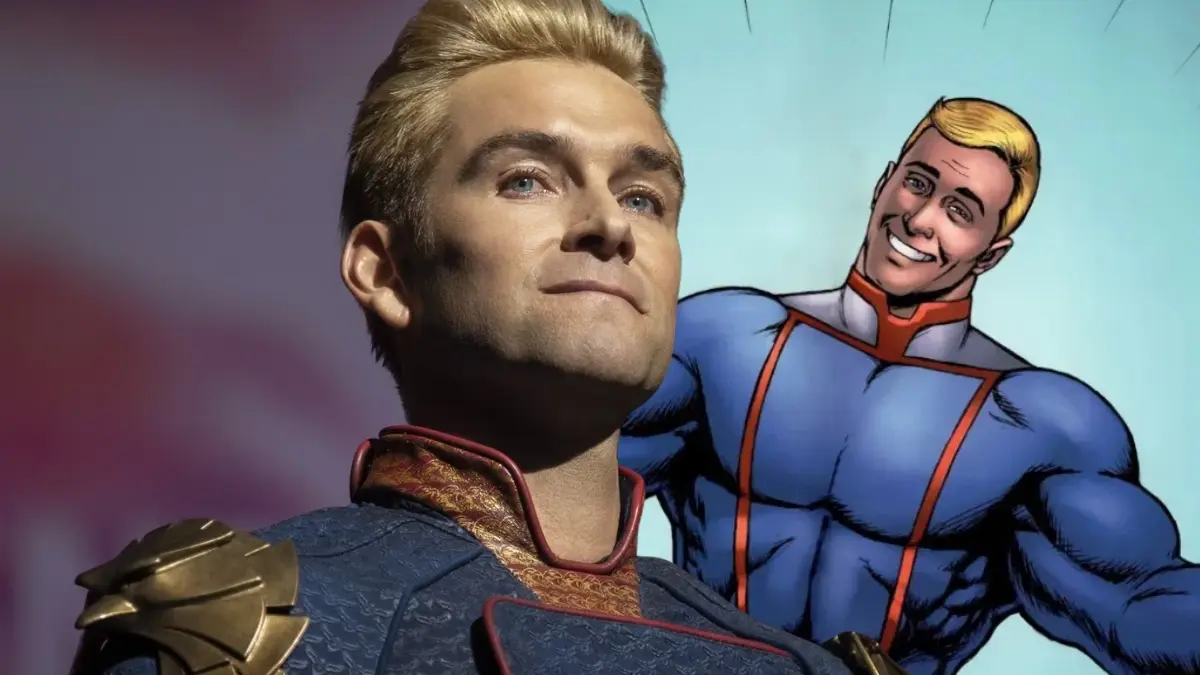

For five seasons, ‘The Boys’ built toward a single, inevitable question: how do you stop a man who cannot be stopped? Antony Starr’s Homelander stood as the near-invincible center of the entire series, a walking god who seemed to have no meaningful weakness. The show’s series finale delivered a genuinely surprising answer, one that diverged dramatically from the source material that started it all.
Garth Ennis and Darick Robertson’s original comic run never offered a depowering solution at all. In those pages, Homelander retained every ounce of his godlike abilities right up to the moment he died, which makes the Amazon Prime Video adaptation’s finale choice all the more bold and thematically charged. The gap between these two versions says everything about what each story is really trying to argue.
The Show’s Explanation for How Homelander Is Depowered
The television series built its depowering logic carefully across the final season. Soldier Boy’s ability to strip supes of their powers was itself not something he was born with, but a byproduct of Soviet-era experimentation that turned him into a living nuclear reactor, capable of unleashing radioactive energy in either a sustained beam or an explosive burst. The show had seeded this as Homelander’s one true physical vulnerability long before the finale.
After visiting Fort Harmony and learning how Soldier Boy originally gained his abilities, the Boys set up shop there, and Kimiko, relying on her regenerative healing, volunteered to be the test subject. Together, Frenchie and Sister Sage managed to replicate the process that gave Soldier Boy his depowering ability, which meant Kimiko had to endure several rounds of uranium exposure. It was an agonizing and uncertain gamble that the team could not afford to get wrong.
The blast works by nullifying the powers of super people, effectively burning Compound V out of a supe’s entire system. When Kimiko finally unleashed it during the White House showdown, the resulting explosion not only hit Homelander directly but also caught Butcher and Ryan in the blast, stripping all three of the Compound V serum from their bodies and permanently depowering them.
In the fight itself, Kimiko realized her powers came from a place of love rather than hatred and anger. By drawing on her love for Frenchie, she activated the depowering blast and finally rendered Homelander completely weak, which then allowed Butcher to deliver the killing blow. It was a moment rooted in grief and emotional clarity, which gave the show’s resolution a very different texture than what Ennis wrote.
Kimiko’s Nuclear Blast and What It Actually Does
The power, as demonstrated earlier in the finale on Sister Sage, is a concentrated blast of nuclear energy capable of removing Compound V from a supe’s bloodstream, reverting them to an ordinary person. The show confirmed this worked in real time on Sage, stripping her of her intelligence-enhancing abilities before the team moved on Homelander.
Sister Sage deliberately antagonized Kimiko to trigger the depowering blast during a test run, and it worked, temporarily stripping Sage of her enhanced intellect and confirming the power could neutralize supes before the final confrontation. This dry run was crucial, giving the audience and the characters alike proof that the plan was viable before everything was on the line.
Despite playing a significant role in the final season, Soldier Boy himself does not appear in the finale at all, with the last glimpse of the character coming in episode seven when Homelander puts him back on ice. His absence from the climax is pointed, because the weapon the team ultimately used against Homelander was essentially a replicated version of his own body.
How the Comics Handle Homelander’s Death Without Depowering
The comic version of this story takes a completely different philosophical approach. There is no depowering, no Kimiko, and no radioactive solution waiting in the wings. In the comics, Homelander is killed by Black Noir, and in a major twist it is revealed that Noir was actually a clone of Homelander, created specifically to eliminate him if he ever stepped too far out of line.
The confrontation in the comics opens with Homelander holding the decapitated head of the President in front of Billy Butcher. Black Noir then reveals his true identity as the clone, and also that he was responsible for the assault on Butcher’s wife.
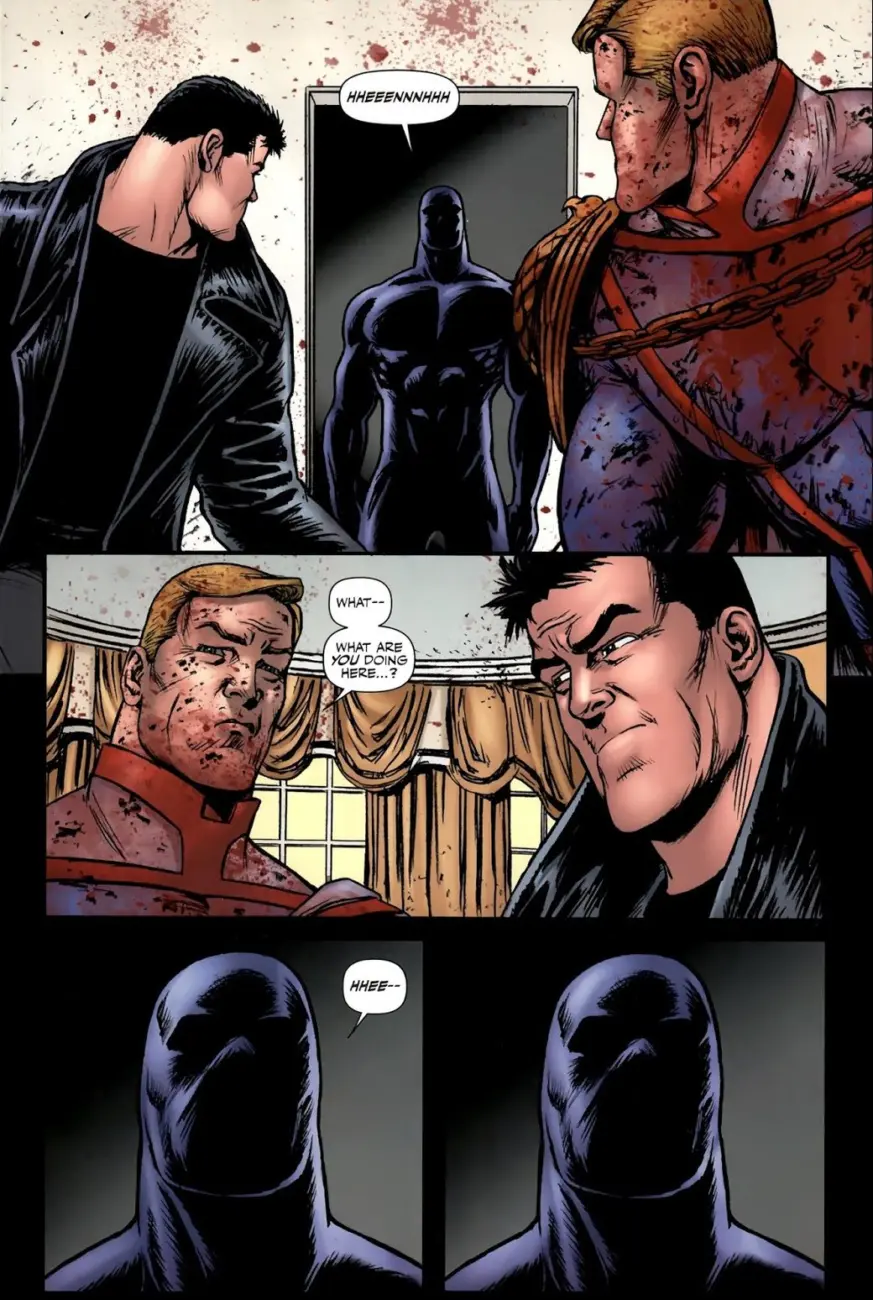
Homelander has an existential crisis upon learning about his duplicate and immediately goes insane, attacking an unmasked Black Noir as the White House is destroyed around them by laser fire.
A badly wounded Black Noir emerges from the White House holding only a section of Homelander’s arm and ribs, having torn him apart with his bare hands while still fully powered. Homelander’s coup lasts less than a day and ends with him murdered by Vought’s secret weapon, with his superhero army mowed down by the military around him. There is no mercy, no pleading, and no moment of mortal vulnerability in Ennis’s version.
Comics vs Show: The Meaning Behind Each Choice
The divergence between these two endings is not just structural, it is ideological. In the series finale, Homelander loses his superpowers outright, while his comics counterpart retained all of his abilities up to the point of death. The show chose to strip him of everything before killing him, which turned the final confrontation into something almost pathetic by design.
A depowered Homelander begs for his life on live television, and Butcher drives a crowbar through his skull and tears the top of it off in front of the entire country. The public humiliation is the point, because the show had always been about the performance of power as much as power itself. Taking away his abilities first stripped away the performance entirely.
The comics also deliver a humiliating end, but through a different mechanism. Homelander is finally forced to confront the horror of his actions, and Black Noir’s reveal exposes his weakness and his fundamental inability to control his own narrative. Ennis’s Homelander dies as a puppet whose strings were cut, while the show’s version dies as a bully who runs out of muscle.
Both approaches land the same thematic blow through completely different means, which is a genuinely fascinating case study in adaptation. Which version of Homelander’s downfall do you think hit harder, the comics’ clone-fueled meltdown or watching the world’s most powerful man beg for his life on live television?